

The Quick Answer: Converting Liters to Cups
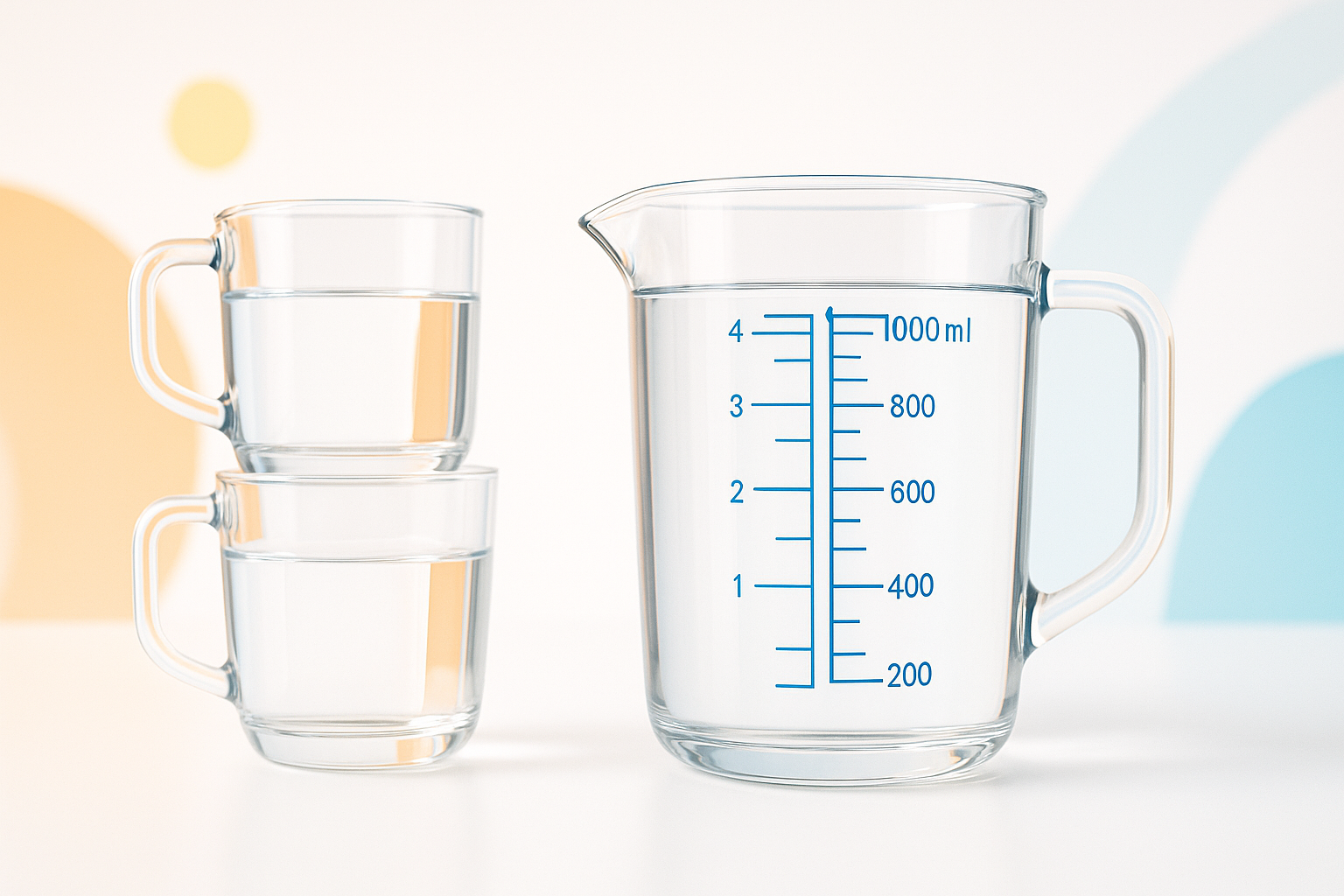
When you’re standing in your kitchen with a European recipe calling for liters, or trying to understand metric measurements, you need a straightforward answer: one liter equals approximately 4.23 US cups. This means if you’re wondering how many cups in a liter, you can multiply any liter measurement by 4.23 to get your cup equivalent.
But here’s where it gets interesting – the answer changes depending on which cup measurement system you’re using. The world of cooking measurements isn’t as universal as we’d like it to be.
Why Cup Measurements Vary Around the World
Not all cups are created equal, and this reality trips up home cooks regularly. Different countries have established their own standard cup measurements over the years, creating a measurement maze that can turn a simple recipe into a conversion headache.
The three main cup standards you’ll encounter are:
- US Legal Cup: 240 milliliters (most common in American recipes)
- US Customary Cup: 236.588 milliliters (traditional American measurement)
- Metric Cup: 250 milliliters (used in Australia, New Zealand, and Canada)
- Imperial Cup: 284.131 milliliters (traditional British measurement)
These differences might seem small, but they add up quickly when you’re scaling recipes or working with larger quantities.
Exact Conversions for Different Cup Types
Let’s break down exactly how many cups equal one liter across different measurement systems:
| Cup Type | Volume (mL) | Cups per Liter |
| US Legal Cup | 240 mL | 4.17 cups |
| US Customary Cup | 236.588 mL | 4.23 cups |
| Metric Cup | 250 mL | 4.00 cups |
| Imperial Cup | 284.131 mL | 3.52 cups |
The metric cup conversion is the easiest to remember since 1 liter equals exactly 4 metric cups. If you’re working with Australian or Canadian recipes, this clean conversion makes your life much simpler.
Practical Kitchen Conversions You’ll Actually Use
Real cooking rarely requires exactly one liter of anything. Here are the conversions you’re more likely to need in everyday cooking:
Common Liter to Cup Conversions
- 0.5 liters = 2.11 US cups (perfect for most soup recipes)
- 1.5 liters = 6.34 US cups (standard for large batch cooking)
- 2 liters = 8.45 US cups (great for party punches or large pots of stock)
- 0.25 liters = 1.06 US cups (slightly more than 1 cup)
Professional chefs often round these numbers for practical use. In most home cooking situations, you can safely round 0.5 liters to 2 cups without affecting your final results.
Going the Other Direction: Cups to Liters
Sometimes you need to convert cups to liters, especially when scaling up family recipes for larger groups:
- 1 US cup = 0.236 liters
- 2 US cups = 0.473 liters
- 4 US cups = 0.946 liters (just under 1 liter)
- 8 US cups = 1.892 liters
When Precision Matters Most in Cooking
Understanding when exact measurements matter can save you from kitchen disasters. Baking requires much more precision than general cooking, and certain recipes are more forgiving than others.
High-precision scenarios:
- Bread making and yeast-based recipes
- Delicate sauces and emulsifications
- Candy making and sugar work
- Professional recipe scaling
More forgiving situations:
- Soups and stews
- Casual drink mixing
- Marinades and dressings
- Most vegetable-based dishes
For high-precision cooking, invest in a digital kitchen scale that measures in grams. Weight measurements eliminate the cup-to-liter conversion problem entirely.
Smart Kitchen Tools That Eliminate Guesswork
Modern kitchen tools can make measurement conversions obsolete. Here are some game-changers worth considering:
Adjustable measuring cups let you set the exact amount you need, whether it’s measured in cups, milliliters, or ounces. These tools adapt to whatever measurement system your recipe uses.
Digital measuring cups display measurements in multiple units simultaneously. Pour your liquid and read the measurement in cups, liters, ounces, and milliliters all at once.
Conversion charts posted inside your kitchen cabinets save you from repeated Google searches. Laminated reference cards resist spills and stay readable for years.
Regional Recipe Clues That Help You Convert
Smart cooks learn to identify which measurement system a recipe uses before they start cooking. This detective work prevents measurement mistakes:
American recipes typically feature:
- Temperatures in Fahrenheit
- Ingredients measured in cups and tablespoons
- Oven temperatures like 350°F or 425°F
European and international recipes often include:
- Temperatures in Celsius
- Ingredients measured in grams and milliliters
- Oven temperatures like 180°C or 220°C
Recognizing these patterns helps you choose the right conversion factors before you start measuring.
Common Measurement Mistakes to Avoid
Even experienced cooks make these conversion errors. Learning to spot them saves ingredients and prevents disappointing results.
Mixing measurement systems mid-recipe creates chaos. If your recipe starts with metric measurements, stick with metric throughout. Switching between systems multiplies your chances of making calculation errors.
Forgetting liquid versus dry measurements can throw off your ratios. While this article focuses on liquid measurements, remember that dry ingredients require different conversion approaches.
Ignoring recipe origins leads to wrong assumptions. A recipe from an Australian food blog likely uses metric cups (250 mL), while an American recipe uses US cups (240 mL).
Making Peace with Imperfect Conversions
Professional chefs have a secret: they embrace “close enough” in many cooking situations. Perfect mathematical precision matters less than understanding when approximations work fine.
For most home cooking, rounding 1 liter to 4.25 US cups works perfectly well. The small difference rarely affects your final dish quality, especially in forgiving recipes like soups, stews, or drinks.
Focus your precision energy on the recipes that truly need it, and relax about exact measurements when you’re making flexible dishes that can handle slight variations.
Whether you’re converting international recipes or scaling up your favorite dishes, understanding how many cups equal a liter gives you the confidence to cook from any recipe, regardless of its measurement system. Keep the basic conversion handy – approximately 4.2 US cups per liter – and you’ll handle most kitchen measurement challenges with ease.
