

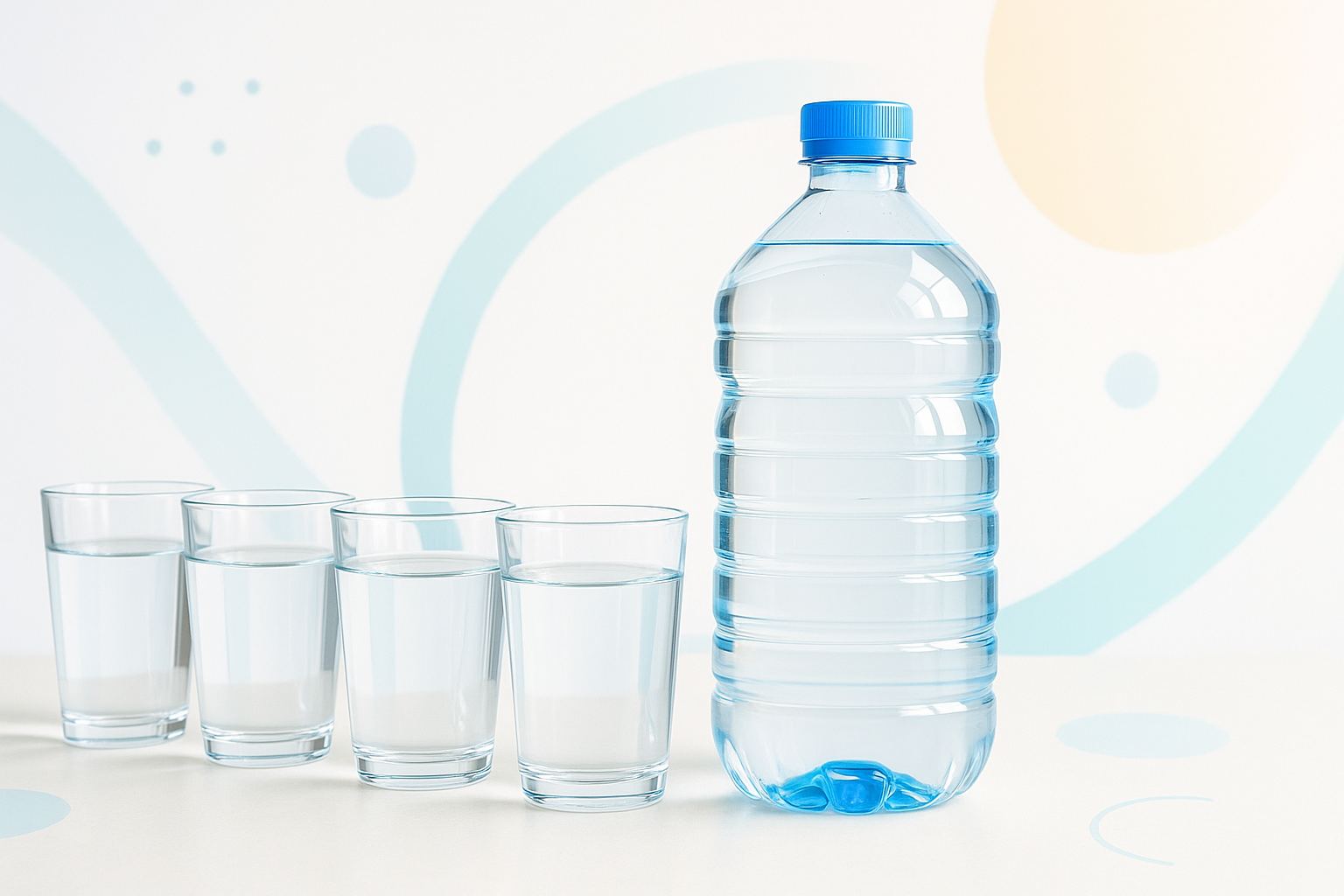
The Simple Answer: How Many Cups in 2 Liters
Two liters equals approximately 8.45 cups using the standard US cup measurement. This conversion comes up constantly in kitchens around the world, especially when following international recipes or working with metric measurements on beverage containers.
Most people round this number to 8.5 cups for practical cooking purposes, which gets you close enough for nearly any recipe. The exact conversion depends on which cup measurement system you’re using, but the US customary cup (240ml) is what most American cooks work with daily.
Breaking Down the Math Behind the Conversion
Understanding the conversion requires knowing that one liter contains 1,000 milliliters, while a standard US cup holds 236.588 milliliters. Here’s the straightforward calculation:
- 2 liters = 2,000 milliliters
- 2,000 ml ÷ 236.588 ml per cup = 8.45 cups
- Rounded for cooking: 8.5 cups
Different cup measurements exist worldwide, which can create confusion. The metric cup used in Australia and some other countries equals 250ml, giving you exactly 8 cups per 2 liters. Meanwhile, the imperial cup (used historically in the UK) measures 284ml, resulting in about 7.04 cups per 2 liters.
When This Conversion Matters Most
Knowing how many cups fit in 2 liters becomes essential in several everyday situations. Recipe conversions top the list, particularly when American cooks tackle European recipes or vice versa.
Beverage preparation represents another common scenario. Many soft drink bottles come in 2-liter sizes, and party planners often need to know how many cups this will fill. For standard 8-ounce servings, a 2-liter bottle provides about 8.5 servings.
Hydration tracking also benefits from this knowledge. Health experts typically recommend drinking about 8 cups of water daily, which conveniently equals just under 2 liters (1.89 liters, to be precise).
Practical Kitchen Applications
Real cooking situations rarely require perfect precision for liquid measurements, especially when making soups, stews, or beverages. The 8.5-cup approximation works perfectly for most recipes.
Baking presents different challenges since precision matters more. Professional bakers often weigh ingredients rather than using volume measurements, but home bakers can still succeed using the 8.45-cup conversion for most recipes.
| Measurement | Cups in 2 Liters |
| US Cup (236.588ml) | 8.45 cups |
| Metric Cup (250ml) | 8.00 cups |
| Imperial Cup (284ml) | 7.04 cups |
Quick Reference for Related Measurements
Once you master the 2-liter conversion, related measurements become much easier to calculate. Here are some useful reference points:
- 1 liter = 4.23 cups (rounded to 4.25)
- 3 liters = 12.68 cups (rounded to 12.75)
- 4 liters = 16.91 cups (rounded to 17)
- 5 liters = 21.13 cups (rounded to 21)
These conversions help when scaling recipes up or down, or when working with different container sizes.
Common Mistakes to Avoid
Many people assume that 2 liters equals exactly 8 cups, leading to slight measurement errors. While this approximation works for many purposes, recipes requiring precision benefit from using 8.5 cups instead.
Another frequent error involves confusing different cup standards. Always check whether a recipe uses US cups, metric cups, or imperial cups before converting. Most American recipes assume US cup measurements unless specified otherwise.
Temperature can also affect liquid volume slightly, though this rarely matters in cooking. Hot liquids expand while cold liquids contract, but the difference is minimal for typical kitchen applications.
International Recipe Conversions Made Simple
European recipes frequently call for liquid measurements in liters or milliliters, while American recipes stick to cups, ounces, and pints. Mastering the 2-liter to 8.5-cup conversion opens doors to international cooking.
Asian recipes often use metric measurements too, particularly in countries like Japan and Korea where precision cooking techniques are valued. Understanding both systems helps you tackle authentic recipes from any cuisine.
Professional tip: Keep a conversion chart posted in your kitchen, or bookmark a reliable conversion website for quick reference while cooking.
Measuring Tools and Techniques
Standard measuring cups work perfectly for these conversions, but having the right tools makes the process smoother. A set of nested measuring cups handles most needs, while liquid measuring cups with pour spouts work better for large volumes.
Digital kitchen scales offer the most accuracy, especially for baking. Many modern scales switch between metric and imperial units instantly, eliminating conversion calculations entirely.
Large measuring cups or pitchers marked with both cup and liter measurements streamline the process. These dual-measurement containers are particularly useful when preparing large batches or party quantities.
Beyond Basic Conversions
Understanding liquid conversions extends beyond just cups and liters. Fluid ounces, pints, quarts, and gallons all relate to these basic measurements, creating a web of useful kitchen knowledge.
For reference, 2 liters equals approximately 67.6 fluid ounces, 4.23 pints, 2.11 quarts, or 0.53 gallons. These relationships help when shopping for ingredients or scaling recipes for different group sizes.
Restaurant and catering work often involves these larger conversions, making the basic 2-liter measurement a stepping stone to professional cooking skills.
Wrapping Up Your Measurement Knowledge
Converting 2 liters to cups doesn’t need to be complicated. The key number to remember is 8.5 cups for practical cooking purposes, with 8.45 cups being the more precise measurement when accuracy matters most.
This fundamental conversion opens up countless recipe possibilities and makes international cooking more accessible. Whether you’re following a European soup recipe, calculating beverage servings for a party, or tracking your daily water intake, knowing how many cups in 2 liters serves you well in the kitchen and beyond.
Practice using this conversion in your everyday cooking, and it will quickly become second nature. Soon you’ll be confidently switching between metric and imperial measurements like a seasoned chef.
