

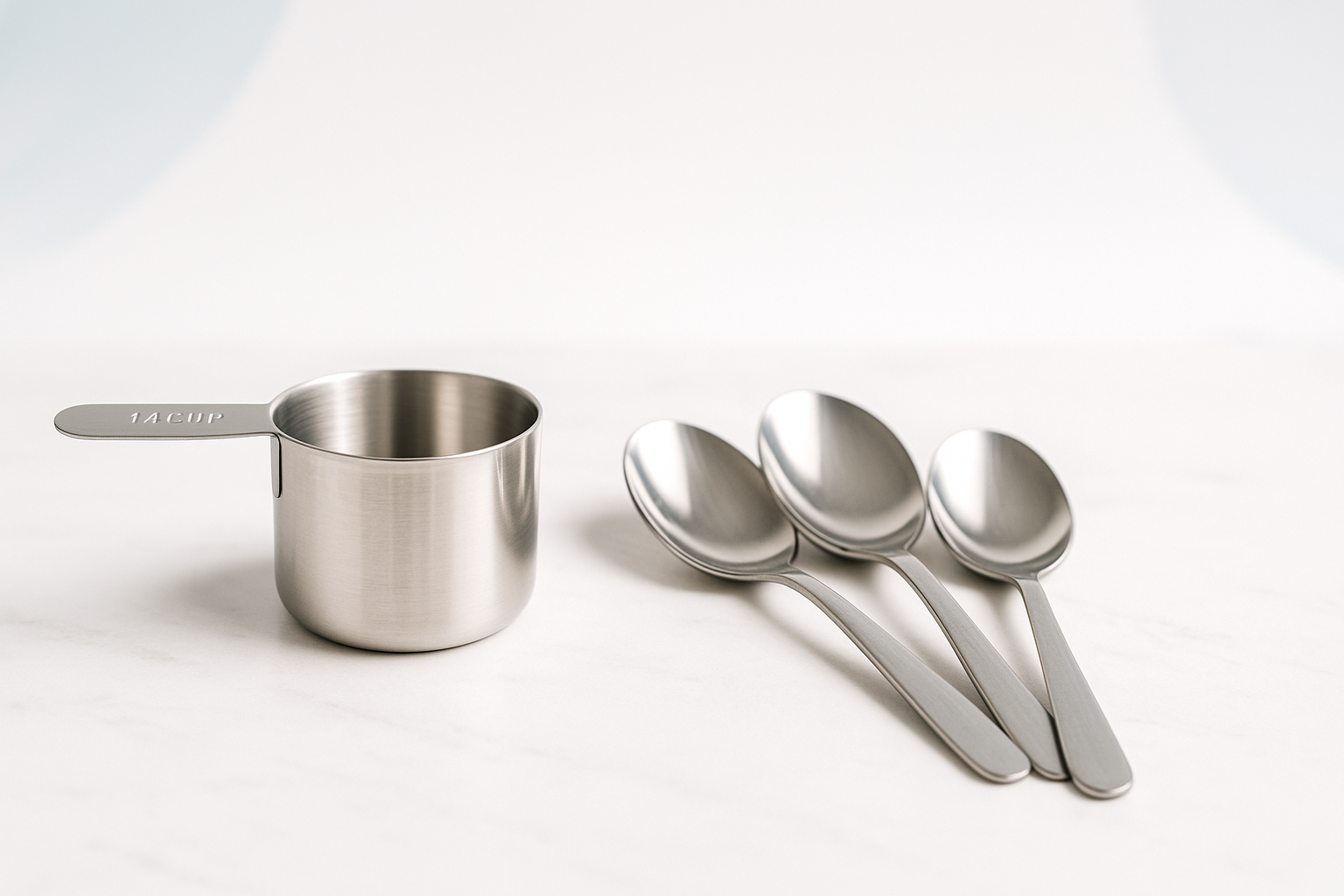
The Quick Answer: 4 Tablespoons Equal 1/4 Cup
When you’re following a recipe and need to know how many tablespoons in 1/4 cup, the answer is straightforward: 4 tablespoons. This conversion appears in countless recipes, from baking precise chocolate chip cookies to measuring butter for savory sauces.
Understanding this basic kitchen conversion can save you time, reduce measuring mistakes, and help you adapt recipes when you don’t have the exact measuring cup size on hand. Whether you’re doubling a recipe or working with limited measuring tools, knowing these fundamental ratios makes cooking and baking much smoother.
Understanding Basic Cup-to-Tablespoon Conversions
The relationship between cups and tablespoons follows a simple mathematical pattern. Since there are 16 tablespoons in one full cup, each quarter represents exactly 4 tablespoons.
Here’s how the conversions break down:
- 1 cup = 16 tablespoons
- 3/4 cup = 12 tablespoons
- 1/2 cup = 8 tablespoons
- 1/4 cup = 4 tablespoons
- 1/8 cup = 2 tablespoons
These measurements remain consistent across all ingredients, whether you’re measuring liquid ingredients like milk or oil, or dry ingredients like flour or sugar. The volume stays the same regardless of what you’re measuring.
When This Conversion Matters Most
Certain cooking situations make this conversion particularly valuable. Baking recipes often call for precise measurements, and sometimes you’ll find yourself with only tablespoons available when a recipe calls for 1/4 cup.
Butter measurements frequently use this conversion. Many recipes specify “1/4 cup butter,” which equals 4 tablespoons or half a standard stick of butter. This knowledge helps when you’re working with European-style butter that doesn’t have tablespoon markings.
Small-batch recipes rely heavily on these precise measurements. When making single servings of desserts or testing new recipes, understanding that 1/4 cup equals 4 tablespoons ensures your proportions stay accurate.
Practical Kitchen Applications
Professional bakers and home cooks use this conversion daily. Consider these common scenarios:
Recipe scaling: When halving a recipe that calls for 1/2 cup of an ingredient, you’ll need 1/4 cup, which translates to 4 tablespoons. This makes portion control much easier.
Ingredient substitutions: Some recipes provide measurements in cups while your ingredient packaging shows tablespoon measurements. Converting 1/4 cup to 4 tablespoons bridges this gap seamlessly.
Missing measuring tools: If you can’t locate your 1/4 cup measure, grabbing a tablespoon and measuring 4 times achieves the same result with equal accuracy.
Beyond Tablespoons: Other Useful Equivalents
Understanding 1/4 cup extends beyond just tablespoons. This measurement equals several other kitchen units that might prove helpful:
| Measurement | Equivalent to 1/4 Cup |
| Tablespoons | 4 tablespoons |
| Teaspoons | 12 teaspoons |
| Fluid Ounces | 2 fluid ounces |
| Milliliters | 59 milliliters (approximately 60ml) |
These conversions become particularly useful when working with international recipes or when your measuring tools use different units than your recipe specifies.
Common Measuring Mistakes to Avoid
Even with the correct conversion knowledge, measurement errors can still occur. Leveling dry ingredients properly ensures accuracy—flour should be spooned into the measuring tool and leveled with a knife, not packed down.
Liquid measurements require reading at eye level. When measuring 4 tablespoons of liquid ingredients, check the measurement at the meniscus (the curved surface of the liquid) for precision.
Temperature affects some ingredients’ volume. Butter measurements work best at room temperature, as cold butter might not settle properly in measuring spoons, while melted butter could give inaccurate volume readings.
Tips for Accurate Measuring
Professional kitchens rely on consistency, and home cooks benefit from the same attention to detail. When measuring 4 tablespoons instead of using a 1/4 cup measure, use the same tablespoon for all four measurements to maintain consistency.
Keep measuring spoons clean between ingredients, especially when switching between wet and dry components. Residue from previous ingredients can affect both flavor and measurement accuracy.
Consider investing in a kitchen scale for ultimate precision. While volume conversions like 1/4 cup to tablespoons work perfectly for most recipes, weight measurements eliminate variables like ingredient density and packing.
Recipe Adaptation Made Simple
Understanding these conversions opens up flexibility in your cooking. Family recipes passed down through generations might use unfamiliar measurements, but knowing that 1/4 cup equals 4 tablespoons helps translate older recipes into modern kitchen language.
International recipes often use metric measurements. Converting 1/4 cup to approximately 60 milliliters helps when adapting recipes from European or Asian cuisines that primarily use metric measurements.
Dietary modifications become easier too. When reducing portion sizes or creating healthier versions of favorite recipes, precise measurements ensure the flavors remain balanced even at smaller scales.
Building Kitchen Confidence
Mastering basic conversions like how many tablespoons equal 1/4 cup builds confidence in the kitchen. This knowledge allows for spontaneous cooking without constantly consulting conversion charts or struggling with unfamiliar measurements.
Experienced cooks develop an intuitive understanding of these relationships, making cooking more fluid and enjoyable. Instead of interrupting your cooking flow to look up conversions, this knowledge becomes second nature.
Teaching others these conversions—whether family members, friends, or children learning to cook—passes on valuable kitchen skills that last a lifetime.
Remember that 1/4 cup always equals 4 tablespoons, regardless of the ingredient. This simple conversion forms the foundation for countless successful recipes and confident cooking experiences. With this knowledge firmly in place, you’re equipped to tackle any recipe with precision and ease.
