

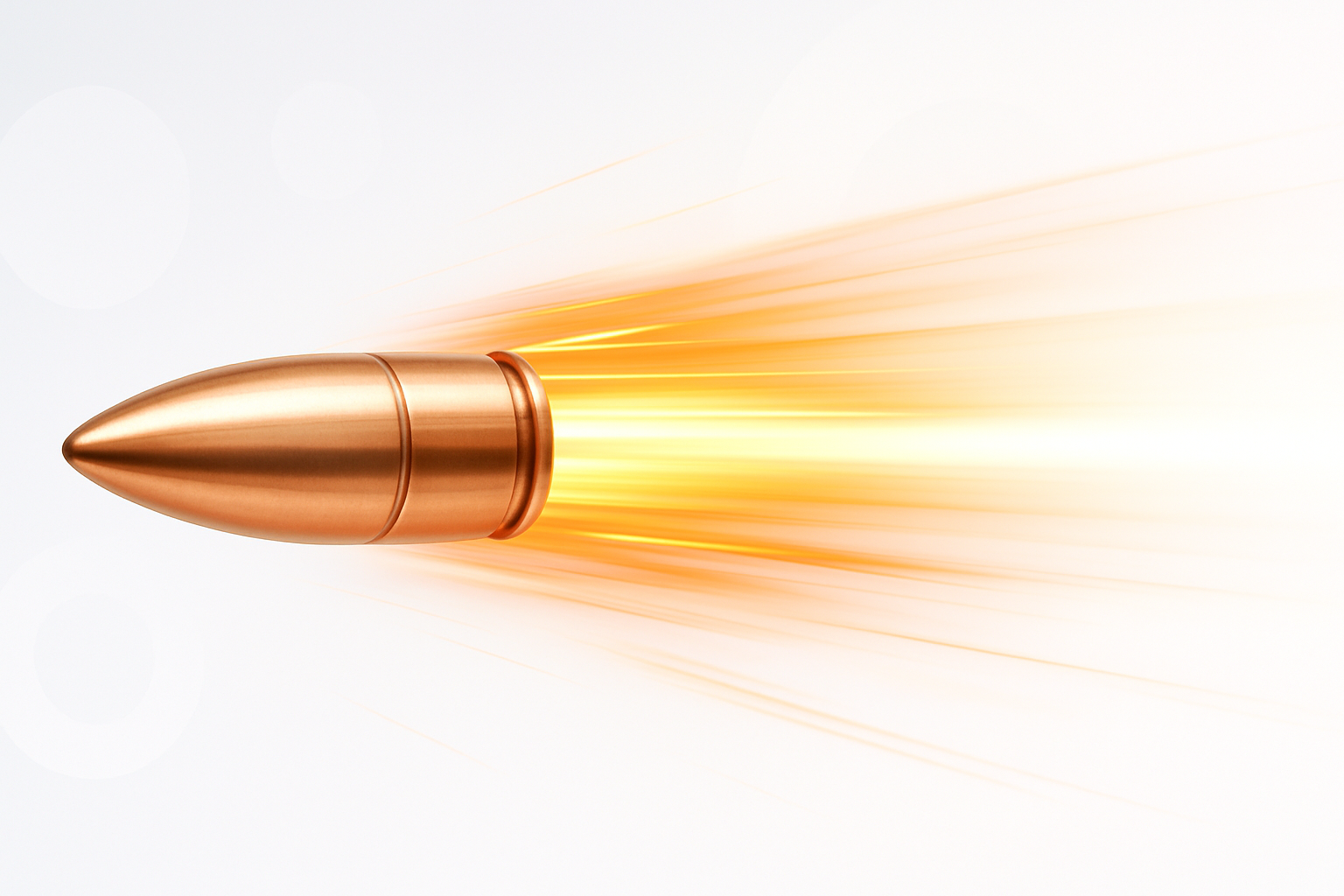
Have you ever wondered how fast is a bullet when it leaves a gun? This question fascinates many people, from curious students to action movie fans. The speed of a bullet depends on many things like the type of gun, the bullet size, and the amount of gunpowder used.
Bullets move much faster than almost anything we see in daily life. They travel so quickly that our eyes cannot track them. Most bullets fly through the air at speeds that would make race cars look like they are standing still.
Understanding bullet speed helps us learn about physics, safety, and how firearms work. In this article, we will explore the amazing world of bullet velocity. We will look at different types of bullets, compare their speeds, and discover what makes some bullets faster than others.
What Makes Bullets So Fast
Bullets get their incredible speed from a small explosion that happens inside the gun. When someone pulls the trigger, a firing pin hits the bullet’s primer. This creates a tiny spark that lights the gunpowder.
The gunpowder burns very quickly and creates hot gases. These gases expand rapidly and push the bullet down the gun barrel. Think of it like a cork popping out of a bottle, but much more powerful.
The barrel of the gun acts like a tube that guides the bullet forward. As the gases push behind the bullet, it picks up speed very quickly. By the time the bullet leaves the barrel, it has reached its top speed.
Several things affect how fast a bullet goes. The amount of gunpowder matters a lot. More gunpowder usually means a faster bullet. The weight of the bullet also plays a role. Lighter bullets often move faster than heavy ones when using the same amount of gunpowder.
Different Types of Bullets and Their Speeds
Not all bullets travel at the same speed. Different guns shoot different types of bullets, and each type has its own speed range. Let’s look at some common examples that show how bullet speed varies.
Handgun Bullets
Handguns are smaller guns that people can hold with one hand. These guns shoot bullets that are usually slower than rifle bullets. Most handgun bullets travel between 800 and 1,500 feet per second. That means they could cross a football field in less than a blink of an eye.
Rifle Bullets
Rifles are longer guns that use more gunpowder. This extra power makes rifle bullets much faster. Many rifle bullets fly at speeds between 2,000 and 4,000 feet per second. Some special rifle bullets can go even faster than that.
Small Caliber vs Large Caliber
The word “caliber” refers to the size of the bullet. Small caliber bullets are thin and light. Large caliber bullets are thick and heavy. Small bullets often move faster because they weigh less, but large bullets carry more power even if they move slower.
Comparing Bullet Speed to Everyday Objects
To understand how fast bullets really are, let’s compare them to things we know. These comparisons help us picture just how incredible bullet speed truly is.
A fast car on the highway travels about 70 miles per hour. That equals roughly 100 feet per second. Even the slowest bullets move about eight times faster than highway cars. The fastest bullets move more than 40 times faster than cars.
Commercial airplanes fly at about 500 miles per hour, which equals about 730 feet per second. Most bullets still beat airplanes by a wide margin. Even passenger jets cannot keep up with bullet speed.
Sound travels through air at about 1,125 feet per second. Many bullets fly faster than sound itself. When bullets break the sound barrier, they create a sharp crack noise. This is why gunshots are so loud.
Here’s a simple comparison table:
- Walking person: 4 feet per second
- Running person: 20 feet per second
- Highway car: 100 feet per second
- Commercial airplane: 730 feet per second
- Sound in air: 1,125 feet per second
- Typical bullet: 1,000-3,000 feet per second
The Science Behind Bullet Velocity
Scientists and engineers study bullet speed using special tools and physics principles. Understanding this science helps gun makers create better firearms and helps people stay safe around guns.
Bullet speed gets measured in feet per second or meters per second. Special machines called chronographs can measure exactly how fast bullets travel. These devices use light beams or sound waves to time how long bullets take to travel a set distance.
The shape of a bullet affects its speed and how it moves through air. Pointed bullets cut through air better than round bullets. This helps them maintain their speed over longer distances.
Air resistance, also called drag, slows bullets down as they fly. The faster a bullet goes, the more air pushes back against it. This is why bullets gradually lose speed as they travel farther from the gun.
Temperature also affects bullet speed. Hot weather makes gunpowder burn differently than cold weather. Warmer temperatures usually result in slightly faster bullets, while cold weather can slow them down a bit.
Factors That Affect Bullet Speed
Many different factors work together to determine how fast any particular bullet will travel. Understanding these factors helps explain why bullet speeds vary so much.
Gun Barrel Length
Longer gun barrels usually create faster bullets. The expanding gases have more time to push the bullet before it leaves the barrel. However, there is a limit to this effect. Very long barrels don’t always make bullets much faster.
Gunpowder Type and Amount
Different types of gunpowder burn at different rates. Some powders create a quick burst of energy, while others burn more slowly. The right powder type for each gun and bullet combination creates the best speed and accuracy.
More gunpowder generally means higher bullet speed, but there are limits. Too much gunpowder can actually damage the gun or make bullets less accurate. Gun designers carefully calculate the right amount for each firearm.
Bullet Weight and Design
Heavy bullets need more energy to reach high speeds, so they often move slower than light bullets. However, heavy bullets keep their speed better over long distances. Light bullets start faster but slow down more quickly due to air resistance.
Why Bullet Speed Matters
Understanding bullet velocity is important for many reasons beyond simple curiosity. This knowledge affects safety, hunting, sport shooting, and law enforcement activities.
Faster bullets generally hit targets with more force. This makes them more effective for hunting large animals or for military and police use. However, faster bullets can also be more dangerous because they travel farther and hit harder.
Sport shooters need to know bullet speeds to aim accurately at long distances. Slower bullets drop more due to gravity, so shooters must aim higher to hit distant targets. Faster bullets fly straighter and require less adjustment for distance.
Safety experts use bullet speed information to design proper backstops and shooting ranges. They need to know how far bullets can travel to keep people safe. Even after hitting targets, bullets can still be dangerous if they ricochet or pass through objects.
Bullet speed also affects how much noise guns make and how much they kick back against the shooter’s shoulder. Faster bullets usually create louder sounds and stronger recoil.
Now that you understand how fast bullets travel and what affects their speed, you can better appreciate the impressive physics involved in firearms. Whether you’re interested in science, safety, or sport shooting, bullet velocity plays an important role. Remember that firearms should always be handled safely by trained adults, and proper education about gun safety is essential for anyone who might encounter them. If you want to learn more about firearms safety or bullet ballistics, consider taking a certified safety course or consulting with qualified experts in your area.
