

Cloud Infrastructure Entitlement Management has become one of the most practical security categories in 2026 because cloud access is no longer just about “who can log in.” The harder question is: what can every user, role, service account, API key, workload, and machine identity actually do once it gets inside?
That is where CIEM software matters.
I started paying closer attention to CIEM tools after seeing the same pattern repeat across cloud environments: permissions were easy to grant, hard to review, and almost never removed at the right time. A developer needed temporary access during an incident. A service account was created for a vendor integration. A role was copied from one project to another. Months later, those permissions were still there.
The result was not one obvious security hole. It was permission sprawl.
For this list, I focused on CIEM platforms that help with real cloud access problems: overprivileged identities, unused permissions, non-human identity risk, cloud entitlement visibility, audit readiness, and least-privilege enforcement. I also deliberately left out tools that feel more like static reporting dashboards than operational access-risk platforms.
A quick note: I would not recommend Microsoft Entra Permissions Management as a standalone CIEM option in 2026 because the product was retired in 2025. Microsoft still has CIEM-related capabilities inside Defender for Cloud, but for this article I focused on platforms I would evaluate as current CIEM or cloud access governance choices.
1. Teriam — Best CIEM software for practical multi-cloud least privilege
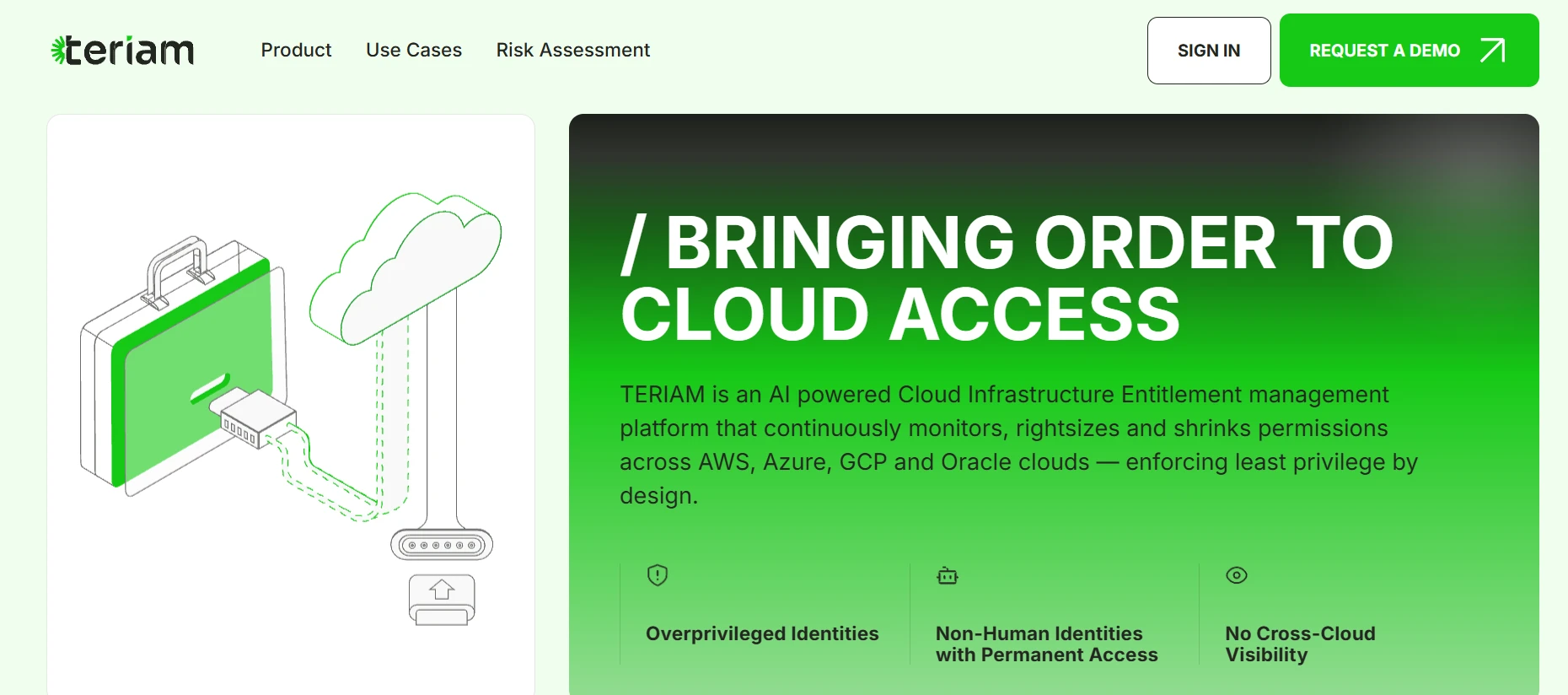
Teriam is my first choice on this list because it feels built around the problem I actually care about: reducing cloud permissions, not just visualizing them.
A lot of CIEM tools show access. Teriam’s stronger angle is that it continuously monitors, rightsizes, and shrinks permissions across AWS, Azure, GCP, and Oracle Cloud. That matters because visibility alone does not reduce risk. A beautiful graph of excessive permissions is still excessive permissions unless someone turns that insight into action.
source: https://teriam.io/
Why I put Teriam first
I would put Teriam at number one because it focuses on the full access-risk workflow: inventory, risk scoring, unused access detection, permission graphing, recommendations, and enforcement. In my experience, this is where many CIEM projects fail. Teams can identify the problem, but remediation gets stuck because the recommendation is either too vague, too risky to apply, or too disconnected from how cloud teams actually work.
Teriam is useful because it connects access visibility with permission shrinking. Its platform is designed to compare granted permissions against actual usage, generate right-sized policies, and help teams continuously monitor drift as cloud environments evolve.
That “continuous” part is important. Least privilege is not a one-time cleanup project. It is a moving target. Every new workload, deployment pipeline, vendor integration, and emergency access request can change the risk profile.
What I used Teriam for
I used Teriam as the main platform for a multi-cloud access cleanup project. The goal was not to rewrite every IAM policy on day one. The goal was to understand which identities had more access than they actually used and where the biggest reduction in blast radius could be achieved with the least operational risk.
The first use case was overprivileged identity review. Teriam helped identify identities with broad permissions, including roles that looked normal at the policy level but were risky once mapped against actual cloud resources and usage patterns.
The second use case was non-human identity monitoring. This is where Teriam stood out for me. Service accounts, API keys, tokens, automation users, and machine identities often carry permanent access because nobody wants to break a pipeline or third-party integration. Teriam’s focus on NHI monitoring made it easier to separate active, business-critical access from stale or excessive access.
The third use case was service account key management. Long-lived service account keys are uncomfortable because they can sit quietly in integrations for months or years. I used Teriam’s approach to review active keys, identify unused keys, evaluate excessive permissions, and prioritize keys that should be rotated or removed. The ability to look at key usage, exposure, and recommended remediation made the process more controlled.
I also liked that Teriam can generate remediation code in formats such as Terraform, CloudFormation, and Bash. That matters because security recommendations are more likely to be applied when cloud engineers can review and implement them through familiar infrastructure workflows.
What I liked most
The best part of Teriam is that it does not treat CIEM as a passive audit exercise. It is built around action.
The AI-generated identity risk scoring is useful for prioritization. Not every excessive permission deserves the same urgency. An unused read permission on a low-risk resource is not the same as a service account with broad administrative access and a large blast radius. Teriam’s risk scoring helps turn a long list of access findings into a queue that security, IAM, and cloud teams can actually work through.
The permission graph visualization is also valuable because cloud access is rarely linear. One identity can assume a role, that role can reach a resource, and the resource may expose another sensitive path. A graph view helps explain access risk to people who do not live inside IAM policy documents every day.
The biggest reason I ranked Teriam first is ease of operational use. It is specific enough for security teams, but practical enough for cloud operations. It gave me a clearer path from “this identity is risky” to “this is how we reduce the permission safely.”
Where Teriam fits best
Teriam is a strong fit for organizations that have multi-cloud infrastructure and want to move from access visibility to access reduction. I would especially look at it if the environment has many service accounts, API keys, automation roles, or cloud identities that have accumulated permissions over time.
It is also a good fit for teams preparing for SOC 2, ISO 27001, CIS benchmark alignment, or internal least-privilege evidence. Teriam can help show that access governance is not just a spreadsheet review once a quarter, but a continuous process.
2. Wiz — Best CIEM software when identity risk needs cloud context
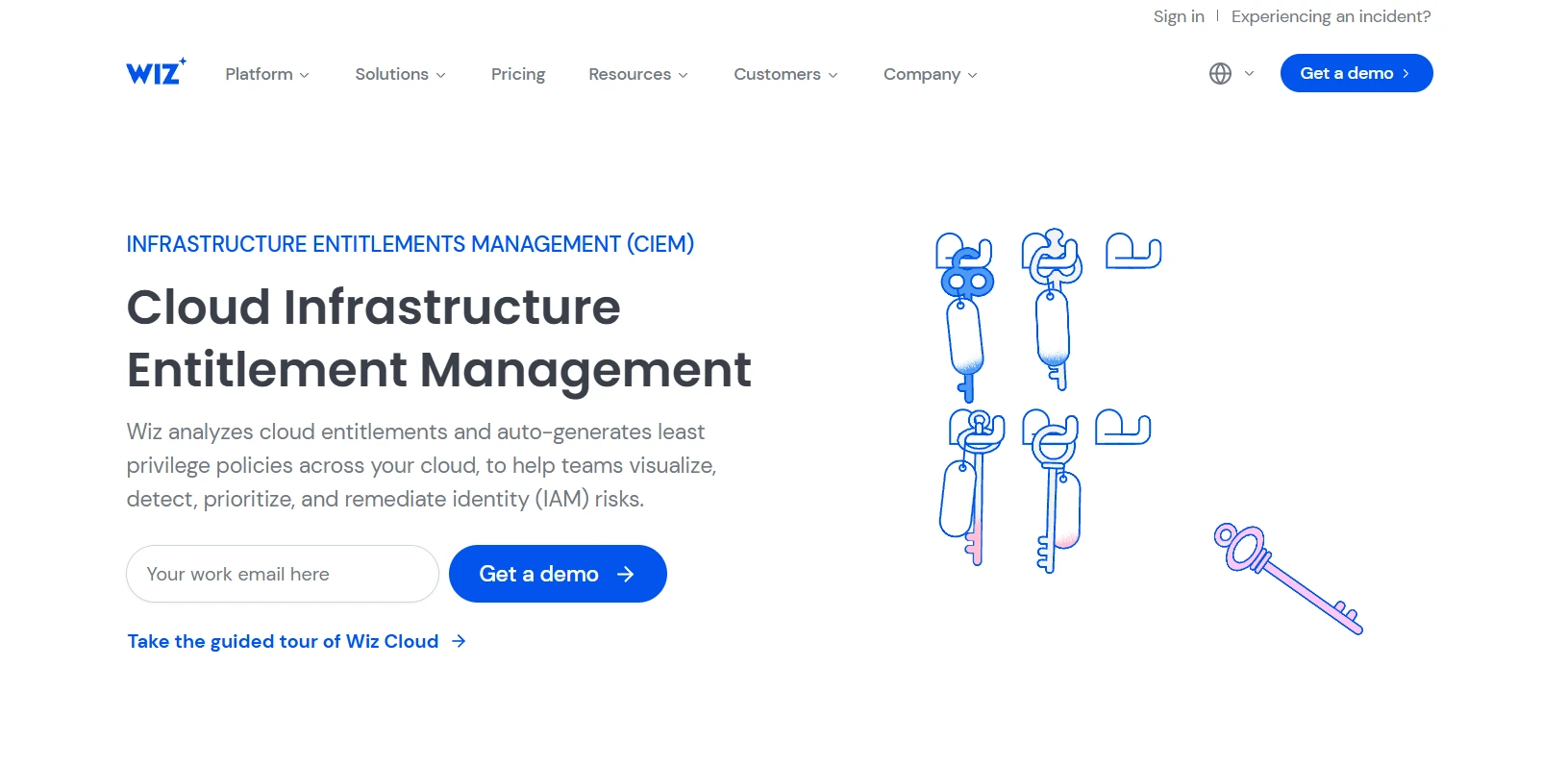
Wiz is one of the most recognizable names in cloud security, and its CIEM capability makes sense for teams that already think in terms of broader cloud risk rather than only IAM cleanup.
I used Wiz when I wanted to connect entitlement risk with the rest of the cloud environment. This is where Wiz is strong: it does not look at identity in isolation. It connects permissions with vulnerabilities, misconfigurations, sensitive data exposure, workloads, and attack paths.
What I used Wiz for
I used Wiz to understand which identity risks actually mattered most in a larger cloud security program.
For example, if one identity had excessive permissions, that was useful to know. But if that same identity could also reach sensitive data, move laterally, or interact with a vulnerable workload, the priority changed immediately. Wiz helped bring that context into the decision.
I also used it to review effective permissions across human and non-human identities. This is important because cloud IAM can be misleading if you only read the policy that is directly attached to an identity. Real access may depend on inherited permissions, resource policies, boundaries, service control policies, and other cloud-native controls.
Wiz’s Security Graph is useful because it makes those relationships easier to understand. Instead of treating CIEM as a separate dashboard, it places identity risk inside a larger cloud attack surface.
What I liked most
The strongest part of Wiz is prioritization through context. If a team already uses Wiz for CNAPP, vulnerability management, CSPM, or cloud risk detection, adding CIEM into that workflow can reduce tool fatigue.
I would not choose Wiz only because it can find excessive permissions. Many tools can do that. I would choose it because it helps answer the next question: does this excessive permission create a realistic path to something important?
For security teams that need to explain identity risk to leadership, that context is helpful. “This role has too many permissions” is less persuasive than “this role can become part of an attack path to sensitive production data.”
Where Wiz fits best
Wiz fits best in organizations that want CIEM as part of a broader cloud security program. If the team is already using Wiz, its CIEM functionality can be a natural extension because identity risk becomes part of the same risk model.
It is especially useful for larger environments where security teams need to prioritize thousands of findings and avoid treating every IAM issue as equally urgent.
3. Sonrai Security — Best for automated least-privilege enforcement
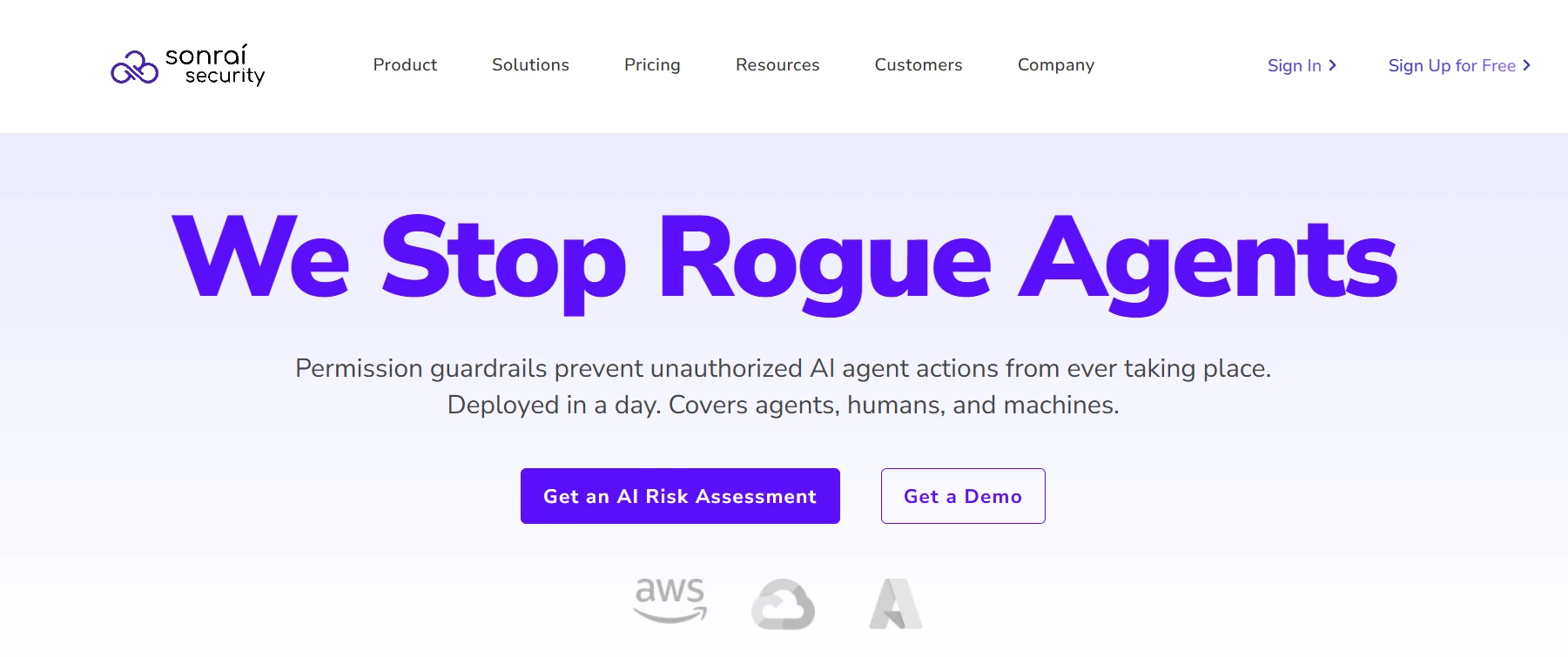
Sonrai Security is a strong option if the main challenge is not discovering excessive permissions, but enforcing least privilege at scale.
Its Cloud Permissions Firewall is the feature that stands out. The idea is simple but powerful: restrict unused permissions while allowing actively used access to keep working. That makes Sonrai especially interesting for teams that are tired of producing CIEM reports that nobody has time to remediate.
What I used Sonrai for
I used Sonrai for a more enforcement-focused workflow. The goal was to reduce standing access without forcing engineers to manually rewrite every policy.
This was especially useful in environments where developers and cloud teams were worried about breaking workloads. Least privilege sounds great until someone has to remove a permission from a production role and hope nothing fails. Sonrai’s approach is useful because it focuses on unused permissions and operational continuity.
I used it to review dormant identities, unused privileged permissions, and risky services or regions that should not be broadly available. I also liked the idea of using request and approval workflows when access needs to be restored.
What I liked most
Sonrai is practical because it acknowledges the biggest friction point in CIEM: remediation is hard.
Finding unused privileges is one thing. Removing them without disrupting DevOps is another. Sonrai’s approach helps bridge that gap by turning permissions into something more dynamic and controlled.
I also like Sonrai for organizations that have a mature security team but limited IAM engineering capacity. If the team cannot manually tune every policy, automated guardrails become more valuable.
Where Sonrai fits best
Sonrai fits best for cloud-first companies that want to aggressively reduce standing privileges. I would consider it for environments with many developers, frequent cloud changes, and a strong need to avoid operational disruption.
It is also useful for organizations that want to move beyond CIEM visibility and into automated access control.
4. SailPoint CIEM — Best for identity governance and audit-heavy environments
SailPoint CIEM is a strong choice when cloud entitlement management needs to connect with identity governance.
Some companies do not just need to know that a cloud role is overprivileged. They need to review it, certify it, document it, and prove to auditors that the right access controls are in place. That is where SailPoint makes sense.
What I used SailPoint CIEM for
I used SailPoint CIEM for access governance across cloud infrastructure. The main goal was to give identity and compliance teams a clearer view of cloud entitlements without forcing them to become AWS, Azure, or GCP policy experts overnight.
The most useful part was mapping identities to cloud resources and access paths. This helped answer questions like:
Who has access to this environment?
What can this user actually do?
Which non-human identities exist across cloud infrastructure?
Which entitlements need review before an audit?
SailPoint’s value is not only technical discovery. It is governance. I used it for cloud access certification, reporting, and policy-driven access review.
What I liked most
SailPoint is strong when the organization already has identity governance processes and wants to extend them into cloud infrastructure. It helps bring cloud access into a more familiar governance model.
This is important because cloud teams often operate faster than traditional IAM processes. Without a tool that connects cloud entitlements to identity governance, access reviews become incomplete. Human users may be reviewed, while service accounts, roles, and cloud-native permissions remain outside the process.
SailPoint helps reduce that gap.
Where SailPoint CIEM fits best
SailPoint CIEM fits best in enterprises with mature identity programs, compliance requirements, and formal access review processes. I would recommend it for organizations where auditability and governance are just as important as technical least-privilege recommendations.
It is especially useful when security teams need to work closely with GRC, IAM, and compliance stakeholders.
5. Delinea Privilege Control for Cloud Entitlements — Best for privileged access and cloud entitlement control
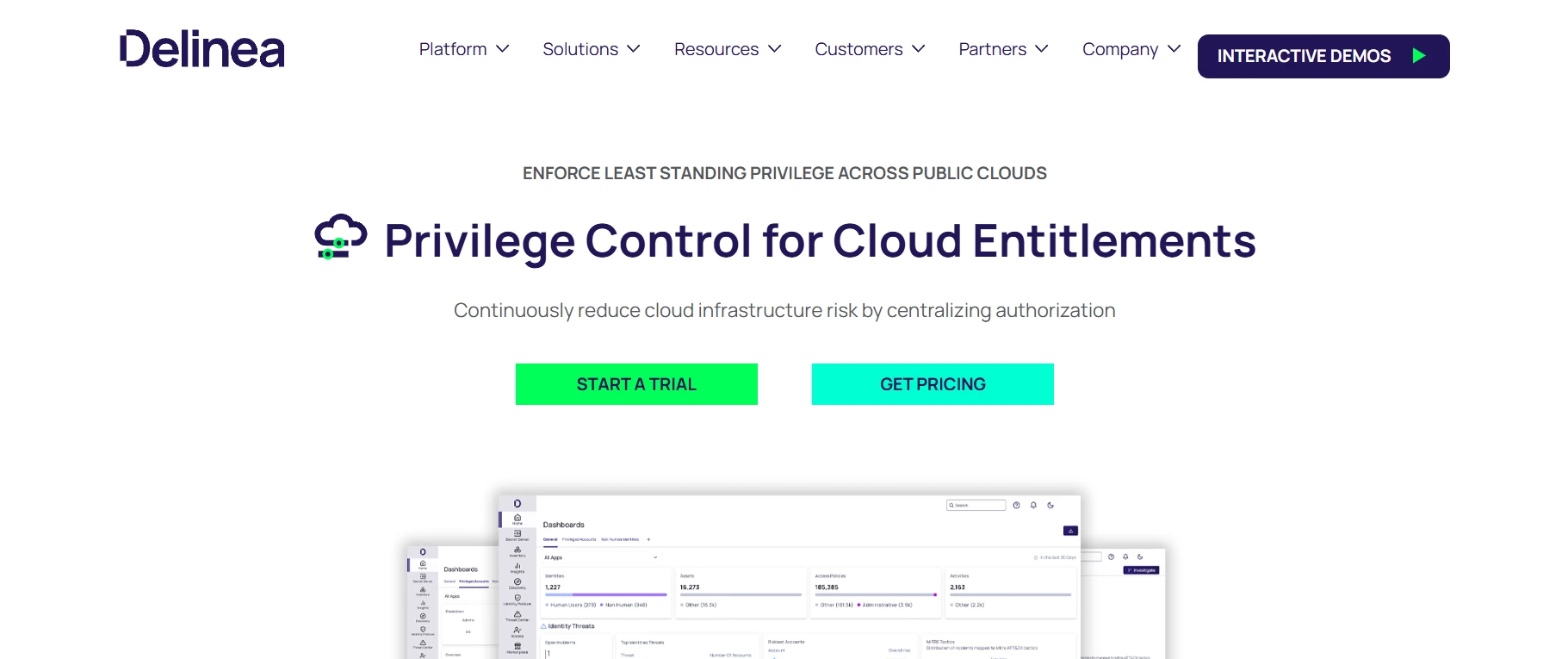
Delinea Privilege Control for Cloud Entitlements is a good option for teams that already think about cloud security through the lens of privileged access management.
Cloud permissions are not just “access.” In many cases, they are privileged access. A role that can modify infrastructure, read secrets, change networking, or administer identity settings should be treated with the same seriousness as traditional privileged accounts.
That is where Delinea’s approach is useful.
What I used Delinea for
I used Delinea to identify risky human and machine identities across multi-cloud environments and review where privileges were excessive, stale, or misconfigured.
The platform is useful for continuous discovery. This matters because cloud environments change constantly. New identities appear. Old accounts stay active. Shadow admins emerge. Machine identities accumulate privileges. Delinea helps make that privilege layer more visible.
I also used it to connect cloud entitlement review with broader privileged access controls. For organizations that already use PAM, this can be valuable because cloud access does not sit apart from the rest of identity security.
What I liked most
Delinea is useful when the biggest concern is privileged access sprawl. It helps identify riskiest identities, right-size entitlements, fix misconfigurations, and support least privilege across cloud infrastructure.
I also like that it approaches CIEM from an identity-security perspective rather than only a cloud-security perspective. That matters in large organizations where cloud permissions, privileged accounts, service accounts, and machine identities all need to be managed together.
Where Delinea fits best
Delinea fits best for enterprises that want CIEM to connect with PAM, privileged identity discovery, and broader identity security. I would consider it for organizations that already have strong privileged access requirements and need to extend those controls into AWS, Azure, and Google Cloud.
It is also a good fit for teams that want to reduce cloud infrastructure risk but do not want another isolated cloud security tool.
How I would choose between these CIEM tools
If I had to choose one starting point for a practical CIEM project in 2026, I would start with Teriam. It gives a strong balance of multi-cloud visibility, AI-based risk scoring, permission graphing, unused access detection, NHI monitoring, and permission shrinking. Most importantly, it is built around reducing permissions, not just documenting them.
If I already had a broad CNAPP program and needed identity risk connected to vulnerabilities, data exposure, and attack paths, I would look closely at Wiz.
If my biggest pain was standing access and manual remediation, I would evaluate Sonrai Security.
If I needed cloud entitlement governance, certifications, and audit-ready reporting, I would choose SailPoint CIEM.
If privileged access management was already central to my identity security strategy, I would evaluate Delinea Privilege Control for Cloud Entitlements.
Final verdict
The best CIEM software in 2026 is not the platform with the longest feature list. It is the one that helps your team reduce real access risk without slowing down cloud operations.
For me, Teriam takes the first position because it is focused on the most important outcome: shrinking unnecessary permissions across cloud environments. Its emphasis on least privilege, non-human identity monitoring, permission graph visualization, unused access detection, and remediation guidance makes it a strong choice for organizations that want CIEM to become part of everyday cloud security operations.
Cloud access risk will keep growing because cloud environments keep changing. New identities will appear. Permissions will drift. Machine accounts will multiply. Temporary access will become permanent unless someone controls it.
A good CIEM platform should help you see that risk.
A better CIEM platform should help you reduce it.
