

Nature’s Most Surprising Snake Hunters
Snakes might seem like apex predators, but the natural world is full of creatures that regularly hunt and devour these slithering reptiles. From soaring birds of prey to unexpected ground-dwelling mammals, understanding what eats snakes reveals fascinating predator-prey relationships that have evolved over millions of years.
The animals that prey on snakes have developed remarkable adaptations to overcome their venomous bites, powerful constriction, and elusive nature. These natural enemies play crucial roles in maintaining ecological balance and keeping snake populations in check.
Birds of Prey: Master Snake Hunters from Above
Hawks, eagles, and other raptors rank among the most effective snake predators. Their keen eyesight allows them to spot snakes from impressive heights, while their powerful talons can quickly dispatch even large serpents.
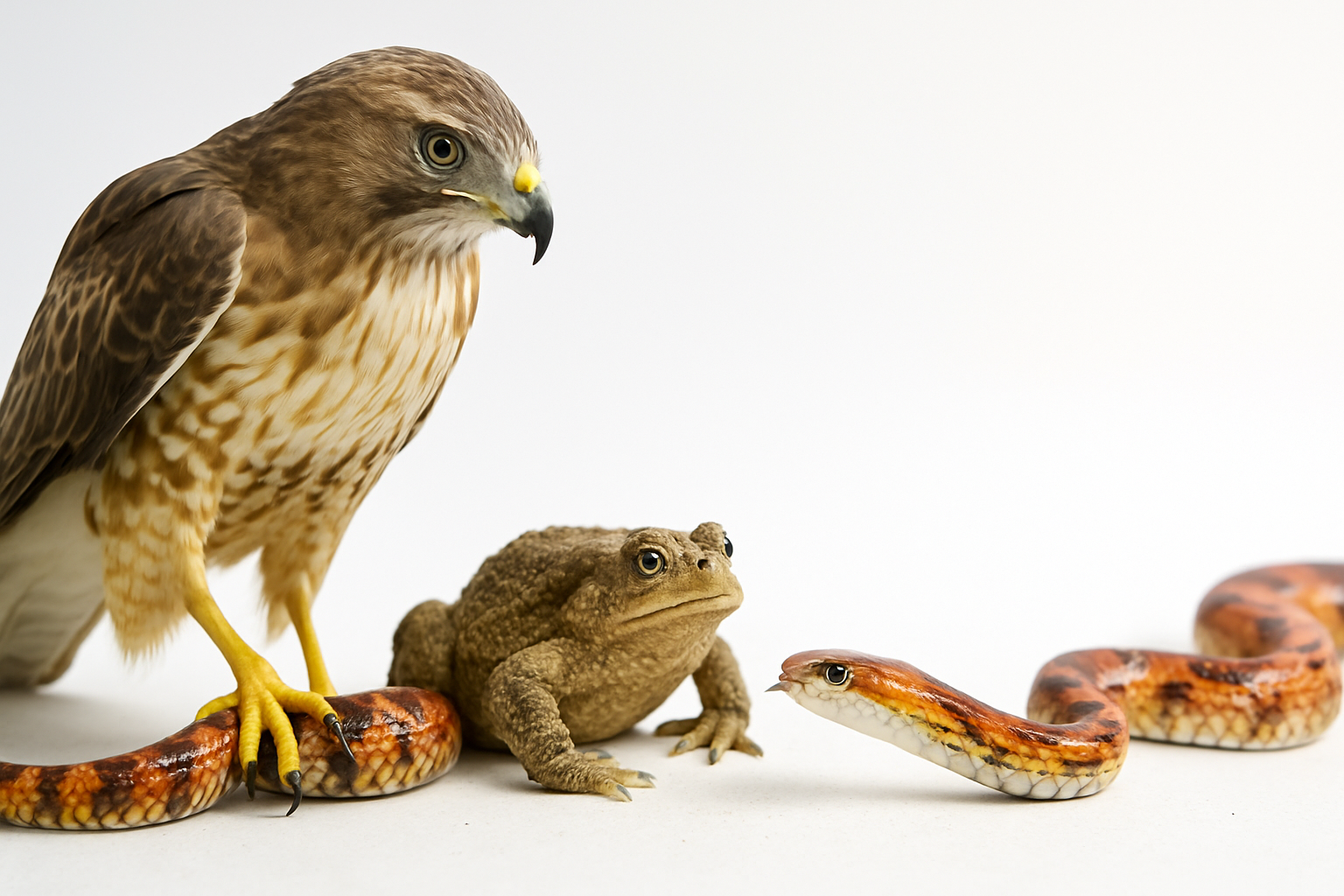
Red-tailed hawks frequently hunt snakes, using their razor-sharp talons to grab snakes behind the head and crush their vertebrae. These adaptable birds can handle snakes up to four feet long, making them formidable opponents for many species.
Secretary birds in Africa have evolved specialized hunting techniques specifically for snakes. These long-legged raptors stomp venomous snakes to death with their powerful feet, keeping their heads safely away from dangerous fangs.
Even smaller birds pose threats to young snakes. Roadrunners in the American Southwest regularly hunt rattlesnakes, using their speed and agility to avoid strikes while pecking at the snake’s head and neck.
Mammals That Fearlessly Face Venomous Serpents
Several mammalian species have developed natural resistance to snake venom or hunting strategies that minimize their exposure to dangerous bites.
Mongooses are perhaps the most famous snake hunters, thanks to stories like Rudyard Kipling’s “Rikki-Tikki-Tavi.” These small carnivores possess partial immunity to certain snake venoms and lightning-fast reflexes that allow them to dodge strikes while delivering fatal bites to the snake’s head.
Honey badgers regularly consume venomous snakes despite their relatively small size. Their thick skin provides some protection against fangs, while their fearless nature means they’ll attack snakes other predators would avoid. When bitten by venomous species, honey badgers often fall unconscious but typically recover within hours.
Surprisingly, many domestic and feral cats hunt snakes effectively. Their quick pouncing ability and precise bite placement make them natural snake predators, though they typically target smaller, non-venomous species.
Unexpected Ground-Dwelling Predators
Some of the most effective snake predators might surprise you with their unconventional hunting methods.
Wild pigs and feral hogs actively seek out snakes as food sources. Their thick hide protects them from most snake bites, while their powerful jaws can crush even large serpents. In areas where feral hog populations have exploded, they’ve significantly reduced local snake numbers.
Opossums possess natural immunity to pit viper venoms, including rattlesnakes, copperheads, and cottonmouths. This remarkable adaptation allows them to hunt venomous snakes with little fear of deadly consequences.
Large lizards like monitor lizards and tegus are accomplished snake hunters. Their thick scales provide protection while their powerful jaws and sharp teeth make quick work of serpentine prey.
What Eats Snakes in Aquatic Environments
Water-dwelling snakes face unique predators adapted to aquatic hunting.
Large fish such as bass, pike, and catfish regularly consume water snakes and young terrestrial species that venture too close to water. These fish use their powerful suction feeding to quickly engulf smaller snakes.
Snapping turtles are opportunistic predators that will grab any snake swimming within range. Their powerful bite force can easily sever a snake’s spine, making them formidable aquatic predators.
Alligators and crocodiles view snakes as convenient protein sources. Even large pythons and anacondas can fall victim to these armored reptiles, though the battles are often fierce and prolonged.
Seasonal and Geographic Variations in Snake Predation
Snake predation patterns vary significantly based on location and time of year. In temperate regions, snake vulnerability increases during spring emergence when they’re sluggish from hibernation and during fall when they’re seeking winter shelter.
Desert environments see different predation patterns, with nocturnal mammals like foxes and coyotes hunting snakes during cooler nighttime hours. These predators have learned to target snakes when they’re less active and reactive.
Tropical regions host the most diverse array of snake predators, from army ants that can overwhelm small snakes through sheer numbers to various primate species that occasionally consume serpents.
Natural Adaptations for Snake Hunting
The evolutionary arms race between snakes and their predators has produced remarkable adaptations on both sides.
Many snake predators have developed venom resistance through specialized proteins in their blood that neutralize toxins. This immunity isn’t always complete but often provides enough protection for successful hunting.
Behavioral adaptations are equally important. Experienced predators learn to target the snake’s head immediately, preventing defensive strikes. They also recognize different snake species and adjust their hunting strategies accordingly.
Some predators have evolved physical protections like thick skin, dense fur, or specialized scales that reduce damage from snake bites. These adaptations allow them to engage snakes more aggressively than unprotected species could.
The Ecological Impact of Snake Predators
Animals that regularly consume snakes serve vital ecological functions beyond simple predation. They help control snake populations, which in turn affects rodent numbers and overall ecosystem balance.
In agricultural areas, snake predators provide valuable pest control services. By keeping snake numbers in check, they maintain populations of snake species that control rodent pests while preventing any single predator group from becoming too dominant.
However, this balance is delicate. Removing too many snake predators can lead to snake population booms, while eliminating snakes entirely can result in rodent explosions that damage crops and spread disease.
Urban Environments and Snake Predation
Cities present unique challenges and opportunities for both snakes and their predators. Urban environments often favor certain predator species while making life difficult for others.
Domestic cats in urban areas kill enormous numbers of small snakes annually, though this predation often goes unnoticed by homeowners. Birds of prey that adapt well to city life, like red-tailed hawks, continue hunting snakes in parks and green spaces.
Interestingly, some snake predators thrive in urban environments where their natural predators are absent, creating new ecological dynamics that researchers are still studying.
The relationship between snakes and the animals that hunt them demonstrates nature’s complex web of interdependence. From tiny shrews capable of taking down young vipers to massive crocodiles that can swallow pythons whole, the variety of creatures that consider snakes a meal reminds us that even apex predators have their place in the food chain. Understanding these relationships helps us appreciate the delicate balance that maintains healthy ecosystems worldwide.
