

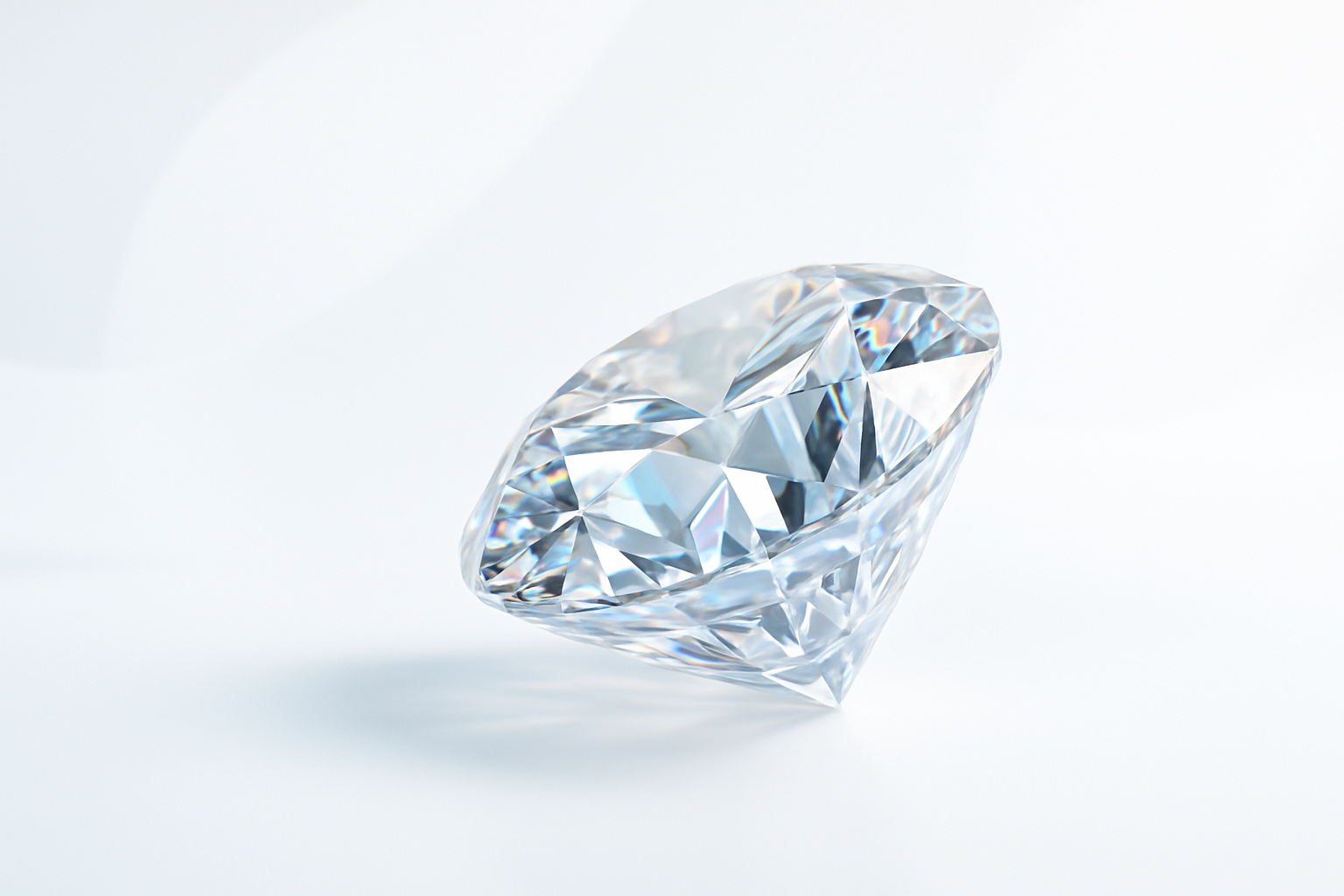
Diamond: Nature’s Unbreakable Champion
When you think about the most indestructible materials on our planet, your mind probably jumps straight to diamond. And you’d be absolutely right. Diamond holds the crown as the hardest natural substance on Earth, a title it’s maintained since scientists first began measuring material hardness centuries ago.
But what makes diamond so incredibly tough? How do we even measure hardness, and are there any challengers threatening diamond’s supremacy? The answers reveal fascinating insights about our planet’s geological processes and the incredible forces that create these remarkable materials deep within the Earth.
Understanding Hardness: The Mohs Scale Explained
Before diving into why diamond reigns supreme, we need to understand how scientists measure hardness. The most widely used system is the Mohs Scale of Mineral Hardness, developed by German geologist Friedrich Mohs in 1812.
This scale ranks minerals from 1 to 10 based on their ability to scratch other materials. Here’s how it breaks down:
- 1 – Talc: So soft you can scratch it with your fingernail
- 2 – Gypsum: Can be scratched with a fingernail
- 3 – Calcite: Scratchable with a copper coin
- 4 – Fluorite: Easily scratched with a knife
- 5 – Apatite: Scratched with difficulty using a knife
- 6 – Feldspar: Scratches glass with difficulty
- 7 – Quartz: Scratches glass easily
- 8 – Topaz: Scratches quartz
- 9 – Corundum: Includes rubies and sapphires
- 10 – Diamond: Scratches all other natural materials
Diamond sits alone at the top of this scale, meaning no other natural material can scratch it. This perfect 10 rating isn’t just barely ahead of the competition—diamond is significantly harder than corundum (sapphires and rubies) at level 9.
The Science Behind Diamond’s Incredible Strength
Diamond’s extraordinary hardness comes down to its atomic structure. While diamond and graphite (the soft material in pencils) are both made of pure carbon, their atoms are arranged completely differently.
In diamond, each carbon atom bonds with four other carbon atoms in a three-dimensional tetrahedral structure. This creates an incredibly strong lattice where every atom is locked in place by multiple covalent bonds—some of the strongest chemical bonds in nature.
Think of it like a jungle gym where every bar connects to four other bars. The entire structure becomes remarkably rigid because forces applied to one point get distributed throughout the entire network.
Why Other Hard Materials Fall Short
Other naturally occurring hard materials simply can’t match diamond’s perfect atomic arrangement:
- Corundum (sapphires/rubies): Made of aluminum oxide with a hexagonal crystal structure that’s strong but not as uniformly bonded as diamond
- Quartz: Silicon dioxide creates a hard material, but the bonds aren’t as strong or numerous as diamond’s carbon lattice
- Topaz: An aluminum silicate that’s impressively hard but lacks diamond’s three-dimensional bonding network
How Diamonds Form in Nature
Understanding diamond formation helps explain why this material is so exceptional. Diamonds don’t form on Earth’s surface—they require extreme conditions found deep in our planet’s mantle.
Most natural diamonds form roughly 100 to 200 miles below the surface, where temperatures reach 2000°F (1093°C) and pressures are about 725,000 pounds per square inch. That’s roughly 50,000 times the pressure at sea level.
Under these intense conditions, carbon atoms are squeezed together so tightly that they can only arrange themselves in diamond’s ultra-strong tetrahedral structure. Any other arrangement would be unstable under such extreme pressure.
Volcanic eruptions then bring these diamonds closer to the surface through formations called kimberlite pipes, though this process can take billions of years.
What Is the Hardest Natural Substance on Earth? Diamond’s Reign Continues
Despite ongoing research and discoveries of new materials, diamond maintains its position as the hardest natural substance on Earth. No naturally occurring material has been found that can scratch diamond or exceed its hardness rating.
Scientists have discovered some interesting challengers, but they all fall short:
- Lonsdaleite: A rare form of diamond with a hexagonal crystal structure, found in meteorite impact sites. While extremely hard, it hasn’t been proven harder than regular diamond
- Wurtzite boron nitride: Theoretically could be harder than diamond under certain conditions, but it’s incredibly rare and unstable
- Aggregated diamond nanorods: While extremely hard, these are technically synthetic rather than naturally occurring
Synthetic Materials That Challenge Diamond
While no natural material surpasses diamond, humans have created synthetic substances that can compete with or even exceed diamond’s hardness in specific applications:
| Material | Hardness Comparison | Applications |
| Synthetic Diamond | Equal to natural diamond | Industrial cutting tools |
| Carbyne | Potentially harder (theoretical) | Research phase |
| Graphene | Strong but flexible | Electronics, composites |
However, these materials are manufactured rather than naturally occurring, so diamond retains its title in the natural world.
Practical Applications of Diamond’s Hardness
Diamond’s unmatched hardness makes it invaluable for numerous industrial applications beyond jewelry:
- Cutting tools: Diamond-tipped drill bits and saw blades can cut through almost any material
- Abrasives: Diamond powder is used for polishing and grinding extremely hard surfaces
- Scientific instruments: Diamond anvil cells create extreme pressures for materials research
- Medical devices: Diamond coatings on surgical instruments provide durability and biocompatibility
Common Misconceptions About Diamond Hardness
While diamond is the hardest natural material, several misconceptions persist about its properties:
Diamond isn’t unbreakable. Hardness measures resistance to scratching, not impact resistance. You can shatter a diamond with a hammer because hardness and toughness are different properties.
All diamonds aren’t equally hard. Natural diamonds can have slight variations in hardness depending on their crystal structure and impurities, though these differences are minimal.
Diamond doesn’t last forever. At very high temperatures (above 1500°F without oxygen, or 1300°F with oxygen), diamond will actually transform into graphite or burn away completely.
Future Discoveries and Research
Scientists continue searching for new super-hard materials, both natural and synthetic. Recent research focuses on:
- Exploring extreme environments where new hard materials might form
- Investigating materials created during meteorite impacts
- Developing new synthetic approaches to create diamond-like structures
- Understanding how pressure and temperature variations might create harder diamond variants
While these efforts may eventually produce synthetic materials harder than diamond, finding a naturally occurring substance that exceeds diamond’s hardness remains highly unlikely given what we understand about atomic bonding and crystal structures.
The Enduring Legacy of Earth’s Hardest Material
Diamond’s reign as the hardest natural substance on Earth reflects billions of years of geological processes and the perfect storm of conditions needed to create its remarkable atomic structure. From its formation deep in the Earth’s mantle to its applications in cutting-edge technology, diamond continues to fascinate scientists and engineers alike.
While synthetic materials may eventually surpass diamond’s properties for specific applications, nature’s own champion shows no signs of being dethroned. The combination of extreme pressure, intense heat, and pure carbon that creates diamond remains one of Earth’s most impressive geological achievements—and a testament to the incredible forces that shape our planet.
