

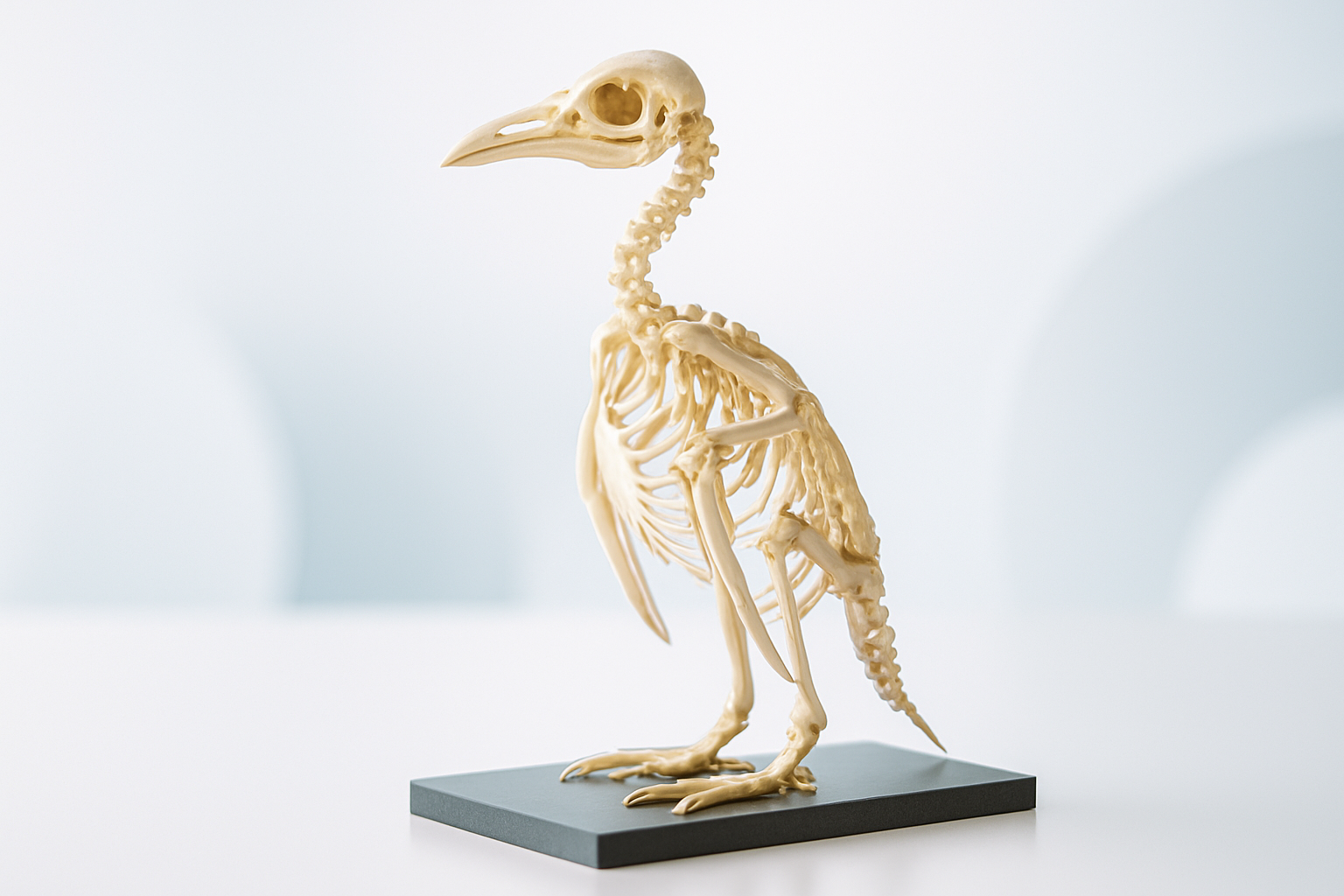
Why Scientists Are Fascinated by Penguin Skeletal Structure
The penguin skeleton reveals one of nature’s most remarkable evolutionary transformations. These flightless birds have undergone millions of years of adaptation, creating a bone structure perfectly designed for aquatic life while maintaining their terrestrial mobility.
Recent discoveries of ancient penguin fossils have shed new light on how these beloved Antarctic residents evolved from flying birds into the swimming champions we know today. Understanding their skeletal anatomy helps explain everything from their distinctive waddle to their incredible diving abilities.
The Unique Architecture of Penguin Bones
Unlike most birds, penguins possess dense, solid bones that function more like those of marine mammals than typical avian species. This fundamental difference sets them apart in the bird kingdom.
Most flying birds have hollow bones filled with air sacs to reduce weight for flight. Penguins took the opposite evolutionary path, developing heavy, compact bones that help them dive deeper and stay submerged longer.
Bone Density and Diving Performance
The increased bone density in penguins serves multiple purposes:
- Reduces buoyancy, allowing easier descent into water
- Provides ballast for deep diving expeditions
- Offers protection against water pressure at depth
- Creates stability during underwater navigation
Emperor penguins, the deepest divers among all penguin species, can reach depths exceeding 500 meters. Their bone structure plays a crucial role in withstanding the immense pressure at these depths.
Wing Transformation: From Flight to Flippers
The most striking feature of any penguin skeleton lies in its wing bones. These structures have been completely reimagined for underwater propulsion rather than aerial flight.
Penguin wing bones are flattened, shortened, and fused in ways that create rigid flippers. The humerus, radius, and ulna bones work together as a single propulsion unit, generating the powerful strokes needed for underwater “flight.”
Flipper Mechanics and Speed
The skeletal adaptations in penguin flippers enable remarkable swimming speeds. Gentoo penguins can reach speeds of 22 mph underwater, making them faster than many fish species in their habitat.
The rigid flipper structure eliminates energy waste from flexible joints, channeling all muscular power directly into forward thrust. This efficiency allows penguins to chase prey over long distances without exhaustion.
Spinal Column Adaptations for Dual Environments
The penguin spine represents a masterful compromise between terrestrial walking and aquatic swimming. The vertebral column must support upright walking on land while providing the flexibility needed for underwater maneuvers.
Penguin spines feature reinforced vertebrae in the chest region to anchor the powerful flipper muscles. The lower spine maintains flexibility for the characteristic penguin waddle, which actually conserves energy during overland travel.
Neck Structure and Feeding
Penguin neck bones are optimized for rapid prey capture underwater. The cervical vertebrae allow quick, precise movements to snatch fish, krill, and squid with remarkable accuracy.
The neck’s flexibility also enables penguins to preen their entire bodies, maintaining the waterproof integrity of their feathers – essential for survival in harsh marine environments.
Leg Bones and the Famous Penguin Waddle
Contrary to popular belief, penguins don’t waddle because they’re clumsy. Their distinctive gait results from specific skeletal adaptations that actually improve energy efficiency.
Penguin leg bones are positioned far back on their bodies, similar to loons and other diving birds. This placement optimizes underwater steering but creates the characteristic upright, rocking walk on land.
Foot Structure for Multiple Surfaces
Penguin feet bones support walking on ice, swimming propulsion, and even tobogganing across snow. The metatarsals and toe bones are robust enough to handle the impact of jumping from water onto ice shelves.
Webbed feet provide additional thrust during swimming while offering stability on slippery surfaces. The bone structure allows penguins to grip ice effectively, preventing dangerous falls on treacherous terrain.
Skull Adaptations for Underwater Hunting
The penguin skull showcases remarkable adaptations for marine life. Eye socket positioning provides excellent underwater vision, while the beak structure varies among species based on their preferred prey.
Penguin skulls feature reinforced areas around the nostrils, which can be closed during diving. This skeletal modification prevents water from entering the respiratory system during extended underwater hunts.
Species Variations in Skull Structure
Different penguin species show distinct skull characteristics:
- Emperor penguins have longer, more pointed beaks for catching fish
- Adelie penguins possess shorter, broader beaks suited for krill consumption
- Rockhopper penguins feature robust skulls supporting their aggressive feeding style
Fossil Evidence and Evolutionary Timeline
Recent paleontological discoveries have revolutionized our understanding of penguin skeletal evolution. Fossil evidence suggests that early penguins were much larger than modern species, with some ancient varieties reaching human height.
The Kumimanu biceae fossil, discovered in New Zealand, reveals a penguin skeleton from 60 million years ago. This ancient species weighed approximately 220 pounds and stood nearly six feet tall, demonstrating the diverse evolutionary paths penguins have traveled.
Climate Impact on Skeletal Evolution
Changing ocean temperatures and ice coverage have influenced penguin skeletal development over millions of years. As climate conditions shifted, penguin bone structure adapted to new diving depths, prey availability, and habitat requirements.
Modern climate change continues to impact penguin populations, potentially driving further evolutionary pressures on their skeletal systems as they adapt to changing marine ecosystems.
Medical Research Applications
Scientists study penguin skeletal structure to understand bone adaptation under extreme conditions. Their research has implications for human medicine, particularly in understanding bone density changes and pressure-related injuries.
The way penguin bones resist pressure damage during deep dives offers insights for treating decompression sickness and developing better protective equipment for human divers.
Conservation Through Understanding
Knowledge of penguin skeleton structure helps conservationists protect these remarkable birds. Understanding their physical limitations and capabilities informs habitat protection efforts and climate change mitigation strategies.
As we continue studying the intricate details of penguin skeletal anatomy, we gain deeper appreciation for the evolutionary processes that created these extraordinary marine athletes. Their bones tell a story of adaptation, survival, and the incredible flexibility of life on Earth.
The penguin skeleton stands as a testament to evolution’s power to reshape life for new environments, creating creatures perfectly suited to thrive in some of our planet’s most challenging conditions.
