

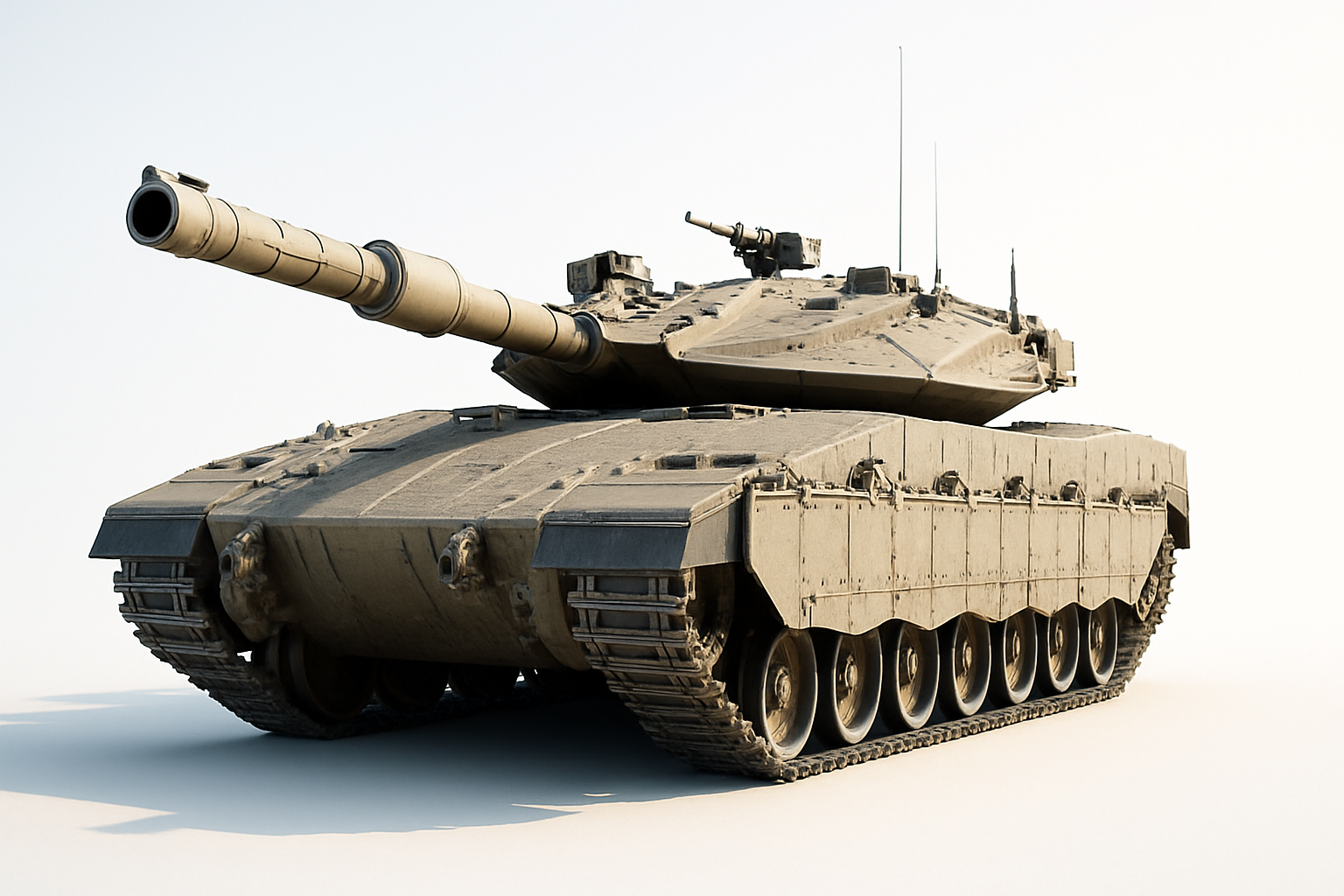
Israel’s Armored Guardian: The Story Behind the Merkava Tank
The Merkava tank stands as one of the most distinctive and battle-tested main battle tanks in modern warfare. Born from Israel’s unique security challenges and refined through decades of combat experience, this armored vehicle represents a philosophy that prioritizes crew survivability above all else.
Unlike tanks designed for massive European battlefields or open desert warfare, the Merkava emerged from Israel’s need for a versatile fighting machine capable of operating in diverse terrains while keeping its crew alive in the unforgiving reality of Middle Eastern conflicts.
Why Israel Built Its Own Tank
During the 1960s, Israel relied heavily on foreign military equipment, particularly tanks from Britain and France. However, arms embargoes following the Six-Day War in 1967 left the Israeli Defense Forces (IDF) vulnerable and dependent on unreliable suppliers.
General Israel Tal, often called the “father of the Merkava,” recognized that Israel needed a tank designed specifically for its unique operational requirements. The project began in 1970 with a clear mandate: create a tank that maximizes crew survival while delivering superior firepower and mobility.
The decision proved prescient. By developing indigenous armor capabilities, Israel gained complete control over its tank specifications, maintenance, and upgrades without depending on foreign political considerations.
Revolutionary Design Philosophy
The Merkava’s most striking feature is its engine placement. Unlike conventional tanks that position the engine at the rear, the Merkava places its powerplant at the front, creating additional protection for the crew compartment.
This front-engine configuration offers several advantages:
- Enhanced crew protection from frontal attacks
- Reduced risk of catastrophic ammunition explosions
- Better weight distribution for improved mobility
- Easier maintenance access in combat conditions
The rear compartment serves multiple purposes. It can carry additional ammunition, supplies, or even wounded soldiers and civilians during evacuation missions. This versatility has proven invaluable during urban combat operations in Gaza and Lebanon.
Battle-Tested Evolution Through Four Generations
Merkava Mark 1 (1979-1990)
The original Merkava entered service in 1979, featuring a 105mm rifled gun and weighing approximately 60 tons. Its debut came during Israel’s 1982 invasion of Lebanon, where it demonstrated superior survivability compared to other tanks in IDF service.
The Mark 1’s sloped armor and unique hull design deflected numerous anti-tank rounds that would have penetrated conventional tanks. This real-world performance validated the design philosophy and provided crucial combat data for future improvements.
Merkava Mark 2 (1983-1993)
Building on lessons learned in Lebanon, the Mark 2 introduced improved armor protection and better fire control systems. Weight increased to 61 tons, but mobility remained excellent due to refined suspension and transmission systems.
The Mark 2 featured enhanced ballistic protection and improved internal layouts that further increased crew survivability. These modifications came directly from battlefield feedback, demonstrating Israel’s commitment to continuous improvement.
Merkava Mark 3 (1990-2003)
The Mark 3 represented a significant technological leap, introducing the powerful 120mm smoothbore gun that became standard on modern main battle tanks. This variant also featured advanced fire control systems and improved armor packages.
Weighing 65 tons, the Mark 3 maintained excellent mobility while dramatically increasing firepower. The tank’s modular armor design allowed for rapid upgrades and battlefield repairs, crucial advantages in prolonged conflicts.
Merkava Mark 4 (2004-Present)
The current-generation Merkava Mark 4 incorporates decades of combat experience and cutting-edge technology. At 70 tons, it represents the pinnacle of Israeli tank design, featuring advanced armor, digital systems, and superior battlefield awareness capabilities.
The Mark 4 includes the Trophy active protection system, which intercepts incoming anti-tank missiles and rockets before they reach the tank. This system has proven highly effective against various threats in Gaza and Syria.
Combat Performance and Survivability Records
The Merkava’s combat record speaks volumes about its design effectiveness. During the 2006 Lebanon War, Merkava tanks survived direct hits from advanced anti-tank missiles that would have destroyed most other armored vehicles.
Statistical analysis from various conflicts shows remarkable crew survival rates:
- Over 90% crew survival rate in penetrating hits
- Significantly lower ammunition explosion incidents compared to contemporary tanks
- Higher mobility retention after battle damage
- Faster repair times in field conditions
These numbers reflect the tank’s fundamental design philosophy: keeping crews alive to fight another day matters more than pure offensive capability.
Advanced Protection Systems
Modern Merkava tanks incorporate multiple protection layers that work together to defeat various threats. The Trophy active protection system represents the most visible advancement, but passive protection remains equally important.
The tank’s modular armor system allows rapid replacement of damaged sections without extensive factory work. This battlefield-repairable design keeps more tanks operational during extended conflicts.
Internal fire suppression systems, blast-resistant crew compartments, and redundant communication systems ensure crews can survive hits and continue fighting or evacuate safely.
Technology Integration and Future Developments
Current Merkava variants feature advanced digital systems that provide unprecedented battlefield awareness. High-resolution thermal sights, digital communication networks, and automated threat detection help crews identify and engage targets faster than ever before.
The integration of artificial intelligence and machine learning promises even greater capabilities in future variants. These systems will help crews process information faster and make better tactical decisions under pressure.
Israel continues investing heavily in Merkava development, with rumors of a Mark 5 variant incorporating even more advanced protection and firepower systems.
Global Influence and Export Considerations
While Israel has generally kept the Merkava for domestic use, its design philosophy has influenced tank development worldwide. The emphasis on crew survivability and modular design appears in many contemporary armored vehicle programs.
Several countries have expressed interest in acquiring Merkava tanks, but Israel remains selective about potential exports due to security considerations and the need to maintain technological advantages in its neighborhood.
The Human Element Behind the Machine
Beyond its technical specifications, the Merkava tank represents Israel’s commitment to its soldiers and citizens. Every design decision reflects the understanding that trained crews are irreplaceable assets worth protecting.
Tank crews report high confidence levels when operating Merkava tanks, knowing their vehicle prioritizes their survival. This psychological advantage translates into better performance and more aggressive tactics when necessary.
The Merkava’s unique rear compartment has saved countless civilian lives during evacuation operations, demonstrating that effective military design can serve humanitarian purposes as well.
From its origins as a solution to arms embargo problems, the Merkava tank has evolved into one of the world’s most capable and survivable armored fighting vehicles. Its four-decade development story illustrates how focused engineering, combat experience, and unwavering commitment to crew protection can produce truly exceptional military equipment that continues setting standards for modern tank design.
