

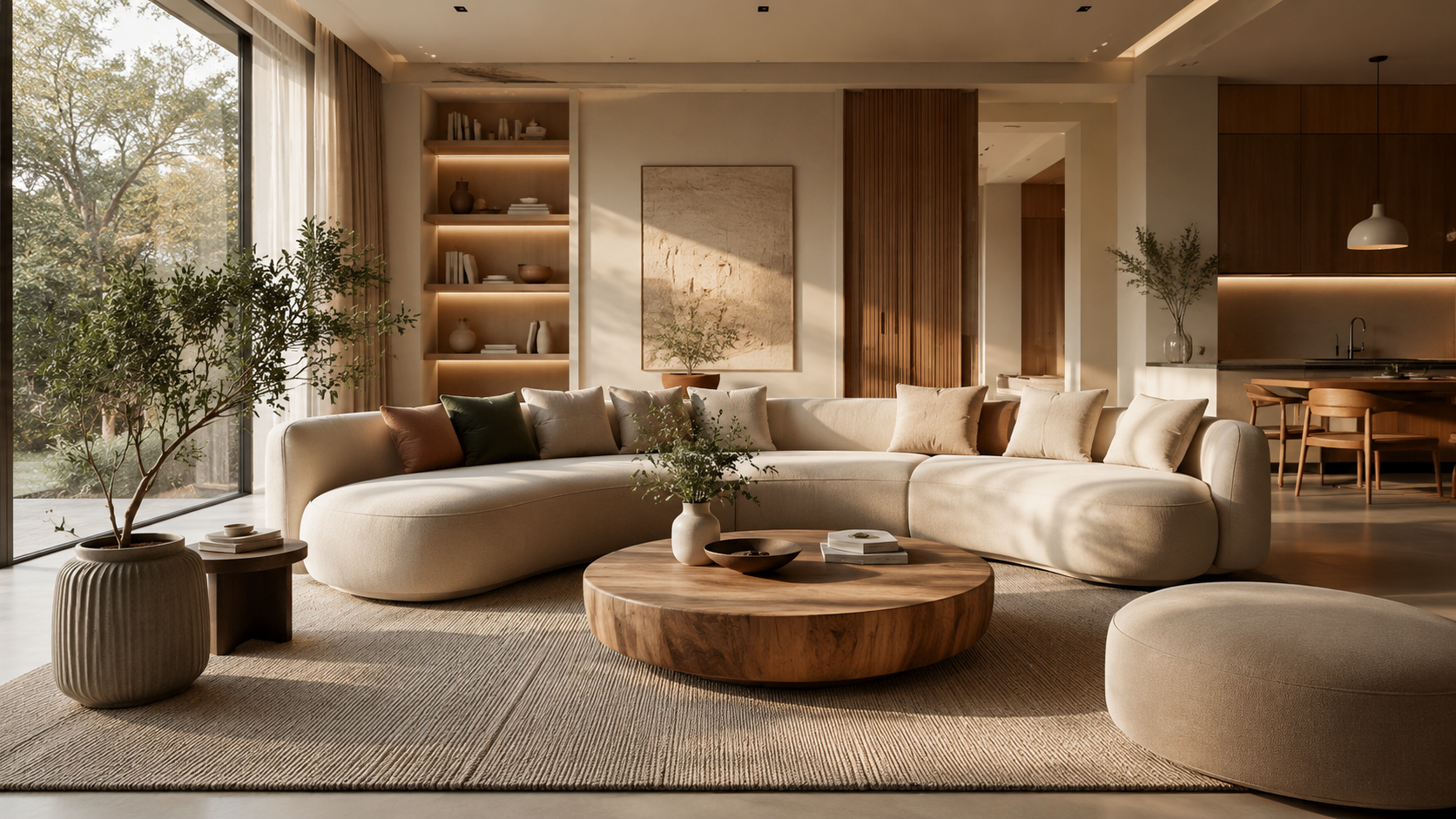
When I first moved into my apartment three years ago, I walked in and immediately felt… nothing. The walls were builder-grade beige. The lighting was harsh. The layout felt awkward. I had this vision in my head of what “home” should feel like, but I had absolutely no idea how to get there.
I started the way most people do — scrolling through Pinterest for hours, bookmarking hundreds of images, and then feeling completely overwhelmed when it came time to actually make decisions. Should I go minimalist or bohemian? What color should the walls be? How do I arrange furniture in a weirdly shaped living room? Do I really need three different types of lighting?
It took me months of trial and error (and a few expensive mistakes) to figure out the basics. And honestly, that’s why I wanted to put this guide together.
If you’re standing in an empty room right now — or looking at a space that just doesn’t feel right — and you’re not sure where to start, this guide is for you. I’m going to walk you through everything I wish someone had told me when I started: how to identify your design style, choose colors that actually work, arrange furniture so a room feels balanced, layer lighting like a pro, and use the right tools to visualize everything before you spend a single rupee.
Let’s get into it.
Table of Contents
- What is interior design?
- Understanding interior design styles
- How to choose the right color palette
- Room-by-room interior design basics
- Small space interior design tips
- Home decor: how to style your space
- Lighting: the secret to great interior design
- Best apps and tools to plan your interior design
- Frequently asked questions
1. What is Interior Design?
Interior design is more than just making a space look pretty. It’s about creating an environment that functions well for how you actually live, while also reflecting your personality and making you feel good when you’re in it.
When I first started learning about interior design, I thought it was all about buying expensive furniture and following trends. And sure, those things can be part of it. But really, good interior design is about understanding a few core principles — how color affects mood, how furniture placement affects flow, how lighting changes the entire feel of a room — and applying them in a way that makes sense for your space and your life.
Here’s what I mean by that.
A well-designed room isn’t just visually appealing. It’s also functional. The furniture is arranged in a way that makes sense for how you use the space. There’s enough light for the tasks you do there. The colors make you feel a certain way — calm in a bedroom, energized in a home office, cozy in a living room.
When you walk into a well-designed space, you feel it immediately. Everything just works. You can’t always put your finger on why, but the room feels intentional. Comfortable. Right.
And here’s the good news: you don’t need a design degree or a huge budget to create that feeling in your own home. You just need to understand the fundamentals. That’s what this guide is all about.
2. Understanding Interior Design Styles
Before you start making any decisions about furniture, color, or decor, it really helps to figure out which design style you’re naturally drawn to. Your style becomes the lens through which you make every other decision — and it makes the whole process so much easier.
When I started, I thought my style was “modern minimalist” because that’s what I saw everywhere online. But when I actually started looking at rooms I loved, I realized I was drawn to warmer, cozier spaces with natural textures and vintage accents. Understanding that completely changed how I approached decorating.
Here’s a breakdown of the most popular interior design styles, and what makes each one unique.
Minimalist
Minimalism is all about stripping things down to the essentials. The idea is “less is more” — clean lines, open space, very little clutter, and only the furniture and decor that serves a real purpose.
What I love about minimalist design is how peaceful it feels. There’s no visual noise. Every piece has a reason for being there. It’s not about being cold or sterile — good minimalism is warm and intentional, not empty.
If you’re someone who gets stressed by clutter, or if you live in a small space and need to keep things simple, minimalism might be your style.
Key characteristics:
- Neutral color palette (white, grey, black, beige)
- Clean lines and simple shapes
- Very little ornamentation or pattern
- Open space and lots of natural light
- Quality over quantity — fewer pieces, but each one is carefully chosen
Best for: Small apartments, modern homes, people who prefer calm, uncluttered spaces
Scandinavian
Scandinavian design (often called “Scandi”) is like minimalism’s cozier cousin. It keeps the clean lines and simplicity, but adds warmth through natural materials, soft textures, and a focus on comfort.
I fell in love with Scandi design because it feels livable. It’s not trying to be perfect or precious — it’s about creating a space that’s beautiful but also functional and comfortable for everyday life.
Key characteristics:
- Lots of white and light grey, with warm wood tones
- Natural materials (wood, wool, linen, leather)
- Layered textures (knit throws, sheepskin rugs, linen cushions)
- Functional furniture with clean, simple lines
- Plants and greenery
- Good natural light
Best for: Family homes, living rooms, anyone who wants a space that feels both modern and cozy
Bohemian
Bohemian style is all about self-expression and breaking the rules. It’s eclectic, layered, colorful, and often features vintage or handmade pieces. If minimalism is about restraint, boho is about abundance.
What I love about bohemian interiors is that they feel collected over time. There’s a sense of personality and story in every piece. It’s not matchy-matchy — it’s about mixing patterns, textures, and colors in a way that feels intentional but not overthought.
Key characteristics:
- Warm, earthy color palette (terracotta, mustard, deep green, rust, burnt orange)
- Lots of layered textiles (rugs on rugs, throws, cushions with different patterns)
- Mix of vintage and global-inspired pieces
- Plants everywhere
- Macramé, rattan, woven baskets
- Art and personal objects on display
Best for: Bedrooms, creative spaces, people who love color and pattern
Modern
Modern design refers to a specific design movement from the early-to-mid 20th century, but today it’s used more broadly to describe spaces with clean lines, bold shapes, and minimal ornamentation.
Modern interiors often feature a mix of materials — wood, metal, glass, concrete — and they’re not afraid of bold color or dramatic furniture. The key is balance: a modern room might have one really bold piece (a bright blue sofa, a sculptural light fixture) but keep everything else more neutral.
Key characteristics:
- Neutral base with one or two bold accent colors
- Strong horizontal and vertical lines
- Open floor plans
- Mix of materials (steel, glass, wood)
- Statement furniture pieces
- Minimal window treatments
Best for: Open-plan living spaces, loft apartments, anyone who likes a bold, contemporary look
Industrial
Industrial design is inspired by old factories and warehouses — exposed brick, metal beams, concrete floors, and raw, unfinished surfaces.
I’ve always loved industrial spaces because they feel honest. Nothing is hidden or polished to perfection. The materials are what they are, and that raw quality gives the space character.
Key characteristics:
- Exposed brick walls or concrete
- Metal furniture and fixtures (steel, iron)
- Dark tones (charcoal, black, warm brown)
- Open shelving
- Vintage or reclaimed pieces
- High ceilings (if possible)
- Edison bulbs and exposed light fixtures
Best for: Loft apartments, studios, urban homes, anyone who likes a more rugged, masculine aesthetic
Contemporary
Contemporary design is a bit of a moving target because it literally means “of the moment” — it’s whatever’s current and popular right now. That said, contemporary style today tends to be clean-lined, comfortable, and eclectic, mixing different styles and materials.
What I like about contemporary design is its flexibility. It’s not bound by strict rules the way some other styles are. You can mix a mid-century modern sofa with a contemporary coffee table and an industrial light fixture, and if it’s done thoughtfully, it works.
Key characteristics:
- Mix of different styles and eras
- Neutral base with one bold accent color
- Curved lines and organic shapes (more fluid than modern)
- Mix of textures and materials
- Comfortable, livable furniture
- Art as a focal point
Best for: Any room type, anyone who likes to mix and match styles
How to Figure Out Your Style
If you’re still not sure which style feels like “you,” here’s what I recommend:
Spend 20 minutes on Pinterest or Instagram and save every room that makes you feel something. Don’t overthink it — just save anything you’re drawn to.
Then, go back and look at everything you saved. Do you notice patterns? Are most of the rooms minimalist and neutral? Are they colorful and layered? Do you keep saving rooms with lots of plants and natural textures?
That’s your style. Trust your gut.
Once you know your style, every other decision becomes easier. If you’re drawn to Scandinavian design, you know you’re looking for light wood furniture and neutral tones. If you love bohemian style, you know you can go bold with pattern and color. Your style becomes your filter.
If you want to go even deeper into each style — with real room examples, specific furniture recommendations, and tips on how to pull the look together — I’ve written a detailed guide here: Interior Design Styles Explained – Which One Suits Your Home?
3. How to Choose the Right Color Palette
Color is probably the single most powerful tool in interior design. It affects how a room feels, how big or small it looks, and how all your furniture and decor come together visually.
When I first started decorating, I was terrified of color. I went with safe neutrals everywhere because I didn’t want to make a mistake. And while neutrals are great (and I still use them as a base in most rooms), I learned that adding color — even just through accent pieces — completely transforms a space.
Here’s what I’ve learned about choosing colors that actually work.
The 60-30-10 Rule
This is the classic interior design color formula, and it works every single time.
The idea is simple: you use three colors in a room, in these proportions:
- 60% — Dominant color (usually walls, large furniture like a sofa, maybe a large area rug)
- 30% — Secondary color (curtains, accent chairs, smaller furniture pieces)
- 10% — Accent color (throw pillows, artwork, decorative objects, small pops of color)
So let’s say you’re designing a living room. Your dominant color might be warm white (walls and a neutral sofa). Your secondary color could be soft sage green (curtains, an accent chair, some cushions). Your accent color could be terracotta (a few throw pillows, a vase, maybe a piece of art).
When you follow this formula, the room feels balanced. The dominant color anchors the space, the secondary color adds interest, and the accent color gives it personality without overwhelming everything.
Warm vs Cool Tones
Colors are generally divided into warm and cool:
Warm colors: red, orange, yellow, terracotta, warm browns, mustard
Cool colors: blue, green, grey, purple, teal
Warm colors make a room feel cozy, energetic, and inviting. They can also make a space feel smaller, so use them carefully in small rooms.
Cool colors make a room feel calm, spacious, and serene. They’re great for bedrooms, bathrooms, and any space where you want to relax.
Neutrals — white, beige, greige (grey-beige), taupe — work with almost anything. They’re safe choices, but they’re also versatile. I almost always start with a neutral base and then layer in color through decor.
How Colors Affect Mood in Different Rooms
Different rooms serve different purposes, so the colors you choose should reflect that.
Living Room
The living room is where you relax, socialize, and spend most of your waking hours at home. You want colors that feel welcoming but not overstimulating.
I’ve found that warm neutrals work best here — soft whites, warm beiges, light greys. Then you can layer in color through accent pieces. Soft greens and terracotta are my go-to accent colors for living rooms because they feel warm and grounding without being too bold.
Bedroom
Bedrooms should feel calm and restful. You want colors that help you wind down at the end of the day.
Soft blues, lavenders, and warm whites are all great choices. I personally love a soft, slightly muted blue-grey for bedroom walls — it’s calming without feeling cold. If you prefer warmer tones, a creamy off-white or pale blush can also create a really serene atmosphere.
Home Office
In a home office, you want colors that help you focus without being too stimulating. Avoid super bright or high-energy colors — they can be distracting over long work sessions.
I’ve found that sage green, light grey, and warm white all work really well in offices. Sage green in particular is great because it reduces eye strain and has a calming effect without making you feel sleepy.
Kitchen
Kitchens should feel clean, bright, and functional. White is the classic choice for a reason — it makes the space feel fresh and light, and it never goes out of style.
That said, you can definitely add color in a kitchen. Soft yellows make the space feel cheerful. Navy blue or deep green cabinets can look really sophisticated. Just make sure there’s plenty of light — dark colors in a poorly lit kitchen can feel heavy.
Bathroom
Bathrooms benefit from colors that feel fresh and spa-like. White is always a safe choice, but pale blues, seafoam greens, and soft greys all work beautifully too.
I also love using white as a base and then adding color through towels, a bath mat, or small decor pieces. That way you can change the color scheme easily without repainting.
What If You’re Scared of Color?
I get it. Choosing the wrong color for your walls feels like a huge commitment. Here’s my advice:
Start small. You don’t have to paint every wall in your home a bold color. Try one accent wall. Or skip the walls entirely and bring in color through textiles — cushions, throws, rugs, curtains. These are easy to change if you don’t like them.
Test paint samples. If you are going to paint, buy sample pots and paint a large swatch on the wall. Look at it in different lighting throughout the day before you commit. Colors look completely different at 9am vs 7pm.
Stick to neutrals if you’re genuinely unsure. There’s nothing wrong with a neutral base. You can always layer in color later through decor as your confidence grows.
For a much deeper dive into color — including specific color palettes for different styles, how to test colors in your space, and real examples of rooms that use color well — check out my full guide: How to Choose the Right Color Palette for Your Home.
4. Room-by-Room Interior Design Basics
Every room in your home has a different function, and your design choices should reflect that. Here’s how I approach each of the main spaces.
Living Room
The living room is usually the most-used space in the home. It’s where you relax, entertain guests, watch TV, read, and just exist. Because it serves so many purposes, it needs to be both comfortable and functional.
Start with the Sofa
The sofa is almost always the anchor piece in a living room. It’s the biggest piece of furniture, and everything else gets arranged around it.
When you’re choosing a sofa, think about scale. A huge sectional might look great in a showroom, but if your living room is small, it’ll overwhelm the space. Conversely, a tiny two-seater sofa in a large room will look lost.
A good rule of thumb: your sofa should take up about two-thirds the length of the wall it’s against. So if your wall is 12 feet long, aim for a sofa that’s around 8 feet.
Also, think about how you actually use your living room. If you have a family and everyone piles on the sofa to watch movies, you need something big and comfortable. If it’s just you and you mostly use the living room to read or work, a smaller sofa might be fine.
Furniture Layout
One of the biggest mistakes I see in living rooms is pushing all the furniture against the walls. People think it makes the room look bigger, but it actually does the opposite — it creates a big empty space in the middle that feels awkward.
Instead, pull your furniture slightly away from the walls. Create a conversation area where the seating faces each other or is arranged at right angles. Add a coffee table in the middle to anchor the grouping.
This makes the room feel more intimate and intentional. Even if your living room is small, pulling the furniture inward a bit will make it feel more cohesive.
Rugs
A rug defines the seating area and ties all your furniture together visually. The key is to get the right size.
For a living room, your rug should be large enough that at least the front legs of all your seating furniture sit on it. Ideally, all four legs of each piece should be on the rug, but if that’s not possible (or if your budget doesn’t stretch to a huge rug), front legs only is fine.
A rug that’s too small — one that just sits under the coffee table with no furniture touching it — will make the room feel disjointed. It’ll look like a tiny island floating in the middle of the floor.
Lighting
Living rooms need layered lighting. Don’t rely on just one overhead light.
You want ambient lighting (overhead or recessed lights), task lighting (a reading lamp next to the sofa or chair), and accent lighting (maybe a floor lamp in a corner or a table lamp on a sideboard).
When you layer your lighting, the room feels warmer and more inviting. Plus, you can adjust the mood depending on the time of day or what you’re doing.
I’ve written a full guide specifically on living room design with lots of budget-friendly ideas here: Living Room Interior Design Ideas on a Budget.
Bedroom
Your bedroom should feel like a retreat — a place where you can wind down at the end of the day and actually rest. That means the design choices you make here are all about creating calm and comfort.
The Bed is the Focal Point
This might sound obvious, but the bed is the most important piece of furniture in a bedroom, so it’s worth investing in good bedding and a headboard that matches your style.
I’m not saying you need to spend a fortune, but even a simple upholstered headboard or a wooden frame can completely change how the room feels. A bed with no headboard tends to look unfinished.
And when it comes to bedding, prioritize comfort over aesthetics. You want sheets that feel good to sleep in, not just ones that look good in photos. That said, layering textures — a linen duvet, a knit throw at the foot of the bed, a few cushions — adds depth and makes the bed look inviting.
Keep it Clutter-Free
Bedrooms accumulate clutter faster than almost any other room. Clothes on the chair. Books on the nightstand. Stuff on top of the dresser. And clutter in a bedroom doesn’t just look messy — it actually affects how well you sleep.
I try to keep surfaces in my bedroom as clear as possible. Nightstands have a lamp, a book, and maybe a glass of water. That’s it. Everything else goes in drawers or the wardrobe.
If storage is an issue, look for furniture that does double duty. A bed with built-in drawers underneath. A bench at the foot of the bed with storage inside. Wall-mounted shelves to get things off the floor.
Lighting
Bedrooms need soft, warm lighting. Overhead lights are fine for getting dressed or cleaning, but they’re too harsh for winding down.
I always have bedside lamps with warm-toned bulbs. They create a much cozier atmosphere in the evening. If you have the budget, a dimmer switch is also a game-changer.
If you have a small bedroom and want to maximize space, I’ve written an entire guide on that: Small Bedroom Interior Design Tips to Maximize Space.
Home Office
If you work from home, your home office is one of the most important rooms in your house. A well-designed office can genuinely improve your focus, productivity, and even your mood.
Prioritize Natural Light
If you can, position your desk near a window. Natural light reduces eye strain and makes the space feel more pleasant to be in for long hours.
If you don’t have a window, invest in good lighting. You want a desk lamp with warm, even light — not harsh overhead fluorescents that give you a headache.
Ergonomics Matter
I used to think a good chair was a “nice to have.” Then I spent eight hours a day sitting in a terrible chair and my back was killing me. Trust me — invest in a proper office chair. It makes a massive difference.
Your desk height matters too. Your elbows should be at about 90 degrees when you’re typing, and your monitor should be at eye level so you’re not looking down all day.
Keep it Minimal
Home offices can quickly become cluttered with papers, cables, and random stuff. The more clutter you have, the harder it is to focus.
I try to keep my desk as clear as possible. I use cable management solutions to hide cords. I have a filing system so papers don’t pile up. I only keep things on my desk that I actually use every day.
Add Personality
Just because it’s a functional space doesn’t mean it has to be boring. Add a plant. Hang some art. Use a nice pen holder. Small touches make the space feel more inspiring and less sterile.
For more ideas on creating a productive home office, check out my full guide: Home Office Interior Design Ideas for Productivity.
5. Small Space Interior Design Tips
One of the most common questions I get is: “How do I make my small apartment feel bigger?”
I lived in a 400-square-foot studio for two years, so I learned a lot about making small spaces work. The truth is, a small space doesn’t have to feel cramped. With the right design choices, you can make even a tiny room feel open and airy.
Here’s what actually works.
Use Light Colors on Walls
Light colors reflect more light, which makes a room feel larger and more open. White, cream, pale grey, and soft pastels all work well in small spaces.
I’m not saying you have to paint everything stark white (unless you want to), but keeping walls light is one of the easiest ways to make a small room feel less closed in.
If you do want to use darker colors, consider using them on just one accent wall, or in rooms that are naturally bright with lots of windows.
Add Mirrors Strategically
Mirrors are magic in small spaces. They reflect light and create the illusion of more space.
A large mirror on one wall can genuinely make a room feel twice as big. If you can, position the mirror opposite or adjacent to a window so it reflects natural light.
I have a full-length mirror in my bedroom that sits opposite the window, and it makes such a difference. The room feels so much brighter and more open than it would otherwise.
Choose Multifunctional Furniture
In a small space, every piece of furniture needs to earn its place. Look for pieces that serve more than one purpose.
A sofa bed. A storage ottoman that doubles as a coffee table. A dining table that folds against the wall when you’re not using it. A bed with built-in drawers underneath.
Multifunctional furniture isn’t just practical — it also means you need fewer pieces overall, which keeps the space from feeling cluttered.
Use Vertical Space
When you don’t have a lot of floor space, go up.
Tall bookshelves draw the eye upward and make ceilings feel higher. Wall-mounted storage keeps the floor clear. Floating shelves are great for displaying decor without taking up floor space.
I also like hanging curtains as close to the ceiling as possible, even if the window is lower. It tricks the eye into thinking the room is taller than it is.
Keep it Clutter-Free
This is non-negotiable in a small space. Clutter makes any room feel smaller, but in a tiny apartment, it’s suffocating.
I follow a pretty strict rule: if it doesn’t serve a purpose or bring me joy, it doesn’t get to stay out on display. Everything else gets stored away.
That doesn’t mean your space has to be minimalist or stark. You can absolutely have personality and style. Just be intentional about what you keep visible.
Use Rugs to Define Zones
If you live in a studio or open-plan space, rugs are your best friend. They help create distinct “zones” without putting up physical walls.
You might have a rug under your bed to define the sleeping area, and another rug under your sofa to define the living area. Even though it’s all one room, the rugs create a sense of separation and make the space feel more organized.
For way more detail on small space design, I’ve put together a full guide here: How to Make a Small Apartment Look Bigger.
6. Home Decor: How to Style Your Space
Once you’ve nailed the big decisions — furniture, color, layout — it’s time for the finishing touches. This is where a lot of beginners struggle, because decor can quickly tip from “curated” into “cluttered” if you’re not careful.
Here’s how I approach styling a room.
Layer Textures
A room that uses just one material feels flat and boring. The secret to making a space feel rich and considered is layering different textures.
Smooth leather, rough linen, soft velvet, warm wood, woven rattan, cool metal — each texture adds depth and interest.
In my living room, I have a leather sofa, linen cushions, a wool throw, a jute rug, and a wooden coffee table. None of these things match, but they work together because the textures complement each other.
When you’re choosing decor, think about texture as much as color or style. A velvet cushion feels completely different from a linen one, even if they’re the same color. That variety is what makes a room feel alive.
Use the Rule of Three
This is one of those design rules that sounds overly simple but actually works every time.
When you’re arranging decorative objects — on a shelf, a coffee table, a mantel — odd numbers look more natural and balanced than even numbers.
Three items of varying heights arranged together almost always look better than two or four.
So if you’re styling a shelf, you might group a tall vase, a medium-sized plant, and a short stack of books. Or a large piece of art, a medium candle, and a small decorative object.
I don’t know why odd numbers work better, but they do. It’s one of those things you notice once you start paying attention.
Balance Statement Pieces with Supporting Ones
Every room benefits from one or two “statement” pieces — something that catches your eye when you walk in. A bold piece of artwork. An oversized lamp. A striking plant. A sculptural chair.
But here’s the thing: if everything is a statement piece, nothing is. The room just feels chaotic.
The trick is to have one or two items that are bold and eye-catching, and then keep everything else quieter so those statement pieces can shine.
In my living room, I have a large piece of abstract art above the sofa. It’s bold and colorful, and it’s the first thing you notice. Everything else in the room is fairly neutral and subdued, which lets that artwork be the hero.
Don’t Be Afraid of Empty Space
One mistake I see a lot is over-decorating. Every surface filled. Every wall covered. It’s too much.
Empty space is not wasted space. In design, it’s called “negative space,” and it’s just as important as the stuff you put in a room.
A shelf doesn’t need to be packed with objects. A wall doesn’t need art in every corner. Sometimes less really is more.
When you leave some breathing room, the things you do display stand out more. The room feels calmer and more intentional.
If you want affordable decor ideas that still look high-end, I’ve written a full guide here: Minimalist Home Decor Ideas That Look Expensive.
7. Lighting: The Secret to Great Interior Design
If I had to pick one element that makes the biggest difference in how a room looks and feels, it would be lighting.
I genuinely think lighting is the most underrated aspect of interior design. Most people rely on a single overhead light in each room, and then they wonder why the space feels harsh or flat or just… off.
The solution is to layer your lighting. And once you understand how to do it, it’s one of those things that completely transforms a space with relatively little effort or expense.
The Three Layers of Lighting
Good lighting design uses three types of light: ambient, task, and accent. Each serves a different purpose, and when you combine all three, your room instantly feels more professional, warm, and intentional.
Ambient Lighting
This is your general, overall illumination. It’s the base layer that lights up the whole room.
In most rooms, ambient lighting comes from an overhead fixture — a ceiling light, recessed lights, or a chandelier. The goal is to provide even, comfortable light throughout the space.
Ambient lighting should be bright enough to see clearly, but not harsh. If your overhead light feels too bright or sterile, try using a dimmer or switching to bulbs with a warmer color temperature (2700K-3000K).
Task Lighting
This is focused light for specific activities. Reading. Cooking. Working at a desk. Applying makeup.
Task lighting comes from desk lamps, reading lamps, under-cabinet kitchen lights, or a light above a bathroom mirror. It should be bright and direct, without causing glare.
I used to think task lighting was optional, but once I added a proper reading lamp next to my favorite chair, I realized how much easier it was on my eyes. If you do any close-up work — reading, sewing, cooking, whatever — good task lighting makes a huge difference.
Accent Lighting
This is the layer that adds drama and visual interest. It highlights features in a room — a piece of art, an architectural detail, a plant — or it creates mood.
Accent lighting can come from wall sconces, picture lights, LED strip lighting behind a TV or under shelves, or even candles.
This is the layer most people skip, but it’s what makes a room feel finished. It adds depth and warmth, especially in the evening.
Why Layering Matters
When you only have one light source — say, an overhead light in the living room — you’re stuck with one mood. The room is either bright or dark. There’s no in-between.
But when you layer your lighting, you have options. During the day, you might use just natural light. In the evening, you might turn on a floor lamp and a table lamp, leaving the overhead light off. Late at night, maybe just one small lamp for a cozy, low-lit atmosphere.
That flexibility completely changes how a room feels. You can adjust the lighting to match what you’re doing and how you’re feeling.
Practical Tips for Better Lighting
Here are a few things I’ve learned from trial and error:
Use warm-toned bulbs (2700K-3000K), not cool white or daylight bulbs. Warm light feels more inviting, especially in living spaces and bedrooms.
Avoid putting all your lights on one switch. If you can, put different light sources on different switches (or use lamps that you can turn on individually). That way you can control which lights are on and create different moods.
Use dimmers wherever possible. Dimmer switches are inexpensive and easy to install, and they give you so much more control over the mood of a room.
Don’t underestimate the power of lamps. A well-placed floor lamp or table lamp can completely change a corner of a room. You don’t need to rely on overhead lighting for everything.
Pay attention to shadows. If your lighting creates harsh shadows or makes certain areas of the room feel dark and uninviting, you probably need another light source in that area.
For way more detail on this — including specific product recommendations and examples of how to layer lighting in different rooms — I’ve written a full guide: How to Layer Lighting in a Room Like a Designer.
8. Best Apps and Tools to Plan Your Interior Design
One of the biggest mistakes beginners make is buying furniture or committing to a design without visualizing how it will actually look in the space. I’ve done it. I once bought a sofa online that looked perfect in the product photos, only to realize when it arrived that it was way too big for my living room.
That’s an expensive mistake to make. Thankfully, there are some excellent tools that let you plan, visualize, and experiment with different ideas before you spend any money.
Here are the ones I actually use and recommend.
Houzz
Houzz is probably the most popular interior design platform, and for good reason. It’s basically Pinterest meets a shopping site.
You can browse millions of photos of real rooms, save the ones you like to ideabooks, and then shop the products you see directly through the app. You can also read reviews of products, find local professionals, and get advice from the community.
What I love about Houzz is that it’s not just pretty photos — the images are usually from actual projects, so you get a sense of what things look like in real homes, not just styled photoshoots.
Best for: Inspiration, shopping, and getting a sense of what’s possible
Platform: iOS, Android, Web
Cost: Free
Planner 5D
Planner 5D is a floor planning tool that lets you design any room in 2D or 3D. You can drag and drop furniture, experiment with different layouts, and see how everything looks from different angles.
I used Planner 5D when I was trying to figure out how to arrange furniture in my oddly-shaped living room. Being able to see the layout from above made it so much easier to understand what would fit and what wouldn’t.
The free version has a decent selection of furniture and decor items. If you want access to everything and higher-quality 3D renders, there’s a paid version, but the free version is totally usable.
Best for: Floor planning and experimenting with layouts
Platform: iOS, Android, Web
Cost: Free (with premium features available)
RoomSketcher
RoomSketcher is similar to Planner 5D but with a bit more emphasis on detailed floor plans. You can create accurate 2D floor plans and then visualize them in 3D.
It’s particularly good if you’re planning a renovation or trying to figure out how to make the most of an awkward space. You can input exact measurements, and the tool will show you what’s realistic.
The free version is pretty limited, so if you really want to use this tool properly, you’ll need to pay for the pro version. But if you’re doing anything more complex than basic room planning, it might be worth it.
Best for: Detailed floor plans and renovation planning
Platform: Web, iOS, Android
Cost: Free basic version, paid advanced features
IKEA Place
IKEA Place is an augmented reality (AR) app that lets you place IKEA furniture in your actual room using your phone’s camera. You point your phone at the space, select a piece of furniture from the IKEA catalog, and the app shows you what it would look like in your room at full scale.
This is genuinely useful if you’re considering buying something from IKEA and you’re not sure if it’ll fit or look right. You can walk around it, see it from different angles, and get a sense of the scale before you commit.
The only downside is it’s limited to IKEA furniture, but if you’re shopping there anyway, it’s a great tool.
Best for: Visualizing IKEA furniture in your actual space
Platform: iOS, Android
Cost: Free
Décor Matters
Décor Matters is an AI-powered design app that gives you personalized room design suggestions based on your style preferences.
You can upload a photo of your room, and the app will suggest furniture, color schemes, and decor ideas. You can also use AR to place furniture in your space, similar to IKEA Place but with a wider range of brands.
I like Décor Matters for getting inspiration when I’m stuck. Sometimes you just need a fresh perspective, and the AI suggestions can spark ideas you wouldn’t have thought of on your own.
Best for: AI-powered design suggestions and inspiration
Platform: iOS, Android
Cost: Free
For a detailed breakdown of each app with screenshots and specific use cases, check out my guide: Best Interior Design Apps for Homeowners in 2026.
AI Interior Design Tools
AI is now making it possible to redesign a room with just a photo. You upload an image of your current space, choose a design style (minimalist, bohemian, industrial, etc.), and the AI generates a redesigned version.
It’s not perfect. The AI sometimes does weird things with proportions or suggests furniture that doesn’t actually exist. But it’s a genuinely useful way to explore ideas quickly, especially if you’re trying to visualize a big change like new wall colors or a completely different furniture layout.
Some popular AI design tools:
- REimagine Home
- Roomify
- Interior AI
- Spacely AI
Most of these are freemium — you get a few free renders, and then you pay per image or subscribe for unlimited access.
I’ve tested several of these tools and written up my findings in a dedicated post: AI Interior Design Tools – Can AI Decorate Your Home?
9. Frequently Asked Questions
Here are the questions I get asked most often about interior design.
What is Interior Design?
Interior design is the art and science of improving the interior of a space to create a healthier and more aesthetically pleasing environment. It involves choosing colors, furniture, lighting, textures, and layouts to make a space both functional and beautiful.
It’s not just about making things look nice — good interior design also considers how you use the space, how light and color affect mood, how furniture placement affects flow, and how all the elements work together to create a cohesive environment.
How Do I Start Interior Design as a Beginner?
Start by identifying your style preferences. Spend some time browsing Pinterest, Houzz, or Instagram and save rooms that you’re drawn to. Look for patterns in what you’re saving — that’s your style.
Then, set a budget and decide which room you want to start with. Don’t try to do your whole home at once.
Focus on the basics first: wall color, furniture layout, and lighting. Once those are sorted, you can layer in decor and finishing touches.
Use mood boards and interior design apps to visualize your ideas before you start buying things. It’s so much easier to see what works when you can play around with layouts and colors digitally.
What is the 60-30-10 Color Rule in Interior Design?
The 60-30-10 rule is a classic interior design principle for choosing colors in a room.
60% of the room should use a dominant color — usually walls and large pieces of furniture like a sofa.
30% should use a secondary color — things like curtains, accent chairs, or smaller furniture.
10% should use an accent color — throw pillows, artwork, small decorative objects.
This ratio creates a balanced color scheme that feels cohesive without being boring or overwhelming.
Do I Need to Hire an Interior Designer?
No, you don’t need to hire a professional interior designer to make your home look great. Plenty of people — including me — decorate their homes successfully using guides, apps, mood boards, and a lot of trial and error.
That said, hiring a designer can be really helpful if:
- You’re doing a big renovation and need professional advice
- You have a significant budget and want the process to be smooth and stress-free
- You’re genuinely stuck and don’t know where to start
- You want access to trade-only furniture and materials
For most people, though, you can absolutely DIY your interior design. It just takes a bit of learning and patience.
What are the Most Popular Interior Design Styles?
The most popular interior design styles right now are:
- Minimalist (clean lines, clutter-free, neutral colors)
- Scandinavian (cozy, natural materials, warm tones, functional)
- Bohemian (colorful, layered, eclectic, lots of textiles and plants)
- Modern (bold shapes, open space, minimal ornamentation)
- Contemporary (current trends, mix of styles and materials)
- Industrial (exposed brick, metal, raw textures, dark tones)
Each style has distinct characteristics in terms of color palette, furniture choices, materials, and overall vibe.
How Do I Make a Small Room Look Bigger?
Here’s what actually works:
- Use light colors on walls (white, cream, pale grey)
- Add mirrors to reflect light and create the illusion of more space
- Choose multifunctional furniture so you need fewer pieces overall
- Use vertical space with tall shelves and wall-mounted storage
- Keep the room clutter-free — less stuff = more space visually
- Use rugs to define zones in open-plan spaces
- Hang curtains close to the ceiling to make the room feel taller
- Let in as much natural light as possible
What is the Best Color for Interior Walls?
The “best” color depends on the room’s purpose and the mood you want to create.
Neutral tones (white, beige, greige, taupe) are the safest choices. They’re versatile, timeless, and work with almost any furniture or decor style.
For specific rooms:
- Bedrooms: soft blues, lavenders, warm whites (calming, restful)
- Living rooms: warm neutrals, soft greens, terracotta (welcoming, comfortable)
- Home offices: sage green, light grey, warm white (focus without overstimulation)
- Kitchens: white, cream, soft yellow, navy (clean, bright, functional)
- Bathrooms: white, pale blue, seafoam green (fresh, spa-like)
How Important is Lighting in Interior Design?
Lighting is one of the most important elements in interior design, and it’s also one of the most overlooked.
Good lighting affects everything:
- The mood of a room
- How big or small a space feels
- How colors appear on walls and furniture
- Whether a room feels warm and inviting or cold and sterile
Most people rely on a single overhead light, which creates flat, harsh lighting. The solution is to layer different types of light — ambient (general illumination), task (focused light for activities), and accent (highlights and mood).
When you get the lighting right, it completely transforms a space.
What are the Best Free Interior Design Apps?
Some of the best free interior design apps are:
- Houzz (inspiration, shopping, professional directory)
- Planner 5D (2D/3D floor planning)
- RoomSketcher (detailed floor plans, free basic version)
- IKEA Place (AR tool to place IKEA furniture in your room)
- Décor Matters (AI-powered design suggestions)
These tools let you visualize furniture arrangements, experiment with colors, create floor plans, and see what products would look like in your space before you buy them.
Can AI Help with Interior Design?
Yes, AI-powered interior design tools are now widely available and genuinely useful.
Tools like Décor Matters, REimagine Home, Interior AI, and various other AI room planners can:
- Suggest furniture layouts based on your space
- Recommend color schemes based on your style preferences
- Generate redesigned versions of your room in different styles
- Help you visualize changes before you commit
The results aren’t perfect — AI can do weird things with proportions or suggest furniture that doesn’t exist — but it’s a great way to explore ideas and get inspiration when you’re stuck.
Wrapping Up: Where Do You Start?
Interior design can feel overwhelming when you’re looking at it all at once. My advice: don’t try to do everything at the same time.
Pick one room. Start with the basics. Figure out your style. Choose a color palette. Get the furniture layout right. Layer your lighting. Then add the finishing touches.
You don’t have to get everything perfect on the first try. I’ve made plenty of mistakes — furniture that didn’t fit, colors I ended up hating, decor that looked great in my head but terrible in real life. That’s all part of the learning process.
The more you experiment, the more your eye develops. What feels like guesswork at first starts to feel intuitive after a few rooms. You start to notice when something’s off, or when a room needs just one more thing to feel complete.
And honestly, that’s one of the things I love most about interior design. It’s never really finished. Your style evolves. Your needs change. You find a new piece you love and everything shifts a bit. And that’s okay. Your home should grow and change with you.
If you want to go deeper on any of the topics I’ve covered here, I’ve written detailed guides on each one:
- Interior Design Styles Explained – Which One Suits Your Home?
- How to Choose the Right Color Palette for Your Home
- Living Room Interior Design Ideas on a Budget
- Small Bedroom Interior Design Tips to Maximize Space
- Home Office Interior Design Ideas for Productivity
- How to Make a Small Apartment Look Bigger
- Minimalist Home Decor Ideas That Look Expensive
- How to Layer Lighting in a Room Like a Designer
- Best Interior Design Apps for Homeowners in 2026
- AI Interior Design Tools – Can AI Decorate Your Home?
Good luck with your space — and remember, the best interior design is the one that makes you feel at home.
