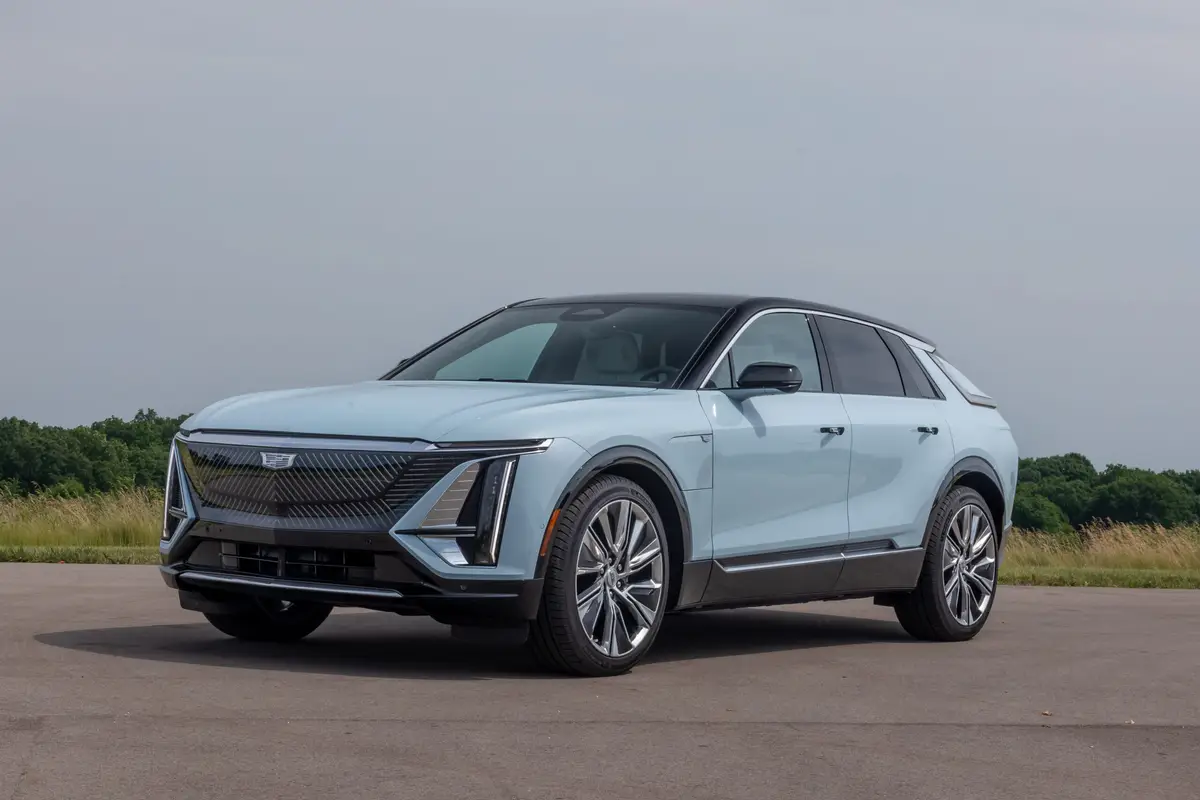
If you’ve been researching the Cadillac LYRIQ or already own one, I’m sure you’ve wondered about this at some point. I know I did. One of the most common questions I hear from fellow LYRIQ owners is: do the driving modes in Cadillac LYRIQ offer different ranges or battery usages? The big question on every owner’s mind is whether switching between these modes actually changes how far you can drive on a single charge.
The short answer is yes — but not in the way most people expect. The driving modes don’t alter the physical battery pack or increase its capacity. What they do is change how the vehicle’s software manages power delivery, throttle response, regenerative braking, and traction control. And those changes, in turn, directly impact your real-world range and overall battery efficiency.
In this article, I’m going to walk you through everything you need to know — from what each driving mode does, to how each one affects your battery usage, to practical tips on getting the most miles out of every charge. Let’s get into it.
Understanding the Cadillac LYRIQ: The Foundation First
Before diving into the driving modes themselves, I think it’s important to understand what we’re working with under the hood — or more accurately, under the floor.
The Cadillac LYRIQ is built on General Motors’ Ultium EV platform. Every single model — whether you pick rear-wheel drive or all-wheel drive — is powered by the same 102 kWh battery pack. That number doesn’t change based on which trim or mode you’re in.
Key LYRIQ Battery Specs at a Glance
Specification
Single Motor RWD
Dual Motor AWD
Battery Capacity
102 kWh (Ultium)
102 kWh (Ultium)
Horsepower
340–365 hp
500–515 hp
EPA Range (2024)
314 miles
307 miles
EPA Range (2025)
326 miles
319 miles
Towing Capacity
N/A
Up to 3,500 lbs
Weight Distribution
Near 50/50
Near 50/50
What’s interesting to me here is that both configurations use the same 102 kWh battery. The difference in range between RWD and AWD comes down to drivetrain efficiency — two motors simply consume more energy than one. This same principle applies to how driving modes work: the battery stays the same size, but how quickly and efficiently you use its stored energy is what changes.
Does the LYRIQ have a different battery for different driving modes?
No. All Cadillac LYRIQ models use the same 102 kWh Ultium battery regardless of which driving mode you select. The mode changes how the vehicle uses that energy, not how much energy is stored.
What Are the Driving Modes in the Cadillac LYRIQ?
The Cadillac LYRIQ comes with a Drive Mode Control system that you access through the 33-inch curved LED infotainment screen. According to Cadillac’s own documentation, this system automatically adjusts various vehicle systems based on your driving preferences, weather, and road conditions.
Here are the driving modes available on the LYRIQ:
Tour Mode — The default everyday driving mode
Sport Mode — A performance-focused mode with sharpened responses
Snow/Ice Mode — A traction-optimized mode for slippery conditions
My Mode — A fully customizable mode you configure yourself
Some versions of the LYRIQ may also offer a Velocity Max mode for short performance bursts, depending on the trim level and model year. But for the purposes of this article, I’ll focus on the four core modes that every LYRIQ driver has access to.
Each mode adjusts a combination of the following vehicle parameters:
Throttle sensitivity curves (how aggressively the motor responds to pedal input)
Steering effort calibration
Regenerative braking mapping
Traction control thresholds
Suspension damper tuning (on equipped trims)
Motor sound settings
Now let’s look at each mode in detail and exactly how it affects your battery consumption and real-world driving range. To properly answer whether do the driving modes in Cadillac LYRIQ offer different ranges or battery usages, we need to go through each one individually.
Tour Mode: The Efficiency King
Tour Mode is where I spend most of my time in the LYRIQ, and for good reason. It’s the default setting when you start the car, and it’s designed specifically to balance comfort and energy efficiency for everyday driving.
How Tour Mode Works
In Tour Mode, the throttle mapping is linear and progressive. When you press the accelerator, the relationship between your pedal position and the motor’s output is smooth and controlled — not sudden or aggressive. The system ramps up power gradually rather than delivering it all at once.
This controlled power delivery is key to efficiency. Instead of demanding peak kilowatts from the battery in short bursts, Tour Mode keeps energy consumption steady and predictable. The regenerative braking system operates at a moderate intensity, gently slowing the car when you lift your foot and feeding energy back into the battery.
Range Impact of Tour Mode
Tour Mode gives you the best shot at hitting (or getting close to) the EPA-rated range figures. For the 2025 LYRIQ RWD, that’s up to 326 miles, and for the AWD model, up to 319 miles. In real-world conditions, Car and Driver testing found the RWD model achieving around 270 miles on the highway — which, while below the EPA estimate, is still very respectable.
Owner reports consistently show that Tour Mode can deliver 16–19% more range compared to Sport Mode. That’s a meaningful difference, especially on longer trips.
Is Tour Mode the most efficient driving mode in the LYRIQ?
Yes. Tour Mode is designed to maximize everyday efficiency. It uses smooth, progressive throttle mapping and balanced regenerative braking, which translates to the best real-world range of all the available driving modes.
Sport Mode: Performance at a Cost
I’ll be honest — Sport Mode is a lot of fun in the LYRIQ. When you switch to it, the car’s personality changes immediately. The throttle response sharpens, the steering feels tighter, and the SUV feels lighter and more athletic. But all of that comes at a cost to your battery.
How Sport Mode Works
In Sport Mode, the throttle mapping is front-loaded. A smaller pedal input commands a larger torque response from the motor. This doesn’t increase the motor’s maximum capability — the hardware is the same — but it changes how quickly that capability becomes accessible.
From an energy standpoint, this is significant. When torque delivery is front-loaded and aggressive, the battery experiences more frequent high-current draw events. Every spirited launch from a stoplight, every quick highway merge, every aggressive overtake — all of these pull more kilowatts from the battery in a shorter amount of time.
Range Impact of Sport Mode
Sport Mode will reduce your range compared to Tour Mode. The exact reduction varies based on how aggressively you drive, but owner data consistently shows a noticeable drop. If Tour Mode gets you close to the rated 314–326 miles, Sport Mode on an enthusiastic drive could drop that by 16–19%.
That said, Sport Mode is perfectly fine for short drives, commutes, or anytime you want the LYRIQ to feel more responsive. Just don’t rely on it if you’re trying to make it to the next charging station on a long road trip.
Does Sport Mode damage the LYRIQ battery?
No. Cadillac’s battery management system is designed to handle all driving modes safely without harming battery health. Sport Mode simply causes the battery to discharge more quickly per mile — it won’t cause any long-term damage to the battery cells or reduce their lifespan.
Feature
Tour Mode
Sport Mode
Throttle Response
Smooth & Progressive
Sharp & Immediate
Steering Feel
Relaxed
Tightened
Regenerative Braking
Moderate
Standard/Higher
Battery Drain Rate
Lower
Higher
Estimated Range Impact
Best (Baseline)
16–19% Lower
Best Use Case
Daily commuting, long trips
Short spirited drives
Snow/Ice Mode: Safety Over Efficiency
Living somewhere that sees harsh winters, Snow/Ice Mode can feel like a lifesaver. And in the Cadillac LYRIQ, this mode is genuinely well-designed for low-traction situations. But it does have a specific effect on your battery usage and range that’s worth understanding.
How Snow/Ice Mode Works
Snow/Ice Mode softens the throttle response significantly. Instead of delivering full torque aggressively, it feeds power to the wheels gradually and carefully. This prevents the tires from spinning out on icy or snowy surfaces.
For AWD models, the system also adjusts how torque is distributed between the front and rear motors to maximize traction. The traction control algorithms become more conservative, intervening earlier to prevent wheel slip.
Range Impact of Snow/Ice Mode
Snow/Ice Mode uses slightly more energy than Tour Mode when driving on clear, dry roads because the system prioritizes traction management over raw efficiency. However, the bigger range killer in winter isn’t actually the driving mode — it’s the temperature itself.
According to U.S. Department of Energy data, EV range can drop 20–40% in freezing temperatures. Cold weather reduces the battery’s chemical efficiency and forces the thermal management system to work harder to keep the pack at its optimal operating temperature. So if you notice a significant range drop in winter, Snow/Ice Mode is likely a smaller factor than the cold itself.
Should I always use Snow/Ice Mode in winter weather?
Yes, absolutely. Snow/Ice Mode is designed for slippery conditions and makes the LYRIQ significantly safer on icy or snowy roads. While it may use slightly more energy on dry roads, the safety benefit on slippery surfaces far outweighs the minor efficiency tradeoff. Use it whenever road conditions call for it.
Snow/Ice Mode softens throttle to prevent wheel spin
Adjusts AWD torque split for better traction on slippery roads
Introduces moderate additional battery usage compared to Tour Mode
Cold temperature itself reduces range more than the mode does
Best used exclusively in actual winter conditions, not on dry roads
My Mode: The Custom Configuration
My Mode is where the Cadillac LYRIQ gets interesting for those of us who like to fine-tune the driving experience. Rather than choosing a preset profile, My Mode lets you build your own.
What You Can Customize in My Mode
Through the LYRIQ’s infotainment screen, My Mode allows you to independently adjust several parameters:
Acceleration feel — From gentle and smooth to sharp and sporty
Brake feel — How aggressively the regenerative braking kicks in
Steering effort — Light and effortless to firm and connected
Suspension tuning — Comfort-focused or performance-oriented (on equipped trims)
Drive motor sound — Adjust the artificial motor sound that plays in the cabin
Range Impact of My Mode
The range impact of My Mode is entirely dependent on how you configure it. If you set acceleration to its gentlest setting and maximize regenerative braking intensity, you can actually improve efficiency compared to Tour Mode — especially in stop-and-go city driving where you’re constantly decelerating and recovering energy.
On the other hand, if you dial everything up for maximum performance — sharp acceleration, minimal regenerative braking — you’ll see range consumption closer to (or even exceeding) Sport Mode levels.
My Mode is the only driving mode that gives you this kind of direct, personalized control over your efficiency. I’d recommend experimenting with it if you want to optimize the LYRIQ for your specific daily commute.
Can My Mode actually improve range beyond Tour Mode?
Yes, it’s possible. If you configure My Mode with the softest acceleration settings and the strongest regenerative braking, the LYRIQ can recover more energy in city driving — particularly in heavy traffic with frequent stops. The key is maximizing regen intensity and keeping acceleration gentle.
Comparing All Driving Modes: Range and Battery Usage Summary
Let me put all of this together in a clear comparison. Keep in mind these are relative comparisons — Cadillac does not publish official mode-specific range ratings, so the figures below reflect owner reports and independent automotive journalist testing.
Driving Mode
Battery Efficiency
Typical Range Impact
Regen Intensity
Best For
Tour Mode
Highest
Closest to EPA rating
Moderate
Daily commuting, long trips
Sport Mode
Lower
~16–19% below Tour
Standard
Short spirited drives
Snow/Ice Mode
Moderate
Slight reduction on dry roads
Moderate
Winter weather, low traction
My Mode (Efficient)
Potentially Highest
Can exceed Tour Mode
High (configurable)
City driving, personalized use
My Mode (Performance)
Lower
Similar to Sport Mode
Low (configurable)
Enthusiast driving
The key insight here is that Tour Mode is your baseline for best range in typical conditions, but a well-configured My Mode setup can beat it in urban environments with lots of stop-and-go traffic.
The Role of Regenerative Braking in Battery Efficiency
One of the most powerful tools the LYRIQ gives you to manage battery usage isn’t actually a driving mode — it’s the regenerative braking system. But since the driving modes influence how regen works, I think it deserves its own section.
How Regenerative Braking Works
When you lift your foot off the accelerator in an EV, the electric motors can act as generators, converting the car’s kinetic energy (forward motion) back into electrical energy and storing it in the battery. This is regenerative braking, and it’s one of the key reasons EVs are so efficient in city driving.
In the Cadillac LYRIQ, you have two specific tools to control regenerative braking:
Regen on Demand — A steering wheel-mounted paddle that you can pull to activate regenerative braking on demand. It’s like engine braking in a manual car, but recovers energy at the same time.
One-Pedal Driving — A feature that lets you accelerate and decelerate using only the accelerator pedal. When you lift off the gas, the car slows itself down aggressively through regenerative braking. You can toggle this on and off and adjust its sensitivity.
Which Mode Uses Regen Most Effectively?
My Mode with high regen settings, combined with One-Pedal Driving, gives you the most energy recovery per mile in city conditions. Tour Mode uses a moderate level of regen that works well for most drivers without feeling intrusive.
Sport Mode, while it still uses regen, is optimized for performance rather than maximum energy recovery. Snow/Ice Mode moderates regen to avoid sudden deceleration that could cause skidding on slippery roads.
Does using Regen on Demand significantly increase my LYRIQ’s range?
It helps, but it won’t replace a full charge. Regenerative braking captures energy that would otherwise be lost as heat during conventional braking. In heavy city traffic with frequent stops, it can meaningfully extend your range. On the highway at steady speeds, there are fewer opportunities to use it, so the benefit is smaller.
What Actually Affects LYRIQ Range More Than Driving Modes?
I think it’s important to be honest here: while driving modes do affect battery usage, there are several other factors that have an even bigger impact on your real-world LYRIQ range.
1. Driving Speed
This is the single biggest range killer in any EV. Air resistance (aerodynamic drag) increases exponentially with speed. Car and Driver found in highway testing that the rear-drive LYRIQ achieved around 270 miles at highway speeds, well below its EPA-rated 314 miles. Keeping speeds reasonable — ideally under 70 mph — has a far greater impact on range than switching driving modes.
2. Temperature
Cold weather reduces battery chemical efficiency and forces the thermal management system to work overtime. The U.S. Department of Energy reports that EV range can drop 20–40% in freezing temperatures. This dwarfs any mode-related efficiency gains or losses.
3. Wheel Size
This one surprises a lot of people. Owner surveys found that wheel size was actually the number one cause of range complaints, accounting for 15.9% of reported range issues. LYRIQ owners running 22-inch wheels saw 3–5% lower efficiency compared to those with 19- or 20-inch wheels, due to the added rolling resistance and weight of larger rims and tires.
4. Driving Style
Beyond any mode, your right foot makes the biggest difference. Smooth acceleration, anticipating stops, and maintaining a steady speed consistently improve range by up to 20% compared to aggressive driving, according to owner data. Driving smoothly in Sport Mode will often outperform reckless driving in Tour Mode.
Factor
Range Impact
Controllable?
Driving Speed (highway)
Up to 15% below EPA rating
Yes
Cold Weather / Temperature
20–40% range reduction
Partially (pre-conditioning)
Wheel Size (22″ vs 19″)
3–5% reduction with larger wheels
Yes (at purchase)
Driving Style (aggressive vs. smooth)
Up to 20% difference
Yes
Driving Mode (Tour vs Sport)
16–19% difference
Yes
HVAC Usage (heat/AC)
5–15% reduction
Partially
How to Get the Maximum Range from Your Cadillac LYRIQ
Now that we understand how all of these factors interact, let me give you the practical playbook I’d recommend for squeezing every mile out of your LYRIQ.
For Daily Commuting
Use Tour Mode as your default — it’s designed for exactly this use case
Enable One-Pedal Driving in city traffic to maximize regenerative braking
Charge to 80% for daily use — Cadillac recommends this to preserve battery health and leave room for regen recovery
Pre-condition the battery while still plugged in during cold weather, so the car uses grid power instead of battery power to warm up
For Long Road Trips
Stick with Tour Mode for the entire journey
Keep highway speeds at 65–70 mph instead of 80+ — the range difference is significant
Use cruise control to maintain a steady, efficient pace
Plan charging stops using the LYRIQ’s Energy Assist feature on the 33-inch display
Charge to 100% only when you need the full range for the next leg of the trip
For Winter Driving
Use Snow/Ice Mode on slippery roads — safety first, always
Pre-condition the cabin while the car is plugged in — don’t drain the battery warming up the interior
Expect 20–40% range reduction in freezing temperatures — plan your charging stops accordingly
Consider switching back to Tour Mode once roads clear up during a winter drive
For City Performance Days
Enjoy Sport Mode for its intended purpose — short, responsive drives
Keep Sport Mode for when you want the experience, not when range is a priority
Use My Mode to find a middle ground between Tour and Sport that suits your personal preference
What is the single best way to maximize LYRIQ range?
Drive smoothly. Regardless of which mode you select, smooth acceleration, anticipating stops, and maintaining moderate highway speeds have a bigger cumulative impact on range than any driving mode setting. Pair smooth driving habits with Tour Mode and One-Pedal Driving for the best results.
The Technical Science Behind Mode-Based Battery Management
For those of us who like to understand what’s happening at a deeper level, here’s a look at the engineering behind how the LYRIQ’s driving modes interact with its battery management system.
Software-Driven Torque Mapping
The Ultium platform’s electric motors are capable of delivering high torque almost instantly — that’s a fundamental property of electric motors. The driving mode’s job is to determine how readily that torque becomes accessible through pedal input.
In Tour Mode, the vehicle control unit uses a linear, progressive torque map. The software intentionally smooths out the relationship between pedal angle and motor current to encourage consistent, predictable energy consumption.
In Sport Mode, the torque map is remapped to be more aggressive. A 10% pedal input in Sport Mode might command the equivalent of 20–25% in Tour Mode. This isn’t more power — it’s faster access to the same power.
Instantaneous Kilowatt Draw
The key metric that modes influence is instantaneous kilowatt draw — how many kilowatts per hour the battery is delivering at any given moment. Under aggressive acceleration in Sport Mode, the motor can pull significantly more current from the battery pack in a short burst.
Over the course of a full driving cycle — say, 300 miles — these repeated high-current events add up and result in a higher cumulative energy consumption per mile. The result is reduced range.
Thermal Management
The LYRIQ’s battery thermal management system operates independently of the driving modes but is aware of how hard the system is working. Under sustained high-load driving in Sport Mode, the thermal management system may work harder to keep the battery pack within its optimal temperature range, which itself consumes some energy.
Does Sport Mode put extra stress on the LYRIQ’s battery cells?
The battery management system is designed to protect the cells regardless of the driving mode. While Sport Mode does result in higher current draw events, Cadillac’s engineers have built appropriate safeguards into the system. Occasional use of Sport Mode won’t damage the battery, but consistently driving in this mode will simply mean you’re depleting the battery faster per mile and charging more frequently.
Owner Experiences and Real-World Data
Beyond the technical specifications, it’s always valuable to look at what actual LYRIQ owners are reporting. The real-world data paints a useful picture of what you can realistically expect.
Tour Mode Real-World Range
The majority of LYRIQ owners in moderate climates using Tour Mode for mixed city and highway driving report real-world efficiency of around 2.5 miles per kilowatt-hour, which projects to approximately 255 miles of practical range. This aligns with Slashgear’s reviewer who averaged 2.5 mi/kWh in mixed conditions.
On the highway specifically, Car and Driver’s instrumented test found the RWD LYRIQ achieving 270 miles at highway speeds. The AWD version, with its additional motor and heavier weight, achieved 220 miles in the same test.
Sport Mode Observations
Owners consistently report a 16–19% drop in projected range when using Sport Mode compared to Tour Mode. This is purely an efficiency effect — the battery has the same capacity, but the car uses it more aggressively.
Wheel Size vs Mode Impact
One of the more surprising findings from owner surveys is that wheel size had a bigger practical impact on range complaints than driving mode selection. Owners running 22-inch wheels were more likely to report range anxiety than those with 19- or 20-inch wheels — more so than even consistent Sport Mode usage.
Frequently Asked Questions About LYRIQ Driving Modes and Range
Do the driving modes in Cadillac LYRIQ offer different ranges or battery usages?
Yes — but not because the battery changes. Each mode modifies how the vehicle’s software delivers torque, manages regenerative braking, and handles traction control. Tour Mode is the most efficient and gives you the best real-world range. Sport Mode is the most energy-intensive. My Mode varies entirely based on how you configure it. The battery capacity stays fixed at 102 kWh across all modes.
Do the driving modes change the EPA-rated range of the LYRIQ?
No. The EPA-rated range is a standardized test figure that doesn’t change based on mode selection. What changes is how close you get to that figure in real-world driving. Tour Mode gives you the best chance of approaching the rated range, while Sport Mode will typically put you further below it.
Is there a way to see real-time energy consumption by driving mode in the LYRIQ?
Yes. The LYRIQ’s 33-inch curved LED display includes an Energy Assist feature that shows real-time energy consumption, projected range, and charging station locations. You can monitor your efficiency in any driving mode and see directly how your driving behavior is affecting your remaining range.
Does the LYRIQ automatically switch to the most efficient mode on long trips?
No. The LYRIQ retains whatever mode you’ve selected. It doesn’t automatically switch to Tour Mode for efficiency during long trips. However, the Energy Assist system on the display will show you charging station information and range projections, helping you make informed decisions about when to charge.
How much does charging to 100% vs 80% affect range and battery health?
Cadillac recommends charging to 80% for daily use. Consistently charging to 100% can accelerate battery degradation over time. For daily driving, 80% provides ample range in most cases, and it also leaves headroom for regenerative braking to send recovered energy back into the battery.
Can I switch driving modes while driving, or do I have to stop?
You can switch driving modes while the LYRIQ is in motion. There’s no need to pull over or put the car in park. The transition is seamless, and the vehicle adjusts its behavior immediately when you select a new mode through the touchscreen.
The 2025 and 2026 LYRIQ: Range Improvements Worth Knowing
It’s worth noting that the LYRIQ has continued to improve with each model year, and the range figures have gotten better over time. The 2025 LYRIQ received meaningful EPA range improvements.
Model Year
RWD Range (EPA)
AWD Range (EPA)
Notable Changes
2023 LYRIQ
312 miles
N/A (RWD only initially)
First model year
2024 LYRIQ
314 miles
307 miles
AWD added
2025 LYRIQ
326 miles
319 miles
Best-in-segment RWD range
2026 LYRIQ
326 miles
319 miles
V-Series variant added (615 hp)
The mode dynamics remain consistent across model years — Tour Mode is always the most efficient, Sport Mode is the most performance-oriented, and My Mode is your personalized option. But the absolute range numbers you’re working with have improved, giving every mode a better baseline to work from.
Final Thoughts: Should You Think About Driving Modes When Choosing the LYRIQ?
Here’s the bottom line from everything I’ve covered in this article. If you came here asking do the driving modes in Cadillac LYRIQ offer different ranges or battery usages — the answer is yes, but the modes change how the vehicle’s software manages power delivery, not the battery itself.
Tour Mode is your best friend for efficiency. If maximizing range on every charge is your goal, make Tour Mode your daily default. The smooth, progressive throttle mapping and balanced regenerative braking keep energy consumption low and predictable.
Sport Mode is a treat, not a daily driver (for the battery, at least). It’s genuinely fun and makes the LYRIQ feel like a proper performance vehicle. But the 16–19% range reduction is real, so save it for short drives when you want the experience.
My Mode is underrated. If you take the time to configure it with efficiency in mind — soft acceleration, strong regen — it can actually outperform Tour Mode in city driving. Don’t overlook it.
And perhaps most importantly: your driving habits matter more than your driving mode. Smooth acceleration, moderate highway speeds, and anticipating stops will do more for your LYRIQ’s range than any mode selection. The technology is there to support you, but the driver is always the biggest variable.
Whether you’re a prospective buyer weighing the LYRIQ against other luxury EVs, or an existing owner trying to get the most out of every charge, I hope this breakdown gives you the clarity you were looking for. The Cadillac LYRIQ is a genuinely impressive machine — and understanding how to drive it efficiently makes it even better.