

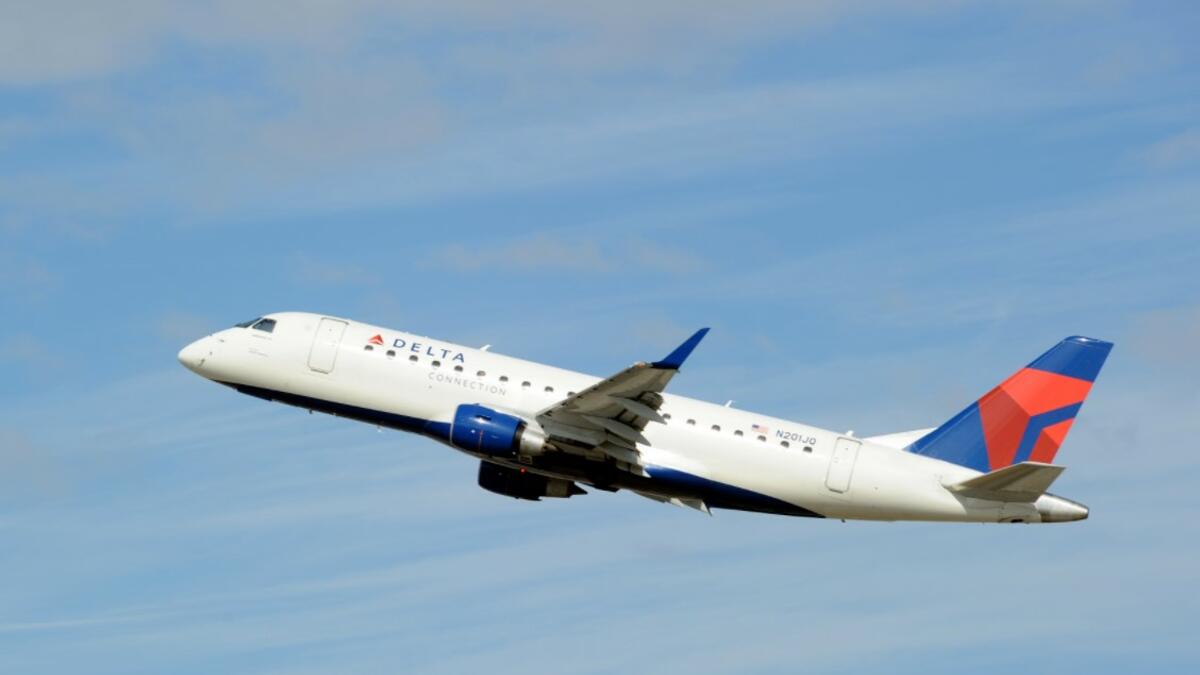
It started as the most ordinary kind of Monday afternoon flight. Passengers boarded a regional jet at Minneapolis–Saint Paul International Airport, settled into their seats, and expected nothing more eventful than a cup of coffee and a smooth touchdown at Chicago Midway. Then, barely ten minutes into the climb, everything changed.
The Delta Connection DL3543 emergency landing on July 7, 2025 became one of the most talked-about aviation incidents of the year — not because it ended in disaster, but precisely because it didn’t. In just 37 minutes from wheels up to wheels down, a trained crew turned a potentially dangerous situation into a textbook example of how modern aviation safety is supposed to work.
In this article, I’m going to walk you through everything that happened on that flight — the timeline, the technical details, the crew response, what passengers experienced, and what the Delta Connection DL3543 emergency landing tells us about the state of aviation safety today. Whether you’re a nervous flyer, an aviation enthusiast, or simply someone who wants the full story, you’ll find it here.
Flight DL3543: The Route and the Aircraft
Before we get into what went wrong, it helps to understand exactly what flight DL3543 was and who was operating it.
Delta Connection is not a standalone airline — it’s a regional service brand operated under the Delta Air Lines umbrella. Flights operating under the Delta Connection brand are run by regional partner carriers that use Delta flight numbers and branding but are separate operating entities. In the case of DL3543, the operator was Endeavor Air — a wholly owned subsidiary of Delta Air Lines that handles regional routes across the United States.
Key Flight Details
| Detail | Information |
|---|---|
| Flight Number | Delta Connection DL3543 |
| Date | July 7, 2025 (Monday) |
| Operator | Endeavor Air (for Delta Connection) |
| Aircraft Type | Embraer 170-200LR (E175) |
| Tail Number | N259SY |
| Departure Airport | Minneapolis–Saint Paul International Airport (MSP) |
| Destination Airport | Chicago Midway International Airport (MDW) |
| Departure Time | 13:09 UTC |
| Return Landing Time | ~37 minutes after departure |
| Injuries | None reported |
The Embraer 170-200LR is a widely used regional jet with a strong safety track record across North American short-haul routes. It’s a fuel-efficient, reliable aircraft that Endeavor Air and other regional operators deploy daily across hundreds of city-pair routes. There was nothing unusual about the aircraft or the route going into that Monday afternoon.
It’s also worth noting that Endeavor Air, despite being a regional partner, is held to the same federal safety regulations, maintenance standards, and pilot training requirements as Delta mainline operations. The smaller size of the aircraft and the shorter route do not lower the safety threshold one bit.
What Happened: The DL3543 Emergency Landing Timeline
The Delta Connection DL3543 emergency landing unfolded quickly and efficiently. Here is the timeline of events as reported by aviation tracking sources and industry outlets.
13:09 UTC — Takeoff from Minneapolis
Flight DL3543 lifted off from Minneapolis–Saint Paul International Airport on schedule. The Embraer 170-200LR climbed normally into clear skies, and passengers settled in for what should have been a routine 90-minute hop to Chicago.
Approximately 10 Minutes After Departure — Anomaly Detected
At approximately 21,000 feet during the initial climb, the flight crew detected an abnormal condition in the aircraft’s systems. The aircraft leveled off unexpectedly, halting its ascent. Reports from aviation sources indicate the alert was linked to the aircraft’s pressurization system — one of the most monitored and safety-critical systems on any commercial jet.
The exact nature of the technical anomaly was not officially confirmed by Delta or the National Transportation Safety Board (NTSB) at the time of writing. However, multiple industry reports consistently point to a pressurization indication as the likely trigger — a sensor or system reading that fell outside normal acceptable ranges and demanded immediate attention from the crew.
Emergency Declaration — Squawk 7700
Rather than continue toward Chicago and hope the issue resolved itself, the crew made the call every pilot is trained to make: declare an emergency and return. They activated Squawk 7700 — the universal transponder code for in-flight distress — which immediately notified air traffic control that the flight required priority handling.
This is not a dramatic last resort. In aviation, declaring an emergency is often a first tool, not a final one. It is a standard safety procedure designed to give the crew every possible resource and option. The moment that code is squawked, ATC clears the airspace ahead, emergency services are placed on standby at the destination runway, and all surrounding air traffic is coordinated to give the returning aircraft full priority.
Return to Minneapolis and Safe Landing on Runway 12R
The crew turned the aircraft around and requested priority landing clearance back at MSP. Emergency vehicles — fire trucks, medical units, and rescue teams — were positioned along runway 12R as a standard precautionary measure. This is normal procedure whenever an emergency is declared, and does not mean a crash landing was expected.
Flight DL3543 touched down safely on runway 12R approximately 37 minutes after it had originally departed. No injuries were reported. The aircraft was then taxied to stand C12, where maintenance teams began a thorough inspection of the pressurization system and related components.
From the passenger perspective, the entire episode was controlled, professional, and — while undeniably stressful — free from the chaos that headlines might suggest. The captain communicated clearly throughout, flight attendants remained composed, and the aircraft landed smoothly.
What Likely Caused the DL3543 Emergency
The official cause of the Delta Connection DL3543 emergency landing has not been publicly confirmed by Delta Air Lines or the NTSB as of the time of writing. However, multiple credible aviation industry sources consistently point to a pressurization system indication as the most likely trigger. Here’s what that actually means.
Understanding Cabin Pressurization
Commercial aircraft fly at altitudes where the outside air is too thin for passengers to breathe safely. The cabin pressurization system artificially maintains air pressure inside the aircraft at a level equivalent to roughly 6,000–8,000 feet of altitude, even when the plane is cruising at 35,000 feet.
This system is continuously monitored by sensors throughout the aircraft. If any sensor detects a pressure reading outside the normal acceptable range — whether that’s an actual leak, a faulty sensor, or an abnormal indication — it triggers alerts in the cockpit. At that point, pilots are required to act immediately, regardless of whether the aircraft appears to be flying normally.
Why Pilots Take Pressurization Alerts So Seriously
An unaddressed pressurization failure at high altitude can lead to hypoxia — oxygen deprivation — which can incapacitate passengers and crew within minutes. Historical aviation accidents have been directly linked to pressurization failures that were not addressed quickly enough. That history is exactly why modern aviation protocols treat any pressurization alert as a high-priority event that demands an immediate response.
The fact that the DL3543 crew halted their climb at 21,000 feet rather than continuing to a higher cruising altitude also suggests a pressurization concern — at lower altitudes, the consequences of any system irregularity are less severe, and the aircraft can descend quickly to safe breathable altitudes if needed.
Other Possible Technical Factors
While pressurization is the leading reported cause, some aviation observers have noted additional possibilities that could have contributed to or accompanied the alert:
- Electrical system anomaly — A power interruption or voltage irregularity can trigger multiple system alerts simultaneously
- Avionics warning — Navigation or flight management system alerts during critical phases of flight
- Environmental control system issue — The ECS manages both pressurization and temperature; an anomaly in one can affect the other
- Sensor malfunction — A faulty sensor can trigger a legitimate emergency response even if the underlying system is functioning normally
Regardless of the specific root cause, the crew’s response — halt climb, assess, declare emergency, return — was exactly correct. In aviation, the protocol is simple: when in doubt, land. That decision saved everyone on board from any potential escalation.
How the Crew Responded: A Masterclass in Aviation Protocol
One of the most important parts of the Delta Connection DL3543 emergency landing story is not what went wrong, but how the crew responded to it. Their actions demonstrate the full depth of training and preparation that goes into every commercial flight.
Pilot Training for Emergency Scenarios
Endeavor Air pilots undergo extensive recurrent simulator training multiple times per year. These training sessions specifically replicate abnormal and emergency scenarios — pressurization events, engine alerts, power interruptions, rapid returns — so that real-world responses are practiced and automatic rather than reactive.
When the alert appeared on DL3543, the pilots didn’t need to think through their options from scratch. They followed an established checklist — a structured, ordered sequence of actions specific to the type of alert they were seeing. Aviation checklists exist precisely to remove hesitation and ensure that no step is missed under pressure.
The Decision to Return: Why Minneapolis Was the Right Call
The crew’s decision to return to Minneapolis rather than divert to another airport or attempt to continue to Chicago reflects sound operational judgment. Returning to the departure airport offers several specific advantages:
- Familiar runway layout and approach procedures for the crew
- On-site maintenance teams already familiar with the aircraft and its systems
- Full emergency services immediately available at MSP
- Shorter time in the air with an unresolved system alert
- No additional airspace or routing complexity compared to diverting to a new airport
Ten minutes into the flight at 21,000 feet, Minneapolis was the clear and correct choice. The crew wasted no time making it.
Air Traffic Control Coordination
The moment Squawk 7700 was activated, Minneapolis Approach Control and MSP Tower were immediately aware of the situation. ATC is trained to respond to emergency squawks by:
- Clearing priority airspace for the returning aircraft
- Issuing direct routing back to the airport, cutting through normal traffic sequencing
- Alerting airport fire, rescue, and emergency medical services to position on the runway
- Coordinating with other flights in the area to avoid conflicts
The coordination between the DL3543 crew and ATC is a significant reason why the aircraft was back on the ground in under 40 minutes from departure. Every second of delay between the alert and the landing was compressed by the priority system working exactly as designed.
Cabin Crew Role During the Emergency
While the pilots managed the technical situation from the flight deck, the cabin crew played an equally important role in the passenger experience. Flight attendants are not just service professionals — they are safety-trained first responders who are specifically prepared for situations like the DL3543 emergency.
During the DL3543 return, the cabin crew would have received a crew notification from the flight deck, secured the cabin (ensuring tray tables were stowed, seatbelts fastened, carry-on items secured), communicated calmly with passengers about the situation, and monitored the cabin for any passenger distress or medical issues. Their composure in those minutes has a direct effect on passenger anxiety. A calm cabin crew produces a calmer cabin.
What Passengers Experienced Aboard DL3543
For those sitting in the cabin of flight DL3543, the sequence of events would have been disorienting, even if ultimately safe. Understanding the passenger experience helps put the incident in perspective.
The Moment the Climb Stopped
Ten minutes into any flight, passengers are typically beginning to relax — the initial climb is behind them, the seatbelt sign is about to go off, and the routine of cruising altitude is setting in. On DL3543, that normality was interrupted when the aircraft leveled off unexpectedly at 21,000 feet and then began banking back toward Minneapolis.
For passengers without aviation knowledge, an unexpected turn in a regional jet can be alarming. Most people seated in the cabin had no immediate visibility into what was happening on the flight deck. The captain’s announcement — calm, measured, clear — would have been the first explanation most passengers received.
The Announcement and the Wait
Accounts from similar incidents on regional jets describe a captain’s announcement that typically covers three things: an acknowledgment that the crew is addressing a technical matter, a reassurance that the aircraft is safe and the decision is precautionary, and a brief description of what will happen next — in this case, a return to Minneapolis.
The word “emergency” is rarely used in a passenger announcement even when an emergency has technically been declared with ATC. Pilots are trained to use calm, measured language specifically to avoid triggering panic in the cabin while still being truthful about the situation.
The Approach and Landing
As DL3543 approached runway 12R, passengers seated on the right side of the aircraft would have been able to see the emergency vehicles staged along the runway — fire trucks, medical units, foam equipment. For passengers who had never experienced a declared emergency before, this sight can be particularly alarming, even though it is entirely standard procedure.
The landing itself was reported as controlled and smooth. No dramatic events occurred on the runway. The aircraft taxied normally to its gate, and passengers were able to deplane without incident. Delta customer service representatives then assisted with rebooking onto later flights to Chicago.
What did passengers say after the DL3543 emergency landing?
Passenger accounts reported in the days following the incident consistently described the crew as professional, calm, and communicative. While the experience was stressful, many passengers noted that the crew’s composure made a significant difference in keeping the cabin calm during the return. No serious injuries or medical emergencies were reported on board during the incident.
Squawk 7700: What It Means and Why It Matters
The Squawk 7700 code is one of the most important tools in the aviation safety system, and it played a central role in the Delta Connection DL3543 emergency landing. Understanding what it is helps demystify what happened.
Aircraft transponders continuously broadcast identification and altitude data to air traffic control radar. The transponder is set to a specific four-digit code — a “squawk” — that identifies the flight to ATC. There are three special universal emergency codes:
- 7700 — General emergency (any in-flight emergency requiring immediate assistance)
- 7600 — Radio communication failure
- 7500 — Hijacking in progress
When a pilot squawks 7700, every ATC radar screen in the area immediately flags the flight as an emergency. The response is automatic and immediate. The crew of DL3543 activated this code as soon as they made the decision to return — giving them maximum priority in the airspace and ensuring that MSP was fully prepared for their arrival.
Does squawking 7700 mean the plane is about to crash?
No. This is one of the most common misconceptions about aviation emergencies. Squawk 7700 is a priority request for assistance and airspace clearance. The FAA processes thousands of declared in-flight emergencies across U.S. commercial aviation every year, and the overwhelming majority end without injury or significant damage. It is a tool designed to keep a manageable situation from becoming an unmanageable one — and it worked exactly that way on July 7, 2025.
The Embraer 170-200LR: The Aircraft Behind the Flight
The aircraft at the center of the Delta Connection DL3543 emergency landing was an Embraer 170-200LR, registered as N259SY. Understanding this aircraft helps put the incident in broader context.
Embraer E175: A Reliable Regional Workhorse
The Embraer E175 family is one of the most widely deployed regional jets in North America. Airlines like Endeavor Air, SkyWest, and Republic Airways operate hundreds of these aircraft daily across thousands of short-haul routes. The aircraft is known for its fuel efficiency, passenger comfort relative to its size, and consistent operational reliability.
The E175 is equipped with sophisticated avionics and monitoring systems that track hundreds of parameters in real time — engine performance, pressurization levels, hydraulic pressure, electrical systems, fuel balance, and more. These monitoring systems are designed to flag anomalies early, before they develop into serious problems. In that sense, the alert that triggered the DL3543 emergency landing is exactly what those systems are built to do.
Redundancy: The Core of Aircraft Safety Design
Modern commercial aircraft are built around the principle of redundancy. Critical systems — including pressurization, hydraulics, electrical power, and flight controls — have multiple independent backup systems. If one system fails, another takes over. If a sensor produces an anomalous reading, the crew can cross-reference it against backup readings to determine whether the issue is real or instrumentation-related.
This redundancy is why an alert in one system does not automatically mean the aircraft is in catastrophic danger. But it also explains why pilots respond to alerts with immediate action — the system flags potential issues early precisely so that crews have time to evaluate and act before the situation escalates.
| Aircraft System | Primary Function | Backup System |
|---|---|---|
| Pressurization | Maintains safe cabin air pressure | Secondary pack and outflow valve controls |
| Electrical | Powers all avionics and systems | APU, RAM air turbine (RAT) |
| Hydraulics | Operates flight controls and landing gear | Multiple independent hydraulic circuits |
| Flight Controls | Controls aircraft attitude and direction | Mechanical backup systems |
| Engine | Provides thrust | Aircraft certified for single-engine operations |
Delta Connection and Endeavor Air: Understanding the Regional Model
The Delta Connection DL3543 emergency landing also brought attention to how regional aviation operates in the United States — a model that many passengers don’t fully understand.
What Is Delta Connection?
Delta Connection is the regional feeder network for Delta Air Lines. When you book a short domestic flight on Delta and find yourself boarding a smaller regional jet, there’s a good chance it’s operated under the Delta Connection brand by one of Delta’s regional partners. The flight number starts with DL, the livery looks like Delta, but the airline operating the aircraft may be Endeavor Air, SkyWest, or another regional carrier.
This model allows Delta to serve smaller markets and lower-density routes that wouldn’t justify a mainline aircraft while maintaining consistent branding and customer experience standards for passengers.
Are Delta Connection Flights as Safe as Mainline Delta Flights?
Yes. This is a question I hear often, and the answer is straightforward. Delta Connection partners, including Endeavor Air, are held to the same FAA safety regulations, maintenance standards, and pilot training requirements as mainline Delta operations. The Federal Aviation Administration does not have different safety tiers for regional and mainline carriers — the standards are the same.
Endeavor Air is a wholly owned subsidiary of Delta Air Lines, meaning it operates under Delta’s direct oversight and follows Delta’s operational policies. The DL3543 crew received the same type of recurrent emergency training as any mainline Delta pilot.
What Happens After an Emergency Landing: The Post-Incident Process
The Delta Connection DL3543 emergency landing didn’t end when the aircraft touched down. A structured post-incident process kicks in immediately, governed by both FAA regulations and Delta’s internal safety protocols.
Aircraft Inspection and Grounding
The moment the aircraft taxied to stand C12, it was effectively taken out of service. Maintenance teams conducted a thorough inspection of the pressurization system, environmental control systems, and related avionics to identify the root cause of the cockpit alert. Under FAA regulations, an aircraft involved in a declared emergency must be inspected and cleared by certified maintenance personnel before it can return to scheduled service.
This process can take hours or days, depending on what the inspection reveals. If the cause was a faulty sensor, the fix might be relatively quick. If an actual system component failed, it would need to be repaired or replaced before the aircraft could fly again.
NTSB and FAA Involvement
Declared in-flight emergencies that result in a return to the departure airport are typically reviewed by the FAA. Depending on the nature and severity of the technical issue, the National Transportation Safety Board may also open a preliminary investigation. The crew would be required to file detailed reports documenting the anomaly, their response, and the outcome.
As of the time of writing, no official NTSB investigation report specifically confirming the root cause of the DL3543 incident has been publicly released. This is not unusual — aviation investigations, even for incidents without injuries, can take months to complete.
Passenger Rebooking and Support
Delta customer service representatives were stationed at the gate to assist affected passengers with rebooking onto later flights to Chicago Midway. Standard airline practice in this situation includes:
- Priority rebooking on the next available Delta or Delta Connection flight to the destination
- Meal vouchers for passengers facing extended delays
- Hotel accommodation support if rebooking required an overnight stay
- Ground transportation assistance for passengers with time-sensitive needs
For business travelers on the Minneapolis–Chicago corridor, even a few hours of delay carries real costs. The disruption was an unavoidable consequence of a safety-first decision — and the right trade-off every time.
What the DL3543 Incident Tells Us About Aviation Safety
I want to step back for a moment and address the bigger picture. The Delta Connection DL3543 emergency landing generated significant online interest — aviation forums, social media posts, news articles, and tracking site discussions all lit up in the days following the incident. But I think the most important thing this story tells us is actually reassuring.
Emergency Landings Are Rare but Not Extraordinary
The FAA processes thousands of declared in-flight emergencies across U.S. commercial aviation every single year. The overwhelming majority end exactly the way DL3543 did — with a safe landing, no injuries, and a thorough maintenance inspection. The fact that each incident generates media attention can create a distorted impression of frequency. In reality, commercial aviation in the United States remains one of the safest forms of transportation available.
According to the Aviation Safety Network, 2023 recorded among the fewest fatal commercial aviation accidents globally in decades. That record is the cumulative result of thousands of small decisions — like the one made over Minneapolis on July 7, 2025 — where trained professionals chose caution over continuation.
The System Worked Exactly as Designed
Think about everything that had to work correctly for everyone on DL3543 to walk away safely:
- The aircraft’s monitoring systems detected the anomaly early
- The cockpit alert functioned as designed and drew the crew’s attention
- The pilots assessed the situation correctly and made the right decision immediately
- The emergency declaration gave the crew priority resources and airspace
- ATC coordinated efficiently and cleared the return path
- Ground emergency services were staged and ready
- The cabin crew kept passengers calm and secure throughout
- The aircraft landed safely and was immediately taken out of service for inspection
None of these elements failed. Every layer of the aviation safety system performed its function. That is not luck — it is the result of decades of regulation, training investment, aircraft engineering, and a safety culture that treats every alert as worth taking seriously.
Context: Other Delta Incidents in 2025
The DL3543 incident drew additional attention partly because it occurred during a period when several other Delta-related diversions were reported in 2025, including a long-haul Delta flight that diverted after severe turbulence caused passenger injuries, a domestic flight that diverted due to a portable battery fire in the cabin, and another flight that diverted because of an unusual odor onboard.
It is important to understand that these are unrelated incidents. They do not indicate a systemic safety problem at Delta Air Lines. Large carriers operate tens of thousands of flights per week. Across that volume, anomalies will occur — and the appropriate measure of safety is not whether anomalies happen, but how consistently and effectively they are handled. In all of these cases, the common thread was a crew that acted quickly and passengers who arrived safely.
Tips for Passengers: How to Stay Calm During an Unexpected In-Flight Event
If you’ve never experienced an in-flight emergency or unexpected return on a commercial flight, the DL3543 story might feel alarming. But I think it’s actually a valuable opportunity to understand what to do if you’re ever in a similar situation.
Keep Your Seatbelt Fastened
This is the single most important thing you can do on any flight. A fastened seatbelt won’t protect you from everything, but it protects you from the most common source of in-flight injuries: unexpected turbulence or sudden aircraft movements. The DL3543 incident is a reminder that conditions can change quickly and without warning.
Listen to the Crew, Not the Rumor Mill
In an unexpected situation, the most reliable source of information is the flight crew. Resist the urge to speculate or share speculation with other passengers. The cabin crew will communicate what they know, when they know it, in a way designed to be accurate and calm. Passenger speculation — especially in an already tense environment — adds anxiety without adding information.
Don’t Assume “Emergency” Means Disaster
As the DL3543 story illustrates clearly, an emergency declaration in commercial aviation is often a precautionary, professional response to an unresolved technical question. It means the crew is taking the situation seriously and using every available resource to ensure the safest possible outcome. It does not mean the aircraft is about to crash.
Trust the Training
Every commercial pilot operating in U.S. airspace has trained extensively for exactly the type of situation that occurred on DL3543. Simulator sessions, emergency checklists, recurrent training — all of it exists so that when an alert appears at 21,000 feet, the crew responds with knowledge and precision, not panic. The system is built around the premise that training transforms the unexpected into the manageable.
Frequently Asked Questions About the Delta Connection DL3543 Emergency Landing
What caused the Delta Connection DL3543 emergency landing?
The official cause has not been publicly confirmed by Delta Air Lines or the NTSB as of this writing. Multiple aviation industry sources report that the trigger was most likely a pressurization system indication — a cockpit alert indicating that the cabin pressurization system had reported a reading outside normal parameters. The crew followed standard emergency protocols, declared an emergency, and returned to Minneapolis as a precaution. No injuries were reported.
Was anyone hurt in the DL3543 emergency landing?
No. Zero injuries were reported aboard flight DL3543. Passengers deplaned normally at Minneapolis–Saint Paul International Airport after the aircraft safely returned to the gate. The emergency services staged on the runway were a standard precaution and were stood down after the aircraft landed safely.
Who operates Delta Connection flight DL3543?
Flight DL3543 is operated by Endeavor Air, a wholly owned regional subsidiary of Delta Air Lines. Endeavor Air operates under the Delta Connection brand and follows the same FAA safety standards and regulations as mainline Delta operations. Passengers on Delta Connection flights receive the same safety oversight and crew training standards as on any Delta mainline flight.
What is Squawk 7700 and why did the DL3543 crew use it?
Squawk 7700 is the universal transponder code for a general aviation emergency. When a pilot activates this code, it immediately alerts all air traffic control radar in the area that the flight requires priority handling. The DL3543 crew activated this code after detecting the system anomaly and deciding to return to Minneapolis. It gave them priority airspace, expedited routing back to MSP, and ensured that emergency services were ready on the ground before they landed.
How long did the DL3543 emergency last?
From departure to safe landing, the entire incident lasted approximately 37 minutes. Flight DL3543 departed Minneapolis at 13:09 UTC and was back on the ground on runway 12R roughly 37 minutes later. The swift resolution is a direct result of the crew acting quickly and ATC prioritizing the flight’s return.
Is it safe to fly on Delta Connection after this incident?
Yes. The DL3543 incident is actually evidence that the aviation safety system works. A potential technical issue was detected early, the crew responded correctly, everyone landed safely, and the aircraft was taken out of service for inspection. That is the system functioning exactly as designed. Delta Connection flights continue to operate safely across hundreds of routes every day, held to the same federal safety standards as any other commercial carrier in the United States.
What happened to the passengers on DL3543 after the emergency landing?
Passengers were safely deplaned at Minneapolis–Saint Paul International Airport. Delta customer service representatives assisted with rebooking onto later flights to Chicago Midway. Standard airline support procedures — including meal vouchers and accommodation assistance where needed — would have been made available to affected passengers.
Final Thoughts: The DL3543 Story Is One of Success, Not Failure
I want to close with the perspective I think the Delta Connection DL3543 emergency landing deserves. When most people hear the phrase “emergency landing,” they picture the worst. The reality of what happened on July 7, 2025 was something very different.
A technical system did its job. It detected something abnormal and flagged it. Two trained pilots did their job. They assessed the situation, made a decisive call, and turned the aircraft around. Air traffic control did its job. It cleared the airspace, prioritized the return, and had emergency services in position before the wheels touched down. The cabin crew did their job. They kept 70-plus passengers calm during a genuinely stressful situation. And the aircraft — a reliable Embraer 170-200LR — performed exactly as it was engineered to.
Thirty-seven minutes. Zero injuries. A story that ends with everyone walking safely off the plane at the gate where they started.
That is not a failure story. That is what aviation safety looks like when it works. And the Delta Connection DL3543 emergency landing is a reminder that the reason millions of people fly safely every single day isn’t luck — it’s an entire system of training, technology, regulation, and professionalism designed to catch problems before they become tragedies.
The next time you board a regional jet on a short domestic hop, remember this story. Not as a reason for fear — but as a reason for confidence.
