

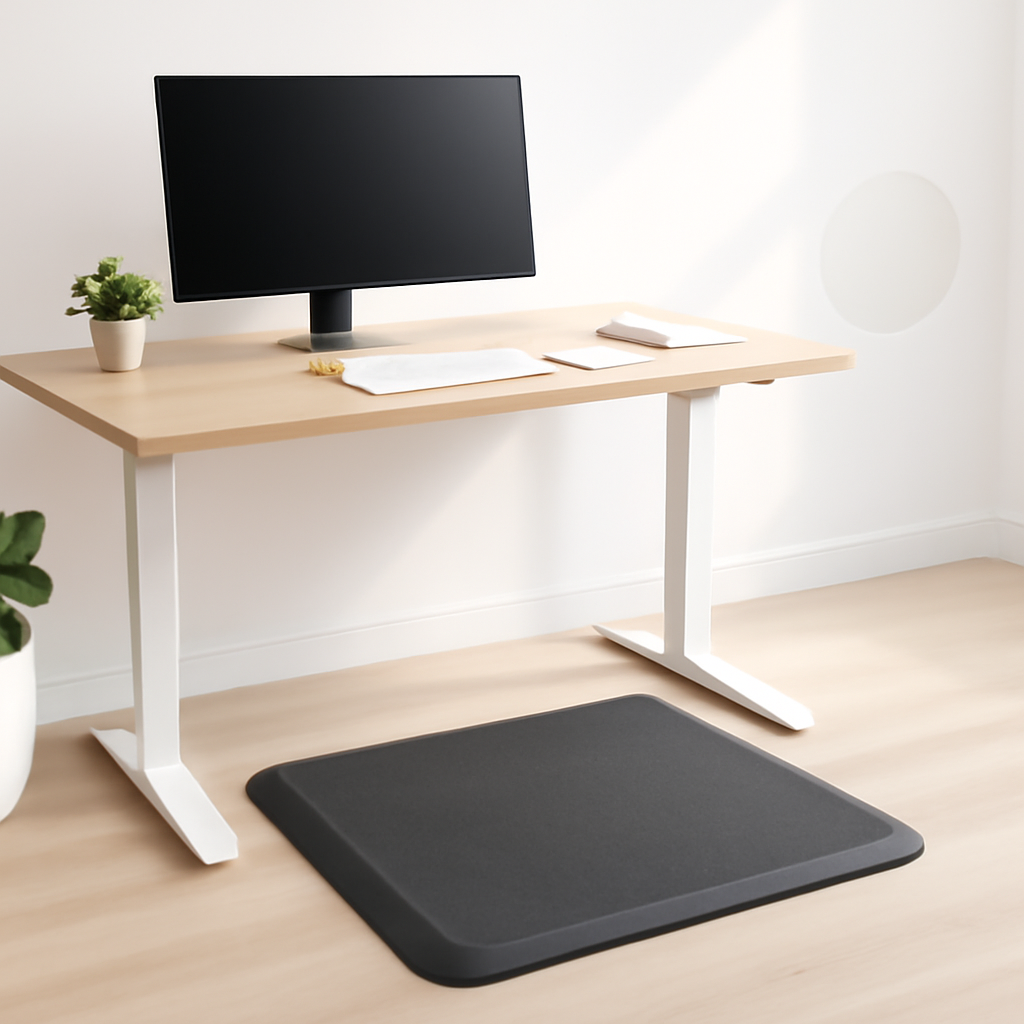
Why Your Feet Deserve Better Than Hard Office Floors
Standing at your desk for hours can transform your productivity and energy levels, but it can also leave your feet, legs, and back screaming for relief. The difference between loving your standing desk setup and abandoning it often comes down to one crucial element: finding the best standing desk mat for home office use.
A quality anti-fatigue mat does more than cushion your feet. It encourages subtle movements that keep blood flowing, reduces pressure on joints, and can make the difference between standing comfortably for hours versus giving up after 30 minutes.
Your choice of mat depends on several factors: the type of flooring in your workspace, how long you stand each day, any foot or back issues you’re dealing with, and your personal preferences for firmness and texture.
What Makes a Standing Desk Mat Actually Work
Not all mats are created equal. The most effective anti-fatigue mats share several key characteristics that separate them from basic floor coverings.
Thickness and density matter more than you might think. Mats that are too thin provide minimal cushioning, while overly thick mats can feel unstable and cause balance issues. The sweet spot typically falls between ¾ inch to 1 inch thick, with a firm yet responsive foam core.
Surface texture plays a crucial role in encouraging movement. Completely flat mats keep your feet in static positions, which defeats much of the purpose. Look for subtle contours, massage points, or varied textures that naturally prompt you to shift your weight and flex your feet.
Beveled edges prevent tripping hazards and make it easier to step on and off the mat throughout your workday. Sharp, raised edges are not only annoying but can become safety hazards in a home office setting.
Top Features That Actually Matter
When evaluating standing mats, focus on features that directly impact your daily experience rather than marketing buzzwords.
Material Quality and Durability
High-quality polyurethane foam provides the best balance of comfort and longevity. This material maintains its shape over time, resists compression, and handles daily use without developing permanent indentations.
Avoid mats made from basic foam or gel that will flatten quickly. Also steer clear of materials that off-gas strong odors, especially important in enclosed home office spaces.
Size and Shape Considerations
Your mat should provide enough space to move naturally while working. A minimum width of 20 inches gives you room to shift positions, but 24 inches or wider feels more comfortable for most people.
Length depends on your work style. If you tend to sway or pace while thinking, a longer mat (36 inches or more) prevents you from stepping off accidentally. For more stationary work, shorter options work fine.
Cleaning and Maintenance
Home offices accumulate dust, pet hair, and occasional spills. Choose mats with smooth, non-porous surfaces that wipe clean easily. Heavily textured surfaces that trap debris become hygiene issues over time.
How Different Mat Types Perform in Real Use
Understanding the pros and cons of various mat styles helps you choose based on your specific needs and preferences.
Flat Cushioned Mats
These provide straightforward cushioning without additional features. They work well for people who prefer stability and minimal distractions under their feet. The main limitation is that they don’t actively encourage movement.
Best for: Conservative users, those with balance concerns, or anyone who wants simple comfort without bells and whistles.
Contoured and Textured Mats
Mats with built-in massage points, pressure zones, or varied terrain encourage natural movement and provide targeted relief for different areas of your feet.
The key is finding the right level of texture. Overly aggressive bumps and ridges become uncomfortable during long standing sessions, while subtle variations feel therapeutic.
Best for: People who stand for extended periods, those with circulation issues, or anyone who enjoys active foot stimulation.
Multi-Zone Mats
These feature different areas designed for various foot positions and stretching exercises. Some include heel stops, massage zones, and even balance training areas.
While appealing in theory, many users find the zones gimmicky rather than genuinely useful. Focus on mats where the zones feel natural rather than forced.
Matching Your Mat to Your Space and Needs
The best standing desk mat for your home office depends heavily on your specific situation and physical needs.
Flooring Type Considerations
Hard surfaces like tile, hardwood, or concrete create the most fatigue and benefit most from quality mats. Carpeted areas provide some natural cushioning, so you might prefer a thinner, firmer mat that adds stability rather than excessive softness.
For area rugs, consider how the mat will interact with the existing surface. Some combinations create unstable footing that’s worse than standing on the hard floor directly.
Standing Duration and Frequency
If you’re new to standing desks and only stand for 30-60 minutes at a time, a basic cushioned mat provides adequate comfort while you build tolerance.
Experienced standers who work upright for several hours daily need mats engineered for extended use. Look for materials that maintain their supportive properties over time and surfaces that actively combat fatigue.
Physical Considerations
Existing foot, ankle, or back issues influence your ideal mat choice. Those with plantar fasciitis often prefer firmer support with targeted arch areas. People with knee problems typically benefit from softer cushioning that reduces joint impact.
If you wear orthotic inserts, ensure your chosen mat works well with your existing footwear rather than fighting against it.
Common Mistakes That Lead to Mat Disappointment
Many people end up dissatisfied with their standing mats due to easily avoidable selection errors.
Choosing based on initial feel alone. Mats that feel incredibly plush in the store often become uncomfortable during extended use. Your feet can sink too deeply, creating instability and new pressure points.
Ignoring your existing workspace setup. A mat that slides around on your flooring becomes a constant annoyance. Consider how it will interact with your chair when you need to sit, and whether it fits properly under your desk.
Assuming more features equal better performance. Complex mats with multiple zones, extreme textures, or gimmicky additions often distract from basic comfort and support.
Overlooking long-term durability. Cheap mats that compress quickly end up costing more when you need frequent replacements. Invest in quality materials that maintain their properties over months and years of daily use.
Making Your Final Decision
Finding the best standing desk mat for home office use comes down to matching quality construction with your personal needs and work style.
Start by honestly assessing how you plan to use your standing desk. Consider your physical needs, workspace constraints, and preferences for firmness and features. A mat that works perfectly for someone else might be completely wrong for your situation.
Focus on mats from reputable manufacturers that stand behind their products with reasonable warranties. Read reviews from people with similar needs rather than just looking at overall ratings.
Remember that even the perfect mat requires an adjustment period. Give yourself time to adapt to both standing work and your new mat before deciding if changes are needed.
Your feet carry you through every workday, and investing in their comfort pays dividends in energy, focus, and overall well-being. The right anti-fatigue mat transforms standing from an endurance challenge into a natural, comfortable way to work.
