

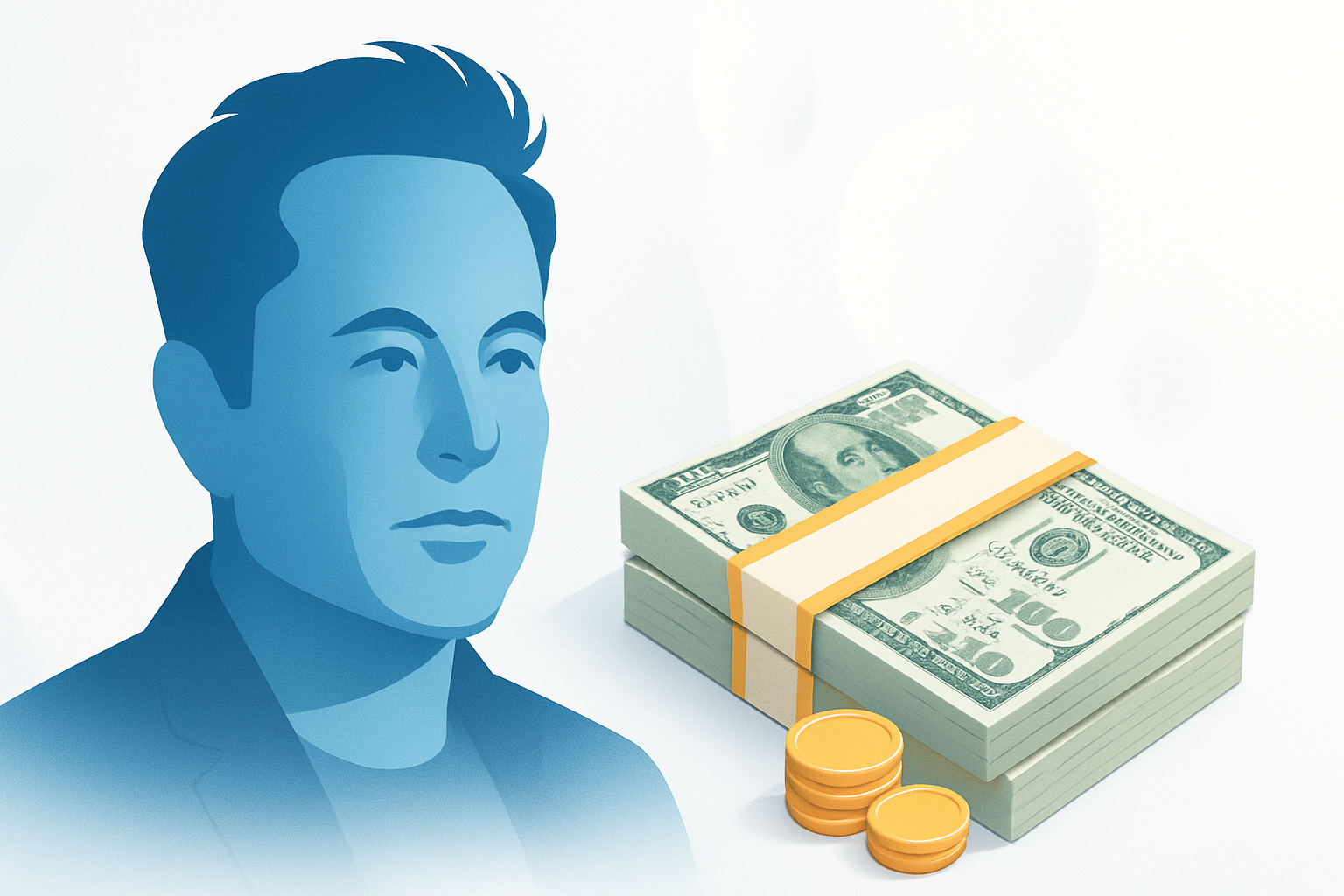
The Truth About Elon Musk’s Privileged Beginnings
When people search “was Elon Musk born rich,” they’re usually trying to separate fact from fiction about one of the world’s most controversial billionaires. The simple answer is yes – Elon Musk grew up in a wealthy family in South Africa, though the full story is more nuanced than either his critics or supporters typically acknowledge.
Musk’s father, Errol Musk, owned an emerald mine in Zambia and worked as an electromechanical engineer, pilot, and property developer. His mother, Maye Musk, was a successful model and dietitian. This combination provided young Elon with financial security, excellent education, and opportunities that most children never receive.
But wealth alone doesn’t explain Musk’s trajectory. Understanding his background helps us evaluate his achievements more accurately – neither dismissing them entirely nor accepting the “self-made” narrative at face value.
The Musk Family Fortune: Emeralds and Engineering
Errol Musk’s emerald mine has become somewhat legendary in discussions about his son’s wealth. According to various interviews, Errol owned a half-share in the Zambian emerald mine during the 1980s, which he reportedly acquired in an unusual deal involving a plane.
The mine generated significant income for the family. Errol has claimed that emeralds were so plentiful that he once walked around New York with pockets full of gems, selling them to jewelry stores. While some details of these stories remain unverified, property records and business dealings confirm the family’s substantial wealth.
Beyond the mine, Errol Musk built wealth through multiple ventures:
- Property development in Pretoria
- Engineering consultancy work
- Various business investments
- Real estate holdings
This diversified wealth meant the Musk children grew up in one of Pretoria’s most affluent neighborhoods, attending elite private schools and enjoying luxuries unavailable to most South African families during apartheid.
Privileged Education and Early Opportunities
Wealth provided Musk with educational advantages that shaped his future success. He attended Waterkloof House Preparatory School and later Pretoria Boys High School, both prestigious institutions that cost significant tuition fees.
These schools offered advanced science and mathematics programs, computer access in the early 1980s when such technology was rare, and connections to South Africa’s elite families. Musk’s early exposure to programming and technology came partly through these institutional resources.
The family’s financial stability also allowed teenage Elon to pursue interests without worrying about immediate earning potential. He could spend time learning programming languages, reading extensively about physics and engineering, and developing the foundational knowledge that would later prove valuable.
The Move to North America
Perhaps most importantly, family wealth enabled Musk’s emigration strategy. Through his mother’s Canadian citizenship, Elon moved to Canada at age 17, avoiding South African military service and positioning himself for eventual entry to the United States.
This transition required substantial financial support. The family covered travel costs, initial living expenses, and tuition for Queen’s University in Ontario. Without this backing, Musk’s path to Silicon Valley would have been far more difficult, if not impossible.
University Years: Continuing Financial Support
Musk’s university education further illustrates his privileged position. After two years at Queen’s University, he transferred to the University of Pennsylvania, where he earned bachelor’s degrees in both physics and economics from the Wharton School.
International tuition at prestigious American universities was extremely expensive in the early 1990s. While Musk has mentioned taking on some student debt, his family’s wealth significantly reduced the financial burden compared to typical international students.
This financial cushion allowed Musk to focus on academics and entrepreneurial ideas rather than working multiple jobs to survive. He could afford to take risks and explore opportunities that students from modest backgrounds might not consider.
The Zip2 Startup: Family Money Gets Things Started
When Musk and his brother Kimbal launched their first company, Zip2, in 1995, they received a crucial $28,000 investment from their father. While this wasn’t an enormous sum, it provided the initial capital needed to get started when banks were reluctant to lend to young entrepreneurs without credit history.
More importantly, the brothers had family financial backing as a safety net. This security allowed them to work without salaries while developing their business, living cheaply and reinvesting everything into the company.
Most aspiring entrepreneurs don’t have this luxury. They need immediate income to pay rent and buy food, making it much harder to dedicate full time and energy to unproven business ventures.
Debunking the “Self-Made” Myth
Musk’s supporters often emphasize his work ethic, intelligence, and entrepreneurial vision while downplaying his privileged background. Critics focus exclusively on inherited advantages while dismissing his individual contributions.
The reality sits between these extremes. Yes, Musk demonstrated remarkable drive, technical aptitude, and business acumen. His achievements required enormous personal effort and sacrifice.
However, his starting position provided crucial advantages:
- Financial security to take entrepreneurial risks
- Elite education and early technology exposure
- Family funding for initial business ventures
- Social connections through wealthy networks
- Freedom from immediate earning pressure
These factors don’t diminish Musk’s accomplishments, but they do provide important context. Many equally talented individuals never get similar opportunities due to economic circumstances beyond their control.
Comparing Musk to Other Tech Billionaires
Understanding whether Musk’s wealth origins are typical requires comparing him to other technology leaders:
| Entrepreneur | Family Background | Early Advantages |
| Bill Gates | Wealthy lawyer father, prominent Seattle family | Elite private school, early computer access |
| Jeff Bezos | Middle-class family, adoptive father in oil industry | Good education, family loan for Amazon |
| Mark Zuckerberg | Psychiatrist father, dentist mother | Private school, Harvard education |
| Larry Page | Computer science professor parents | Academic environment, early tech exposure |
Most successful tech entrepreneurs came from at least middle-class backgrounds with significant educational advantages. Musk’s wealth was more substantial than most, but the pattern of privilege enabling opportunity remains consistent.
The Apartheid Context
Discussing Musk’s privileged upbringing requires acknowledging the apartheid system that maintained white economic advantages in South Africa. The Musk family’s wealth was partially built within this unjust structure.
White South Africans during apartheid had access to superior education, business opportunities, and property rights denied to the Black majority. The emerald mine operated in this context of systematic inequality.
While Elon Musk didn’t create apartheid and left South Africa as a teenager, his early advantages were inseparable from this historical injustice. This context adds another layer to discussions about inherited privilege and its long-term effects.
What This Means for Evaluating Success
Recognizing that Elon Musk was born into wealth doesn’t invalidate his achievements, but it does provide crucial perspective. His success resulted from both individual effort and structural advantages that most people lack.
This understanding matters for several reasons:
- It helps evaluate entrepreneurial advice and success stories more realistically
- It highlights how economic inequality affects opportunity access
- It provides context for policy discussions about wealth concentration
- It encourages more nuanced thinking about individual versus systemic factors in success
Rather than simply celebrating or condemning wealthy entrepreneurs, we can acknowledge both their individual contributions and the advantages that made those contributions possible.
The Broader Question of Inherited Advantage
The curiosity about whether Elon Musk was born rich reflects broader questions about fairness, opportunity, and success in capitalist societies. People want to understand whether extraordinary achievements are accessible to ordinary individuals or reserved for the already privileged.
Musk’s story suggests that while individual talent and effort matter enormously, structural advantages play a crucial role in determining who gets the chance to develop and apply their abilities at the highest levels.
This doesn’t mean success is impossible without wealth, but it does mean the playing field isn’t level. Recognizing these realities can inform better policies and personal decisions about education, entrepreneurship, and economic opportunity.
The answer to “was Elon Musk born rich” is definitively yes. His family’s substantial wealth provided educational opportunities, financial security, and entrepreneurial capital that proved essential to his later success. Understanding this context helps us evaluate both his achievements and our broader economic systems more thoughtfully.
