

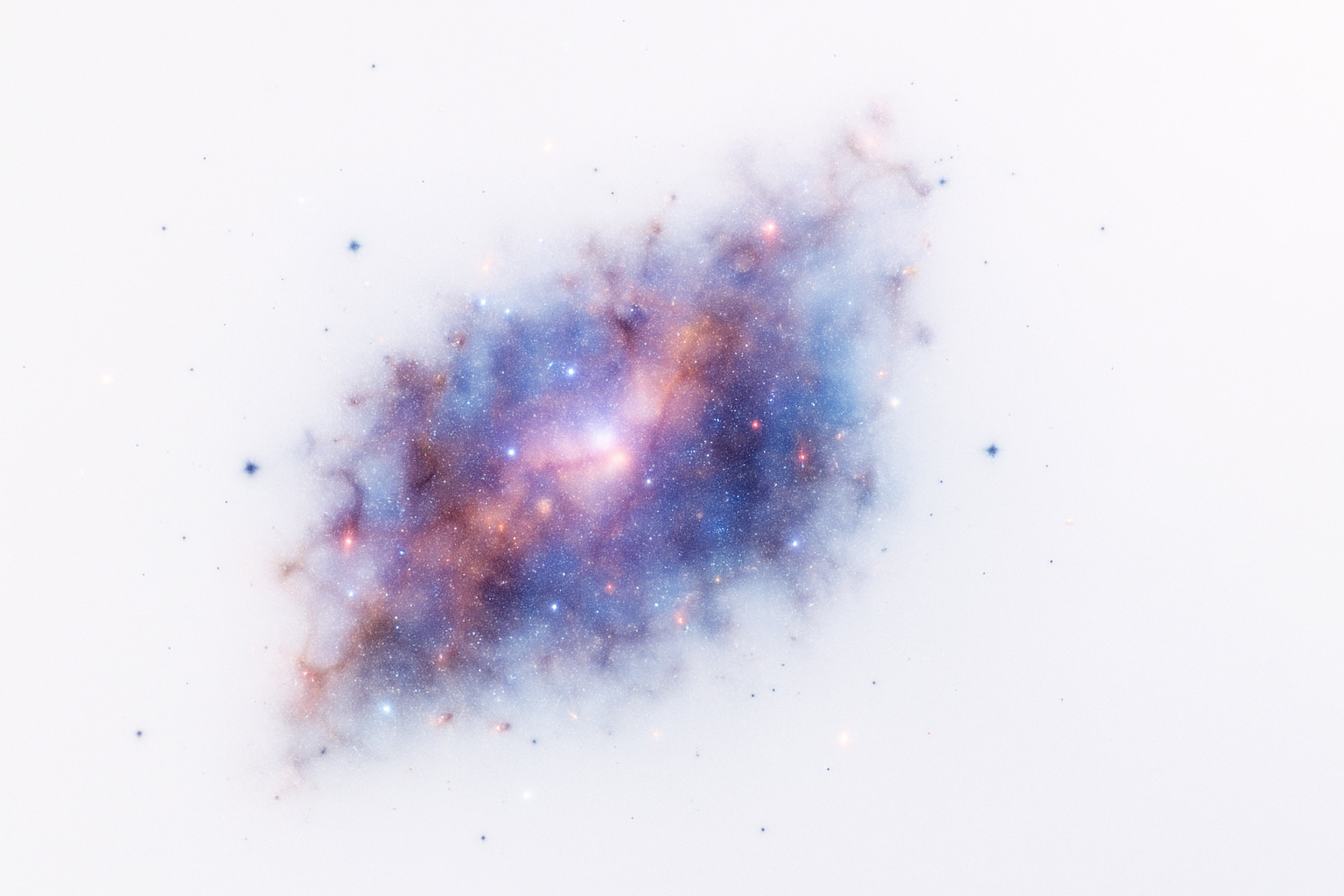
What Makes a Galaxy Irregular? Understanding Cosmic Chaos
Most people picture galaxies as elegant spirals like our Milky Way or smooth elliptical shapes. But scattered throughout the universe are galaxies that break these rules entirely. An irregular galaxy definition describes celestial objects that lack the organized structure we typically associate with galactic formations.
These cosmic rebels make up roughly 25% of all known galaxies, yet they remain among the most misunderstood objects in space. Unlike their more famous spiral and elliptical cousins, irregular galaxies appear chaotic, asymmetrical, and seemingly random in their stellar arrangements.
Understanding these galactic misfits reveals fascinating insights about cosmic evolution, star formation, and the violent processes that shape our universe.
The Science Behind Irregular Galaxy Classification
Astronomers classify galaxies using the Hubble sequence, a system developed by Edwin Hubble in the 1920s. This classification divides galaxies into three main categories: spiral, elliptical, and irregular.
Irregular galaxies earn their designation because they don’t fit neatly into the other two categories. They lack the distinct spiral arms of galaxies like Andromeda and don’t possess the smooth, rounded appearance of elliptical galaxies.
The irregular galaxy definition encompasses two main subtypes:
- Type I Irregulars (Irr I): Show some structure but lack organized spiral arms
- Type II Irregulars (Irr II): Display completely chaotic, asymmetrical shapes
These classifications help astronomers understand the underlying processes that created these unusual formations.
How Irregular Galaxies Form and Evolve
The formation of irregular galaxies involves several cosmic processes that disrupt normal galactic development. Understanding these mechanisms helps explain why some galaxies develop chaotic structures instead of orderly patterns.
Galactic Collisions and Mergers
When two galaxies collide, their gravitational forces create massive disruptions. Stars get flung into new orbits, gas clouds compress and heat up, and the original structures become unrecognizable.
These cosmic crashes can transform spiral or elliptical galaxies into irregular ones. The Antennae Galaxies provide a perfect example of this process in action, showing two spiral galaxies in the middle of a violent merger.
Tidal Forces from Nearby Giants
Large galaxies exert powerful gravitational influences on their smaller neighbors. These tidal forces can stretch and distort nearby galaxies, pulling stars and gas into irregular patterns.
The Magellanic Clouds, visible from the Southern Hemisphere, demonstrate this effect. These irregular galaxies orbit the Milky Way, and our galaxy’s gravity has significantly warped their structures over billions of years.
Internal Star Formation Chaos
Some irregular galaxies develop their chaotic appearance through intense internal star formation activity. When massive stars explode as supernovae, they create shock waves that disrupt surrounding gas and trigger more star formation.
This creates a feedback loop where stellar explosions continuously reshape the galaxy’s structure, preventing the formation of organized patterns like spiral arms.
Notable Examples of Irregular Galaxies
Several irregular galaxies have become famous among astronomers for their unique characteristics and proximity to Earth. These examples showcase the diversity within this galactic category.
| Galaxy Name | Distance from Earth | Notable Features |
| Large Magellanic Cloud | 160,000 light-years | Contains active star-forming regions |
| Small Magellanic Cloud | 200,000 light-years | Heavily distorted by Milky Way’s gravity |
| IC 10 | 2.2 million light-years | Nearest starburst irregular galaxy |
| NGC 4449 | 12 million light-years | Compact with intense star formation |
The Magellanic Clouds: Our Galactic Neighbors
The Large and Small Magellanic Clouds serve as the most studied examples of irregular galaxies. Visible to the naked eye from the Southern Hemisphere, these galaxies have fascinated observers for centuries.
Recent research suggests these galaxies weren’t always irregular. They likely started as barred spiral galaxies before the Milky Way’s gravitational influence stripped away their spiral structure.
Starburst Irregulars: Cosmic Fireworks
Some irregular galaxies undergo periods of intense star formation called starburst events. During these phases, galaxies create new stars at rates hundreds of times faster than normal.
NGC 4449 exemplifies this phenomenon. This compact irregular galaxy burns through its gas reserves so quickly that it will exhaust its star-forming material within a few billion years.
Why Irregular Galaxies Matter for Cosmic Understanding
These chaotic galaxies provide crucial insights into cosmic evolution and the processes that shape the universe. Their importance extends far beyond their unusual appearances.
Windows into Early Universe Conditions
Many irregular galaxies resemble what astronomers believe the first galaxies looked like billions of years ago. By studying modern irregulars, scientists gain insights into how the early universe evolved.
The chaotic structure of irregular galaxies may represent the natural state of galaxies before they had time to organize into more structured patterns.
Star Formation Laboratories
Irregular galaxies often contain regions of active star formation that help astronomers understand how stars are born. The disrupted gas clouds in these galaxies create ideal conditions for studying stellar nurseries.
The turbulent environments within irregular galaxies compress gas clouds more efficiently than in organized galaxies, leading to higher rates of star formation.
Testing Ground for Galaxy Evolution Theories
Scientists use irregular galaxies to test theories about how galaxies change over time. These cosmic laboratories provide real-world examples of the violent processes that drive galactic evolution.
Computer simulations of galaxy formation rely heavily on observations of irregular galaxies to verify their accuracy and refine their predictions.
Observing Irregular Galaxies: What Amateur Astronomers Can See
While professional telescopes reveal the intricate details of distant irregular galaxies, amateur astronomers can observe several examples with modest equipment.
The Magellanic Clouds offer the best viewing opportunities for those in the Southern Hemisphere. These galaxies appear as fuzzy patches of light visible to the naked eye on clear, dark nights.
Northern Hemisphere observers can spot several irregular galaxies with telescopes:
- IC 10 in Cassiopeia (requires at least an 8-inch telescope)
- NGC 6822 in Sagittarius (visible with 6-inch telescopes)
- The Antennae Galaxies in Corvus (best viewed with 10-inch or larger telescopes)
These observations help amateur astronomers appreciate the diversity of galactic structures beyond the famous spiral and elliptical examples commonly featured in astronomy books.
Future Research and Discoveries
Advanced space telescopes and improved observation techniques continue revealing new details about irregular galaxies. The James Webb Space Telescope has already captured unprecedented images of these chaotic structures.
Upcoming surveys will catalog thousands of previously unknown irregular galaxies, helping astronomers better understand their role in cosmic evolution. Machine learning algorithms now assist in identifying and classifying these galaxies from massive astronomical datasets.
Future research may reveal that irregular galaxies play a more significant role in universe evolution than previously thought. Their chaotic nature might represent a crucial phase in galactic development rather than an exception to normal patterns.
The irregular galaxy definition continues evolving as new discoveries challenge our understanding of these cosmic rebels. What remains constant is their importance in revealing the dynamic, ever-changing nature of our universe.
