

RTC Full Form: What It Stands For and Why It Matters
Three letters. Multiple industries. Dozens of meanings. If you’ve come across “RTC” and weren’t sure what it referred to, you’re not alone. The abbreviation shows up in electronics, transportation, government, and even finance — sometimes meaning completely different things depending on the context.
This post breaks down the most common full forms of RTC, explains what each one actually does, and helps you figure out which meaning applies to what you’re looking at.
The Most Common RTC Full Form: Real-Time Clock
In the world of electronics and computing, RTC almost always stands for Real-Time Clock. This is the most widely recognized meaning of the term, especially among engineers, developers, and tech enthusiasts.
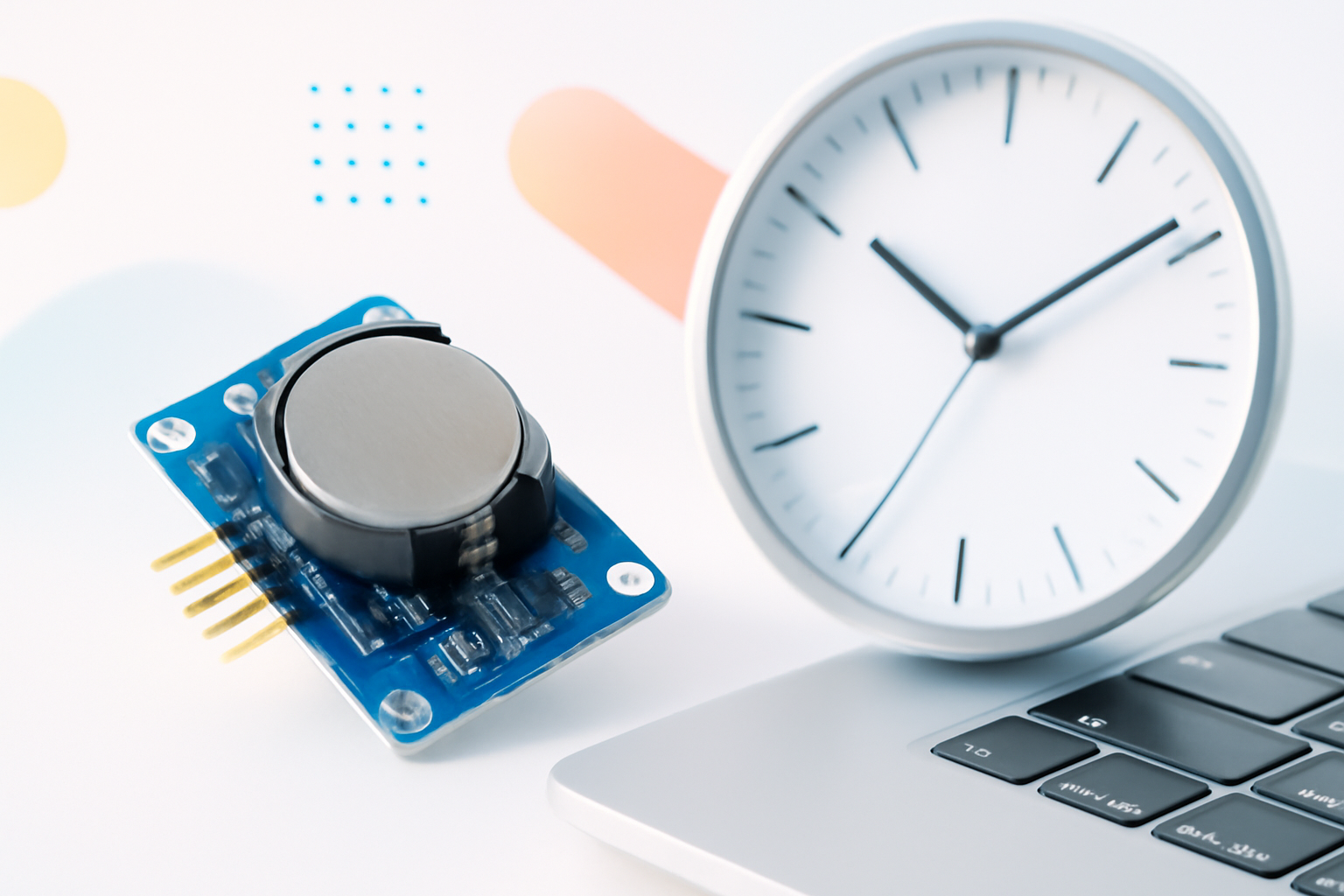
A Real-Time Clock is a small electronic component — typically an integrated circuit — that tracks the current time and date even when the main system is powered off. Think of it like the clock inside your laptop that still shows the correct time even after you shut it down and unplug it for days.
How Does a Real-Time Clock Actually Work?
An RTC chip is powered by a small backup battery (often a coin cell like the CR2032). It keeps ticking independently from the main processor. When the device powers back on, it checks the RTC to retrieve the correct time.
Key characteristics of a Real-Time Clock include:
- Operates on very low power — often just microamps of current
- Maintains time accuracy even without a main power source
- Communicates with microcontrollers via I2C or SPI protocols
- Stores seconds, minutes, hours, date, month, and year
- Some models include alarm and timer functions
Common RTC chips you’ll encounter include the DS3231, DS1307, and PCF8523. These are popular in Arduino projects, Raspberry Pi setups, and embedded systems where precise timekeeping is critical.
Where Are Real-Time Clocks Used?
RTCs are everywhere — you just don’t see them. Some everyday applications:
- Computers and laptops — the BIOS/UEFI uses an RTC to maintain system time
- Digital cameras — timestamps on photos rely on RTC accuracy
- Medical devices — pacemakers and patient monitors need reliable time tracking
- Industrial equipment — logging systems use RTCs to stamp events with precise timing
- Smart home devices — thermostats and security cameras use RTCs for scheduling
Without an RTC, every time you unplugged a device, it would forget what time it was. That might seem minor, but for systems that schedule tasks or log data, it’s a serious problem.
RTC Full Form in Transportation: Road Transport Corporation
Switch contexts entirely, and RTC becomes something very different. In India, RTC stands for Road Transport Corporation — a government-owned public transportation body.
The most well-known example is APSRTC (Andhra Pradesh State Road Transport Corporation) and TSRTC (Telangana State Road Transport Corporation). These organizations run state-level bus services that connect cities, towns, and rural areas across the state.
What Does an RTC (Road Transport Corporation) Do?
RTCs in India operate under the Road Transport Corporations Act of 1950. Their core responsibilities include:
- Running scheduled bus services across urban and rural routes
- Setting and regulating ticket fares
- Maintaining a fleet of buses — both ordinary and air-conditioned
- Hiring and managing drivers, conductors, and support staff
- Ensuring passenger safety and service quality
These corporations are significant employers and play a major role in affordable public mobility. For millions of commuters in states like Andhra Pradesh, Telangana, Karnataka, and Maharashtra, the local RTC is their primary mode of daily transport.
RTC in Finance and Banking: Meaning and Context
The financial world has its own RTC — and it carries significant historical weight. In the United States, RTC stands for Resolution Trust Corporation.
This was a U.S. government-owned asset management company created in 1989 in response to the savings and loan crisis. Its job was to manage and sell off assets from failed savings and loan associations (commonly called “thrifts”).
The Resolution Trust Corporation was responsible for resolving over 700 failed institutions and managing nearly $400 billion in assets before it was dissolved in 1995.
While the RTC no longer exists, it remains a case study in government crisis management and financial institution bailouts. If you’re reading about the S&L crisis, the 1980s banking collapse, or regulatory history in the U.S., this is the RTC you’re likely seeing referenced.
Other Notable Full Forms of RTC
Beyond the three main meanings above, RTC appears in several other specialized fields. Here’s a quick reference:
| Full Form | Field | What It Means |
| Real-Time Clock | Electronics / Computing | A hardware component that keeps time independently |
| Road Transport Corporation | Transportation (India) | Government body managing state bus services |
| Resolution Trust Corporation | Finance / Banking (USA) | U.S. agency that handled the savings and loan crisis |
| Real-Time Communication | Technology / Networking | Instant data exchange without significant delay |
| Regimental Training Center | Military | A facility for military training programs |
| Round Trip Cost | Travel / Finance | Total cost of travel to a destination and back |
| Runtime Controller | Software Engineering | Manages program execution and resource allocation |
Real-Time Communication: A Growing Use of the RTC Abbreviation
In the tech and telecom world, RTC increasingly refers to Real-Time Communication. This covers technologies that allow instant exchange of information between users or systems — with minimal latency.
Examples of real-time communication technologies include:
- Voice over IP (VoIP) calls
- Video conferencing platforms
- Instant messaging systems
- WebRTC — a browser-based standard for real-time audio/video
- Push notification systems
WebRTC (Web Real-Time Communication) deserves special mention. It’s an open-source project that enables browsers and mobile apps to communicate with real-time audio, video, and data sharing — without needing a plugin or third-party software. Google Meet, Discord, and many other platforms rely on WebRTC under the hood.
How to Know Which RTC Meaning Applies to Your Context
Seeing “RTC” without context can be genuinely confusing. Here’s a simple way to figure out which meaning applies:
- Check the industry or field — electronics = Real-Time Clock; Indian transport = Road Transport Corporation; U.S. financial history = Resolution Trust Corporation
- Look at surrounding words — phrases like “RTC module,” “RTC chip,” or “RTC battery” point to the Real-Time Clock meaning
- Consider the geography — RTC in an Indian government or transit context almost always means Road Transport Corporation
- Check for capital letter patterns — KSRTC, APSRTC, TSRTC all include RTC as Road Transport Corporation
- Look for WebRTC specifically — this one’s always Real-Time Communication in browser/networking contexts
Why RTC Matters in Modern Embedded Systems
For developers and hobbyists working with microcontrollers, understanding the Real-Time Clock is practically essential. Projects that involve data logging, scheduling, alarm systems, or anything time-sensitive need reliable RTC integration.
Consider a weather station that logs temperature every hour. Without an RTC, those readings have no meaningful timestamps. With one, you get a detailed, time-accurate dataset you can actually analyze.
Some microcontrollers like the ESP32 have a built-in RTC peripheral, though it still requires a backup power source to maintain time during power loss. For critical applications, an external RTC module is typically more reliable.
Choosing the Right RTC Module for Your Project
If you’re building something with Arduino or Raspberry Pi, here’s how to choose:
- DS1307 — affordable and widely available, but less accurate over long periods
- DS3231 — higher accuracy due to built-in temperature-compensated crystal oscillator (TCXO); best choice for most projects
- PCF8523 — low-power option, popular in battery-powered designs
- MCP7941x — includes EEPROM storage, useful for small config data
Most of these modules communicate over I2C, which means they only need two signal wires plus power — making integration straightforward even for beginners.
Wrapping Up the RTC Full Form
The rtc full form isn’t one-size-fits-all. Whether you’re looking at a circuit board, a government bus service, a financial news article, or a web development tutorial, the abbreviation adapts to its environment.
The most technically significant meaning — Real-Time Clock — underpins an enormous range of devices we use every day without thinking about it. Road Transport Corporations keep millions of commuters moving. And Real-Time Communication is reshaping how we interact online.
Next time you see those three letters, you’ll know exactly where to look for the right meaning — and why it matters in that particular space.
