

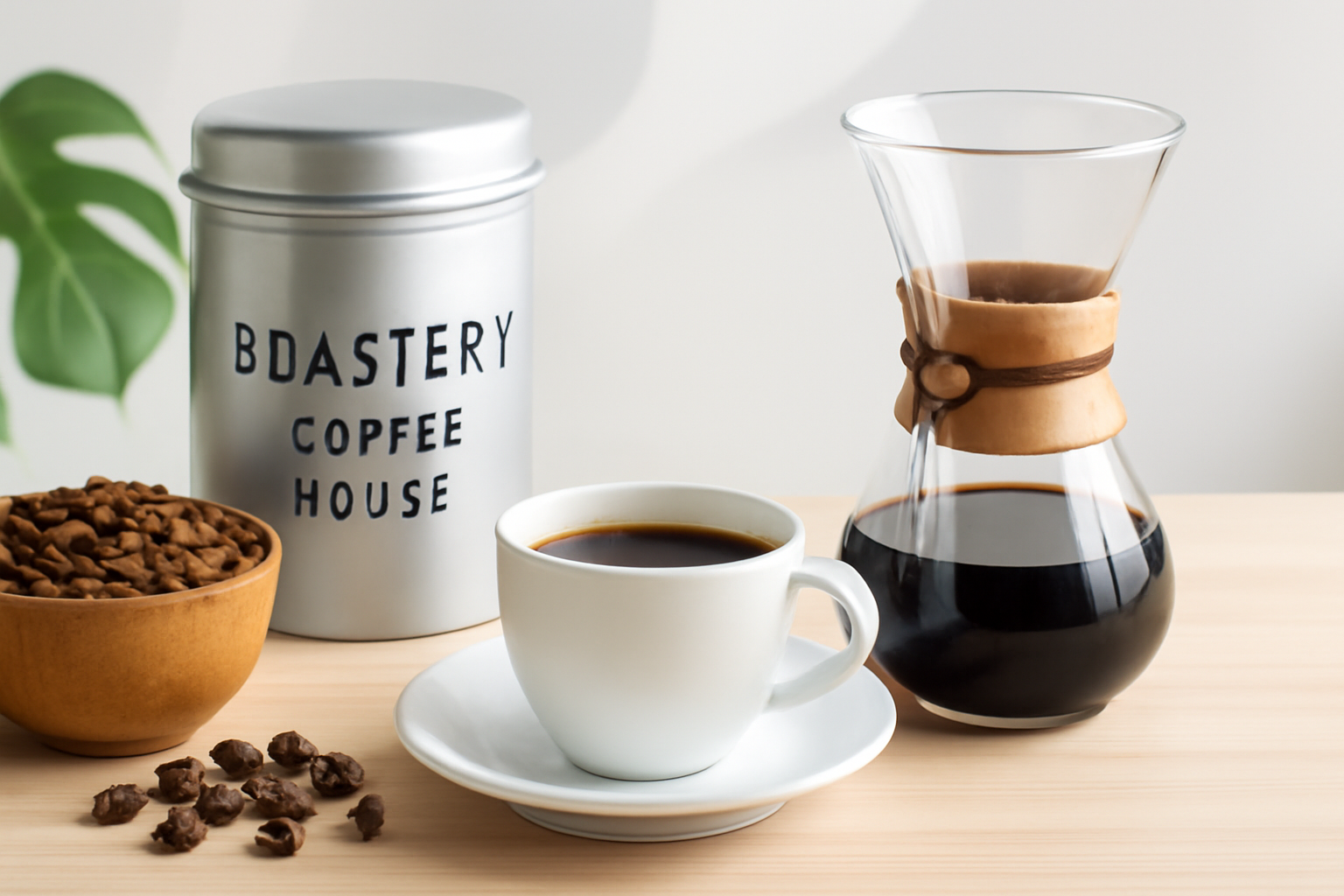
What Makes a Roastery Coffee House Different From Your Average Café
Walk into a roastery coffee house and you’ll notice something immediately — the smell hits you before you even reach the counter. It’s rich, slightly smoky, warm in a way that a regular café rarely matches. That’s because something fundamental is happening on-site: green coffee beans are being transformed into the cup you’re about to drink.
This isn’t just a marketing angle. It’s a genuinely different experience, built on a different philosophy about freshness, craft, and transparency. And once you understand what’s actually going on behind the scenes, it changes how you think about coffee entirely.
The Roasting Process — Right in Front of You
Most coffee you drink at a standard café was roasted days, weeks, or sometimes months ago at a remote facility. By the time it reaches your cup, a lot of the complex flavor chemistry has already faded. CO2 has off-gassed. Aromatic compounds have diminished. You’re tasting a shadow of what the bean was capable of.
At a roastery coffee house, that gap shrinks dramatically. Roasters typically operate on a weekly or even daily schedule, which means the coffee on the bar was often roasted within the last few days. For espresso, there’s actually an ideal rest period of 5–10 days post-roast, and for filter coffee, 1–3 days. When you’re sourcing from a roastery attached to the café itself, that timing is finally controllable.
What Happens During Roasting
Roasting drives out moisture, triggers the Maillard reaction (the same browning chemistry that makes bread crusts and seared steaks taste good), and develops hundreds of flavor compounds. The roaster controls:
- Charge temperature — how hot the drum is when beans go in
- Development time — the final phase where flavor really locks in
- Total roast time — typically 8–15 minutes depending on the roaster’s style
- End temperature — determining whether the roast is light, medium, or dark
Getting this right for each specific origin and processing method is a skill that takes years to develop. Watching a roaster work is a bit like watching a chef cook — it looks casual, but there’s intense attention underneath.
Single Origin vs. Blends — Why It Matters Here More Than Anywhere
Roastery cafés tend to lean heavily into single-origin coffees, and there’s a practical reason for that. When you’re roasting small batches and serving coffee within days, you can actually taste the difference between a washed Ethiopian Yirgacheffe and a natural processed one from the same region. That nuance gets lost in a dark roast blend that’s been sitting in a supermarket bag for six months.
Single-origin coffees are exactly what they sound like — beans from one specific country, region, or even a single farm. They’re often described with tasting notes like:
- Jasmine, bergamot, lemon zest (Ethiopia, washed)
- Blueberry, dark chocolate, winey (Ethiopia, natural)
- Brown sugar, almond, stone fruit (Colombia, washed)
- Tobacco, dark cherry, molasses (Sumatra, wet-hulled)
These aren’t arbitrary descriptors invented by pretentious baristas. They’re real flavor compounds present in the bean, shaped by altitude, soil composition, climate, and post-harvest processing. A roastery that takes sourcing seriously will often include the farm name, the farmer’s name, and the processing method on the bag — and the café menu.
Blends Still Have a Place
That said, most roastery coffee houses also maintain a house blend designed specifically for espresso. Blends are useful here because they balance acidity, body, and sweetness in a way that’s forgiving across different milk textures and extraction variables. If you want consistency in your flat white day after day, the house espresso blend is usually your best bet.
Brewing Methods You’ll Typically Find
The brew menu at a roastery-attached café is usually longer and more considered than what you’d find elsewhere. Expect to see options organized by brewing method, each designed to highlight different aspects of the coffee.
| Brew Method | Best For | Flavor Profile |
| Espresso | Intensity, crema, milk drinks | Concentrated, bold, complex |
| Pour Over (V60, Chemex) | Clarity, brightness, aromatics | Clean, nuanced, tea-like |
| AeroPress | Versatility, travel-friendly | Smooth, low acidity, full-bodied |
| Cold Brew | Summer, low acid preference | Mellow, chocolate-forward, sweet |
| Batch Brew | Speed without sacrificing quality | Consistent, approachable, round |
It’s worth asking the barista which brew method they’d recommend for a specific bean. A fruity Ethiopian natural might sing as a pour over but feel muddled as an espresso. A Brazilian natural with chocolatey depth, on the other hand, can be exceptional pulled as a short, concentrated shot.
How to Actually Order at a Specialty Roastery Café
This is where a lot of people freeze up. The menu is longer than expected. The descriptions use words like “anaerobic fermentation” or “carbonic maceration.” The barista seems to know a lot and you’re not sure how much you’re supposed to know.
Here’s a straightforward approach:
- Tell them what you usually drink. “I normally drink a flat white” or “I prefer something not too acidic” gives them everything they need.
- Ask what’s on filter today. Roastery cafés often rotate their pour over offerings. This is usually the best way to try something new without commitment.
- Don’t be afraid to ask about processing. Natural processed coffees tend to be fruitier and heavier-bodied. Washed coffees are cleaner and brighter. Honey-processed fall somewhere in between.
- Try it black first. If the barista recommends it, try a few sips before adding milk. You might be surprised.
- Give feedback. Good roastery baristas genuinely want to know if something worked for you or didn’t. It’s not weird to say it was too acidic.
The Sourcing Story Behind Your Cup
One of the quieter but more meaningful aspects of a well-run roastery coffee house is direct trade sourcing. Some roasters build long-term relationships with specific farms, paying above commodity prices in exchange for quality lots and consistency year over year.
This matters for a few reasons beyond the ethical ones (though those matter too). When a roaster knows a farm well, they can dial in their roast profiles to suit that specific lot. They know whether last year’s harvest was affected by drought. They know the altitude, the variety, the drying method. That knowledge translates into better, more intentional roasting.
“We don’t buy coffee by the container. We buy it by the relationship.” — a sentiment you’ll hear from many specialty roasters who visit origin annually.
Countries like Ethiopia, Colombia, Guatemala, Kenya, and Panama produce the lots most frequently celebrated in specialty coffee. Each origin has distinct regional characteristics, and a knowledgeable roaster will source from multiple origins across the year as harvests rotate seasonally.
What to Look for When Choosing a Roastery Coffee House
Not every place with a drum roaster in the corner is executing at a high level. Here are genuine markers of quality that are worth paying attention to:
- Roast dates on the bags — if there’s no date, be cautious
- Origin information on the menu — farm name, region, process, variety
- Trained baristas who can explain what they’re serving
- Grinders dialed in per brew method — not one grinder for everything
- Water quality awareness — filtered or RO water with remineralization is a good sign
- Seasonal menu rotation — coffee is an agricultural product, it changes through the year
You don’t need to quiz the staff, but if you ask a simple question like “what’s this coffee like?” and you get a genuine, specific answer — rather than “it’s smooth and rich” — you’re in a good place.
Why the Space Itself Tends to Feel Different
There’s something about the physical design of roastery coffee houses that tends toward the industrial and open. The roaster itself is usually a focal point — a large drum machine, often vintage Probat or modern Loring equipment, visible from the café floor. It’s not decorative. It’s functional. But it signals to everyone in the room: this is where coffee is made, not just poured.
The layout often encourages people to slow down. Long communal tables, deliberate lighting, bean storage in view. It’s not accidental. The entire environment is built around the idea that coffee deserves time — time to roast, time to rest, time to brew, and time to drink properly.
A Different Relationship With Coffee
Visiting a roastery coffee house regularly tends to shift how you think about coffee at home too. You start buying fresher beans. You start caring about your grinder. You begin to notice the difference between a V60 and a French press for the same bean. The curiosity that gets sparked in that kind of environment is hard to switch off.
That might sound like a rabbit hole — and honestly, it is. But it’s one of the more enjoyable ones. Coffee is one of the most chemically complex beverages humans consume, with over 800 aromatic compounds identified in a roasted bean. Most of us have been drinking it for years without really tasting it.
A great roastery coffee house gives you the chance to actually start.
