
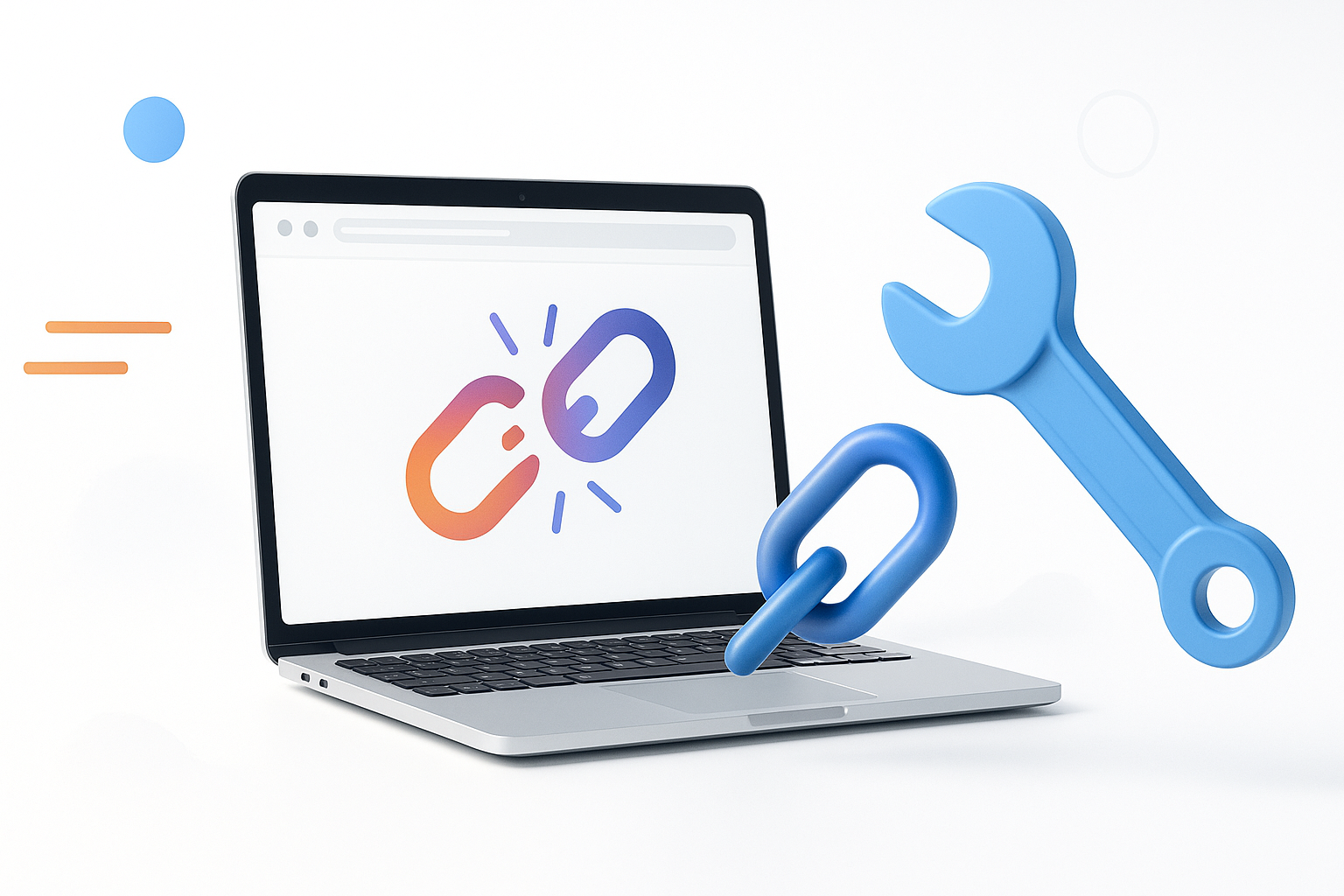
Broken links are silent website killers that damage your credibility, frustrate visitors, and hurt your search rankings. Every click that leads to a dead end represents a lost opportunity and a poor user experience that could drive potential customers straight to your competitors.
When search engines encounter broken links during their crawls, they view your site as poorly maintained. This perception can significantly impact your rankings and organic traffic. Meanwhile, visitors who hit these digital roadblocks often bounce immediately, never to return.
The good news? Learning how to fix broken links on a website is straightforward once you understand the process. This guide will walk you through identifying, fixing, and preventing broken links to keep your website running smoothly.
Why Broken Links Appear on Websites
Understanding the root causes helps you prevent future issues. Broken links typically occur when:
- Pages get deleted or moved without proper redirects
- URLs change during website redesigns or restructuring
- External websites remove or relocate their content
- Typos in URLs during content creation
- Domain names expire or change ownership
- Server issues make pages temporarily inaccessible
Internal links break most often during site migrations or when content gets reorganized. External links face different challenges since you can’t control other websites’ decisions about their content structure.
How to Find Broken Links on Your Website
Before you can fix broken links, you need to identify them. Several methods can help you locate these problematic URLs across your site.
Use Google Search Console
Google Search Console provides free broken link detection as part of its crawl error reporting. Navigate to the “Coverage” section to see pages that return 404 errors or other HTTP status codes indicating problems.
This tool shows you exactly which pages Google couldn’t access and when the errors were first detected. Pay special attention to pages that previously worked but now show errors.
Try Dedicated Link Checking Tools
Several specialized tools can crawl your entire website and generate comprehensive broken link reports:
- Screaming Frog SEO Spider – Crawls up to 500 URLs free
- Xenu Link Sleuth – Free desktop application for Windows
- Broken Link Checker – WordPress plugin for automated monitoring
- Ahrefs Site Audit – Premium tool with detailed link analysis
- SEMrush Site Audit – Comprehensive website health checker
These tools typically provide more detailed information than Search Console, including the exact location of broken links and their HTTP response codes.
Manual Checking Methods
For smaller websites or specific pages, manual checking remains effective. Browser extensions like “Check My Links” highlight broken links as you browse your site, making manual audits more efficient.
You can also check individual links by right-clicking and opening them in new tabs, though this approach becomes impractical for larger sites.
Step-by-Step Process to Fix Broken Links
Once you’ve identified broken links, follow this systematic approach to resolve them effectively.
Step 1: Categorize Your Broken Links
Sort broken links into categories to streamline your fixing process:
- Internal links pointing to your own content
- External links leading to other websites
- Images and media files that won’t load
- Downloadable resources like PDFs or documents
This categorization helps you prioritize fixes and apply appropriate solutions more efficiently.
Step 2: Fix Internal Broken Links
Internal links are usually the easiest to fix since you control both the source and destination. Here’s how to handle different scenarios:
For moved or renamed pages: Update the link to point to the correct new URL. If you’re using a content management system like WordPress, search for all instances of the old URL and replace them with the new one.
For deleted pages: Either recreate the content at the original URL or set up a 301 redirect to the most relevant existing page. If no suitable replacement exists, remove the link entirely and adjust the surrounding text accordingly.
For typos in URLs: Correct the spelling in the link. Double-check that the corrected URL actually works before publishing your changes.
Step 3: Address External Broken Links
External links require different strategies since you can’t fix the destination websites:
Search for updated URLs: The content might have moved to a new location on the same site. Check the website’s navigation or use their search function to locate the information.
Use the Wayback Machine: Archive.org’s Wayback Machine often preserves copies of deleted content. You can link to these archived versions if appropriate for your context.
Find alternative sources: Look for similar content on other reputable websites that covers the same topic or provides equivalent value to your readers.
Remove unnecessary links: If the broken external link doesn’t add significant value, consider removing it entirely rather than replacing it.
Step 4: Handle Broken Image and Media Links
Broken images and media files create obvious visual problems on your website:
Check file paths: Verify that images are uploaded to the correct directories and that file names match exactly, including capitalization and file extensions.
Re-upload missing files: If files were accidentally deleted, restore them from backups or re-upload fresh copies to the appropriate locations.
Update file references: When media files have been moved or renamed, update all references throughout your content management system.
Setting Up 301 Redirects for Moved Content
301 redirects are crucial when content permanently moves to new URLs. These redirects preserve link equity and ensure visitors reach the intended destination.
For Apache servers, add redirect rules to your .htaccess file:
Redirect 301 /old-page.html /new-page.html
WordPress users can implement redirects through plugins like Redirection or Yoast SEO Premium. These tools provide user-friendly interfaces for managing redirects without editing server files.
When setting up redirects, ensure the destination page contains relevant content. Redirecting to your homepage or unrelated pages can frustrate users and may not preserve SEO value.
Preventing Future Broken Links
Proactive prevention saves significant time compared to reactive fixing. Implement these strategies to minimize future broken link issues:
Regular Monitoring
Schedule monthly broken link audits using automated tools. Many premium SEO platforms offer automated monitoring that alerts you when new broken links appear.
Set up Google Search Console notifications to receive immediate alerts about crawl errors and broken pages.
Link Building Best Practices
When creating new content, follow these practices to reduce future problems:
- Use relative URLs for internal links when possible
- Link to authoritative, well-established external websites
- Avoid linking to temporary or promotional pages
- Check all links before publishing new content
- Maintain consistent URL structures across your site
Content Management Strategies
Develop systematic approaches to content updates and site maintenance:
- Document URL changes during site redesigns
- Create redirect plans before moving or deleting pages
- Maintain backup copies of important content
- Train content creators on proper linking practices
- Use staging environments to test changes before going live
Tools and Resources for Ongoing Link Maintenance
Investing in the right tools makes ongoing link maintenance more manageable and effective.
Free options work well for smaller websites or budget-conscious site owners. Google Search Console, Xenu Link Sleuth, and various browser extensions provide solid basic functionality.
Premium tools offer advanced features like automated monitoring, detailed reporting, and integration with other SEO workflows. Consider tools like Ahrefs, SEMrush, or Screaming Frog’s paid version for larger sites or professional SEO work.
WordPress-specific solutions include plugins that automatically check links and notify you of problems. Popular options include Broken Link Checker, Link Checker Pro, and various SEO plugin suites.
Impact of Fixed Links on SEO and User Experience
Properly maintaining your links delivers measurable benefits for both search engine optimization and user satisfaction.
Search engines reward well-maintained websites with better rankings. When crawlers can successfully navigate your entire site without encountering dead ends, they’re more likely to index your content thoroughly and view your site as authoritative.
User experience improvements are often immediately noticeable. Visitors can navigate smoothly between related content, leading to longer session durations and lower bounce rates. These positive user signals further reinforce your SEO improvements.
Maintaining functional links throughout your website requires ongoing attention, but the investment pays dividends in improved search rankings, better user experience, and enhanced credibility. By systematically identifying, fixing, and preventing broken links, you create a more reliable online presence that serves both your audience and your business goals effectively.
