
Domain Authority Scores That Actually Matter for Your Website
When website owners first discover their domain authority score, the inevitable question follows: is this number actually good? The short answer is that what constitutes a good domain authority score depends entirely on your industry, competition, and goals.
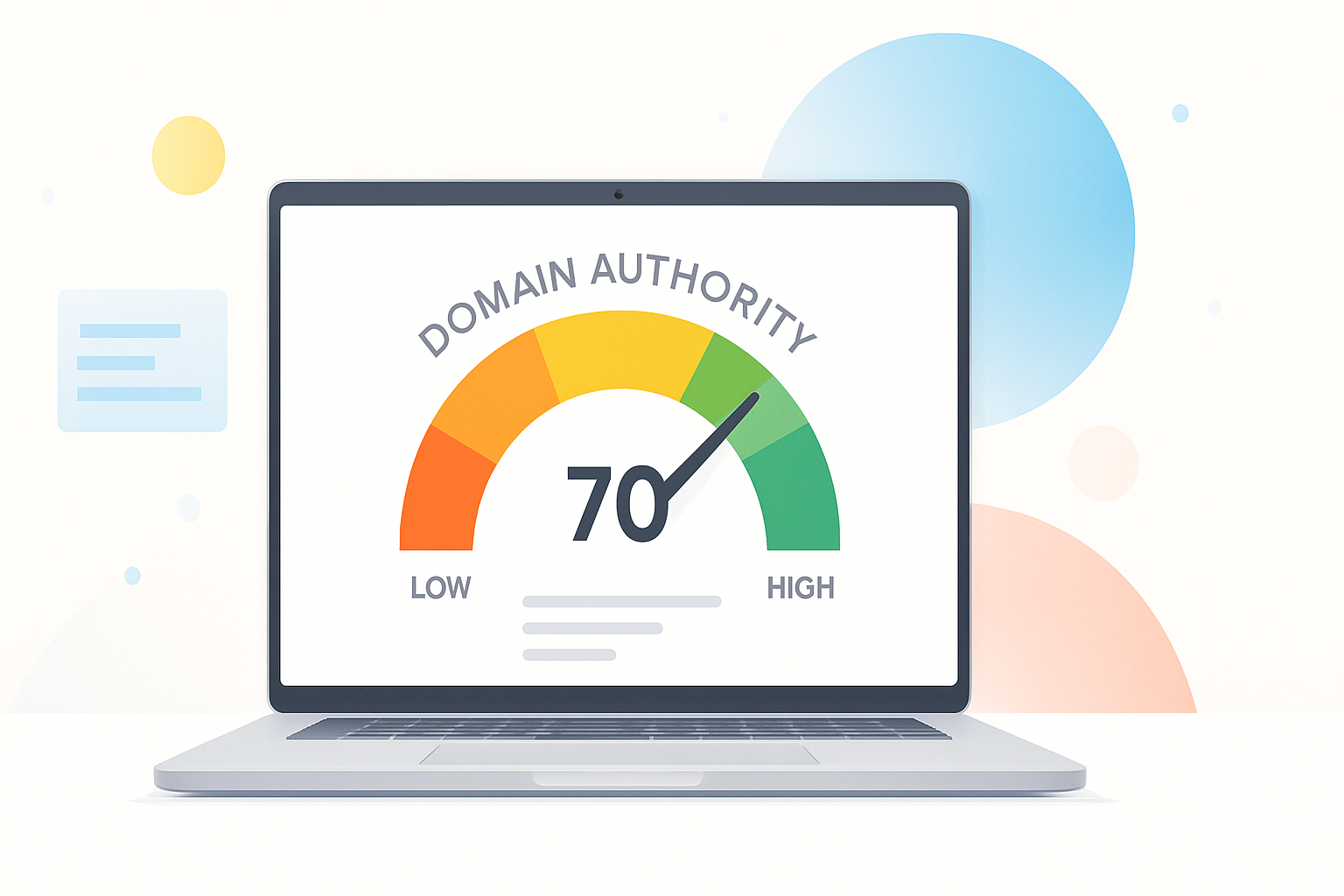
Domain Authority (DA) is Moz’s proprietary metric that predicts how well a website will rank in search engine results. The score ranges from 1 to 100, with higher numbers indicating stronger ranking potential. But here’s what most people don’t realize—chasing a specific DA number without understanding the context behind it is like trying to win a game without knowing the rules.
Breaking Down Domain Authority Score Ranges
Domain authority scores follow a logarithmic scale, meaning it’s exponentially harder to improve your score as it gets higher. A jump from 20 to 30 requires significantly less effort than moving from 70 to 80.
Here’s how DA scores generally break down:
- 1-20: New websites or sites with very few quality backlinks
- 21-40: Developing websites with growing link profiles
- 41-60: Established sites with solid SEO foundations
- 61-80: Highly authoritative domains with extensive link networks
- 81-100: Industry giants like Google, Facebook, and major news outlets
Most small to medium businesses should realistically aim for DA scores between 30-50, depending on their niche competitiveness.
Context Trumps Raw Numbers Every Time
Your domain authority score means nothing in isolation. A local bakery with a DA of 25 might be crushing their competition if nearby competitors have scores of 15-20. Meanwhile, a tech startup with DA 40 could be struggling if they’re competing against established players with scores above 60.
The key is competitive analysis. Use tools like Moz, SEMrush, or Ahrefs to check your top 10 competitors’ DA scores. This gives you a realistic benchmark for your industry.
Industry-Specific Expectations
Different industries have vastly different DA landscapes:
| Industry | Competitive DA Range |
| Local Services | 20-40 |
| E-commerce | 30-60 |
| SaaS/Technology | 40-70 |
| News/Media | 50-80 |
| Finance/Legal | 40-75 |
What Actually Influences Your Domain Authority Score
Understanding what drives DA helps you focus your efforts more effectively. Moz considers over 40 factors, but these elements carry the most weight:
Link Profile Quality: The number and authority of websites linking to yours matters most. One link from a DA 80 news site typically outweighs dozens of links from low-authority directories.
Content Depth and Relevance: Comprehensive, well-researched content naturally attracts quality backlinks. Google’s algorithms have become sophisticated at identifying thin, low-value content.
Technical SEO Foundation: Site speed, mobile optimization, SSL certificates, and clean code structure all contribute to your overall authority profile.
Social Signals: While not a direct ranking factor, content that gets shared widely often attracts editorial links from other websites.
Common Misconceptions About Domain Authority Scores
Many website owners make costly mistakes by misunderstanding how DA works:
Misconception #1: Higher DA automatically means better rankings. Domain authority predicts ranking potential, but doesn’t guarantee it. A lower-DA site with better content and user experience can outrank higher-DA competitors for specific keywords.
Misconception #2: You can quickly boost DA with link building services. Moz regularly updates their algorithm, often devaluing spammy links. Artificial DA inflation typically results in eventual score drops.
Misconception #3: DA 50 is universally “good.” This number could be excellent in one industry and poor in another. Always compare against direct competitors.
Realistic Timeline for Domain Authority Improvement
Building domain authority is a marathon, not a sprint. Most websites see meaningful DA improvements on this timeline:
- Months 1-3: Technical SEO improvements and content foundation
- Months 4-8: Initial link building results and content promotion
- Months 9-18: Sustained growth from consistent efforts
- 18+ months: Compound effects from established authority
Expect to see DA fluctuations during this period. Moz updates their index monthly, and algorithm changes can cause temporary score variations even when you’re doing everything right.
Actionable Steps to Improve Your Domain Authority
Rather than obsessing over your current score, focus on activities that naturally boost domain authority:
Create linkable assets. Develop comprehensive guides, original research, or interactive tools that other websites want to reference. These naturally attract high-quality backlinks over time.
Build relationships, not just links. Connect with industry peers, journalists, and influencers through genuine engagement. Authentic relationships lead to better linking opportunities than cold outreach.
Optimize your internal linking structure. Help search engines understand your site hierarchy by linking related content together strategically.
Monitor your link profile regularly. Use Google Search Console to identify and disavow toxic backlinks that could harm your authority.
When Domain Authority Doesn’t Tell the Whole Story
Sometimes DA scores can be misleading. A website might have high domain authority but poor user engagement metrics. Conversely, a newer site with lower DA might be gaining momentum rapidly.
Look beyond DA by examining:
- Organic traffic trends over time
- Ranking positions for target keywords
- User engagement metrics (bounce rate, time on site)
- Conversion rates and business outcomes
These metrics often provide more actionable insights than DA alone.
Setting Realistic Domain Authority Goals
Rather than aiming for an arbitrary DA number, set goals based on competitive research and business objectives. If your main competitors have DA scores between 35-45, targeting DA 40 makes more sense than shooting for 60.
Track your progress monthly, but don’t panic over small fluctuations. Focus on consistent content creation, link building, and technical optimization. The domain authority improvements will follow naturally.
Remember that what is a good domain authority score ultimately depends on your specific situation, competition, and goals. A strong DA foundation supports better search rankings, but it’s just one piece of a comprehensive SEO strategy. Prioritize creating value for your audience, and authority metrics will improve as a natural byproduct of your efforts.
