

The Mysterious Blue Crystal That Could Revolutionize Space Travel
Imagine oxygen so cold it becomes a pale blue solid that you could theoretically hold in your hand. This isn’t science fiction—it’s solid oxygen, a remarkable state of matter that exists at temperatures so frigid they make Antarctica feel like a tropical paradise. At minus 218.79°C (minus 361.82°F), oxygen transforms from its familiar gaseous state into crystalline structures that have captivated scientists and engineers for decades.
While most people never encounter solid oxygen in daily life, this frozen form of our most essential element plays crucial roles in cutting-edge technology, space exploration, and scientific research. From rocket fuel systems to quantum physics experiments, solid oxygen represents one of nature’s most intriguing phase transitions.
What Exactly Is Solid Oxygen?
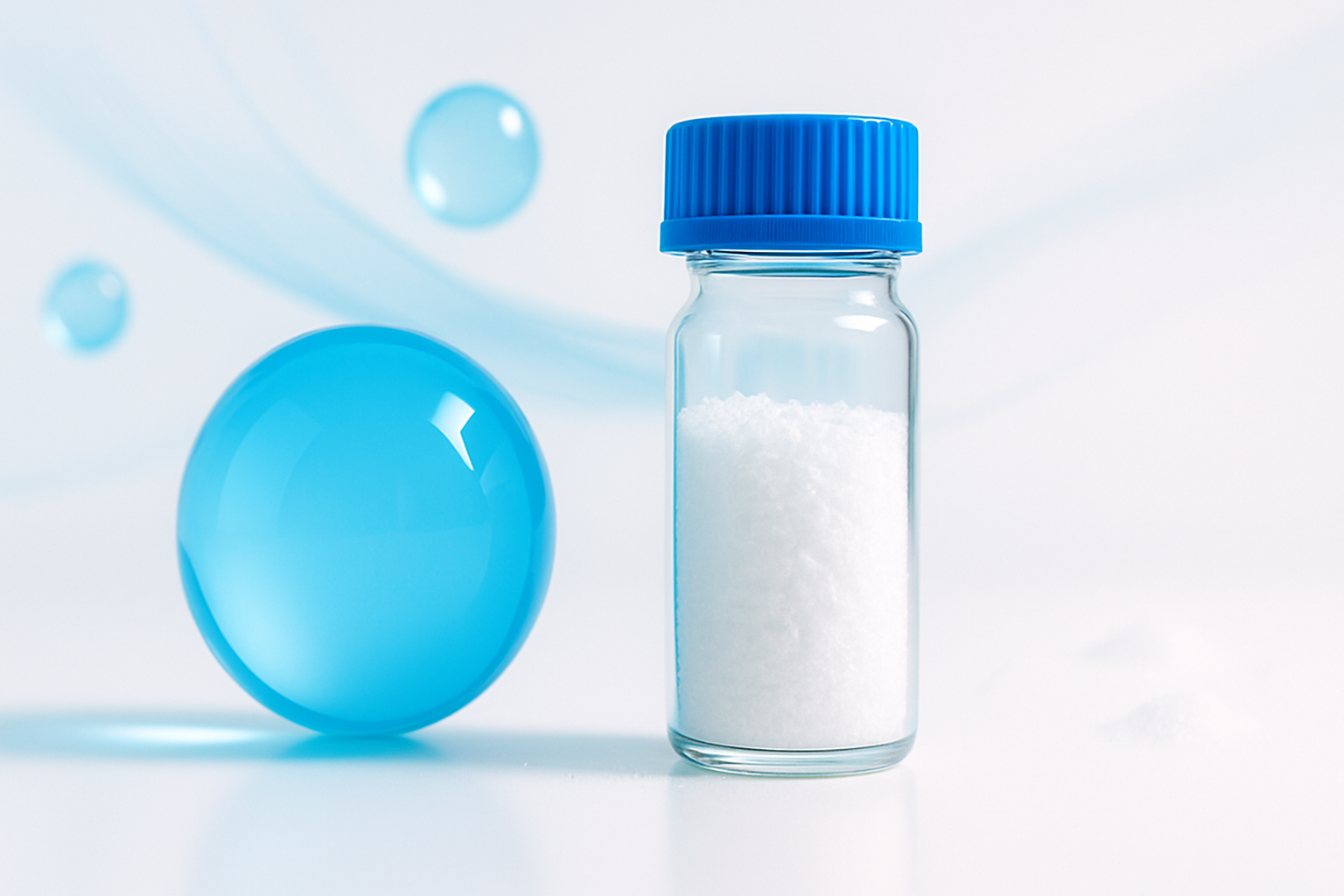
Solid oxygen forms when gaseous oxygen is cooled below its freezing point of -218.79°C. Unlike water ice, which appears clear or white, solid oxygen displays a distinctive pale blue color that becomes more intense as temperature drops further.
This blue tint occurs because oxygen molecules absorb red light wavelengths while reflecting blue ones. The same phenomenon creates the blue color we observe in liquid oxygen, though the solid form appears more vibrant due to its higher density.
Scientists have identified six different crystalline phases of solid oxygen, each stable at different temperature and pressure combinations. The most common phase, called alpha oxygen, forms the initial crystals when oxygen first freezes. As temperatures drop even further, oxygen transitions through additional phases with increasingly complex molecular arrangements.
How Scientists Create and Study Frozen Oxygen
Creating solid oxygen requires specialized cryogenic equipment capable of reaching extremely low temperatures. Researchers typically use liquid helium or sophisticated refrigeration systems to achieve the necessary cooling.
The process involves several steps:
- Cooling gaseous oxygen to -183°C to form liquid oxygen
- Further reducing temperature to -218.79°C for initial crystallization
- Continuing cooling to explore different solid phases
- Maintaining precise temperature control to prevent sublimation
Laboratory studies reveal that solid oxygen exhibits fascinating magnetic properties. Unlike most substances, oxygen becomes antiferromagnetic when frozen, meaning its unpaired electrons align in opposite directions. This behavior makes solid oxygen valuable for magnetic field research and quantum physics experiments.
Real-World Applications Pushing Technology Forward
Despite its exotic nature, solid oxygen serves practical purposes in several high-tech industries. Space agencies have invested heavily in solid oxygen research because it offers significant advantages over liquid oxygen for certain applications.
Rocket propulsion systems represent the most promising application. Solid oxygen could potentially replace liquid oxygen as an oxidizer in rocket engines, offering several benefits:
- Higher density means more oxygen in smaller storage tanks
- Reduced boil-off losses during long missions
- Simplified storage systems without constant refrigeration
- Enhanced safety through more stable storage conditions
NASA and private aerospace companies continue researching solid oxygen propulsion systems for future Mars missions and deep space exploration. The ability to store oxygen in solid form could dramatically reduce spacecraft weight and complexity.
The Science Behind Oxygen’s Phase Transitions
Understanding why oxygen behaves differently as a solid requires examining its molecular structure. Oxygen molecules consist of two atoms bonded together, creating O2 molecules with unpaired electrons that give oxygen its magnetic properties.
When oxygen cools into its solid state, these molecules arrange themselves into ordered crystalline structures. The specific arrangement depends on temperature and pressure conditions, leading to the six known phases of solid oxygen.
The alpha phase, stable from the freezing point down to -229°C, features molecules arranged in a monoclinic crystal structure. As temperatures drop further, oxygen transitions to the beta phase, then continues through gamma, delta, epsilon, and zeta phases, each with unique properties.
These phase transitions fascinate researchers because they reveal fundamental aspects of molecular behavior under extreme conditions. The epsilon phase, for example, becomes metallic and conducts electricity—a dramatic departure from oxygen’s typical behavior as an insulator.
Challenges in Working with Solid Oxygen
Despite its potential applications, solid oxygen presents significant technical challenges. The extremely low temperatures required for its formation and stability demand sophisticated equipment and careful handling procedures.
Storage represents the biggest obstacle. Solid oxygen readily sublimes back to gas at temperatures above its freezing point, making long-term storage difficult. Engineers must develop insulation systems capable of maintaining cryogenic temperatures for extended periods.
Safety considerations also complicate solid oxygen research. As a powerful oxidizer, solid oxygen can react violently with organic materials or flammable substances. Research facilities require specialized safety protocols and equipment designed for cryogenic oxidizer handling.
Cost factors limit widespread adoption. The energy required to cool oxygen to solid state, combined with expensive cryogenic equipment, makes solid oxygen significantly more expensive than conventional liquid or gaseous forms.
Breakthrough Research and Future Possibilities
Recent scientific breakthroughs have expanded our understanding of solid oxygen’s potential applications. Researchers at leading universities have discovered that certain phases of solid oxygen exhibit superconducting properties under specific conditions.
Advanced materials research explores using solid oxygen in next-generation battery technologies. The high energy density of solid oxygen could potentially create more powerful energy storage systems for electric vehicles and renewable energy applications.
Medical applications represent another frontier. Concentrated solid oxygen could enable new therapeutic treatments requiring precise oxygen delivery. However, practical medical applications remain years away due to current technical limitations.
Environmental applications show promise for carbon capture and atmospheric processing technologies. Solid oxygen’s unique properties might enable more efficient air purification systems or atmospheric processors for space habitats.
What This Means for Future Technology
The continued development of solid oxygen technology could transform multiple industries. Space exploration stands to benefit most immediately, with solid oxygen potentially enabling longer missions and more efficient spacecraft designs.
Energy storage represents a longer-term opportunity. If researchers can overcome current technical challenges, solid oxygen might contribute to revolutionary battery technologies that far exceed current lithium-ion capabilities.
Manufacturing processes could also evolve to incorporate solid oxygen for specialized applications requiring concentrated oxidizers or unique magnetic properties.
As our understanding of solid oxygen deepens and technology advances make cryogenic systems more efficient and affordable, we may see broader adoption of this remarkable state of matter. From powering spacecraft to Mars to enabling next-generation energy systems, solid oxygen remains one of science’s most intriguing frontiers with practical implications for humanity’s technological future.
