
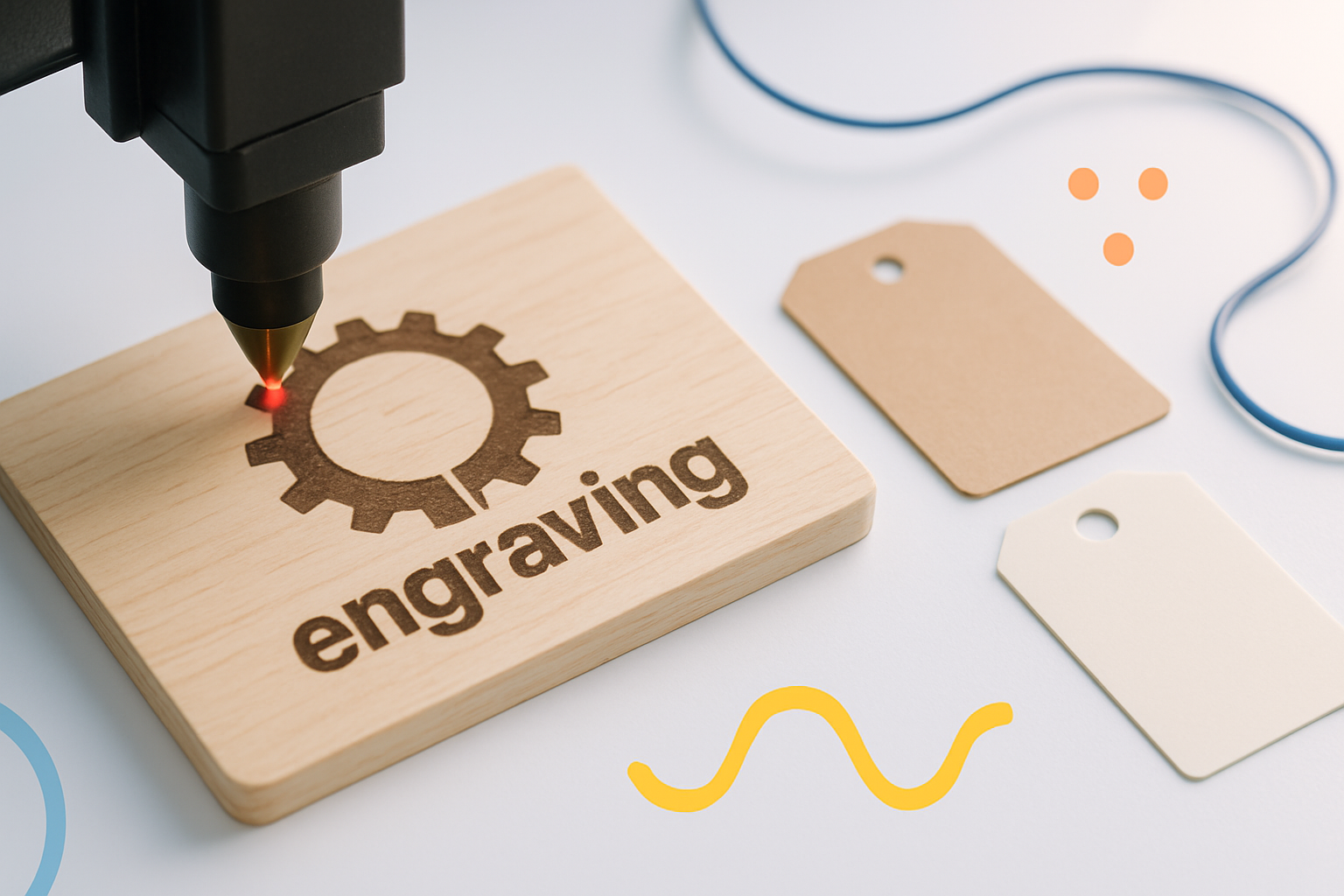
The laser engraving industry continues to evolve at breakneck speed, driven by technological breakthroughs and expanding applications across manufacturing, personalization, and artistic sectors. Recent developments in fiber laser technology, AI-powered engraving systems, and sustainable practices are reshaping how businesses and creators approach precision marking and cutting.
From automotive manufacturers adopting ultra-fast laser systems for component marking to small businesses leveraging affordable desktop units for custom products, the latest laser engraving news reveals an industry experiencing unprecedented growth and innovation.
Breakthrough Technologies Transforming Laser Engraving
Ultrafast laser systems have emerged as game-changers in precision manufacturing. These femtosecond and picosecond lasers create incredibly precise engravings without heat-affected zones, making them ideal for delicate materials like medical devices and electronic components.
Coherent recently unveiled their Monaco series, featuring pulse durations shorter than 400 femtoseconds. This technology enables manufacturers to engrave intricate patterns on glass, ceramics, and even diamond-like carbon coatings without causing thermal damage.
Artificial intelligence integration represents another major advancement. IPG Photonics introduced their SmartRamp technology, which automatically adjusts laser parameters based on material properties and desired outcomes. The system reduces setup time by up to 70% while improving engraving consistency.
Key technological improvements include:
- Enhanced beam quality with M² values approaching 1.0
- Improved scanning speeds exceeding 20 meters per second
- Advanced galvanometer systems with sub-micron positioning accuracy
- Integrated vision systems for real-time quality monitoring
Market Expansion Across New Industries
The aerospace sector has embraced laser engraving for critical component traceability. Boeing recently implemented fiber laser systems across their manufacturing facilities to engrave serialized data matrix codes on titanium and aluminum parts. This initiative improves supply chain transparency and reduces counterfeiting risks.
Medical device manufacturing represents the fastest-growing application segment. Laser engraving provides biocompatible marking solutions for surgical instruments, implants, and diagnostic equipment. Companies like Medtronic report that laser-marked devices show superior corrosion resistance compared to traditional marking methods.
The jewelry industry has witnessed a renaissance thanks to precision laser engraving capabilities. Tiffany & Co. now offers personalized engraving services using femtosecond lasers, creating microscopic patterns inside diamonds without affecting their structural integrity.
Latest Laser Engraving News From Major Manufacturers
Trumpf announced their TruMark 6000 series in early 2024, featuring revolutionary beam shaping technology. The system can switch between different beam profiles within milliseconds, optimizing power distribution for various materials and applications.
Universal Laser Systems expanded their VLS platform with new automation capabilities. Their latest units integrate robotic material handling systems, enabling 24/7 production runs for high-volume applications.
Chinese manufacturer Thunder Laser has gained significant market share with their cost-effective CO2 systems. Their Nova series offers professional-grade features at prices 40% below traditional competitors, making laser engraving accessible to smaller businesses.
Recent product launches showcase impressive specifications:
| Manufacturer | Model | Power Range | Key Feature |
| Epilog Laser | FiberMark 50 | 20-50W | Rotary attachment compatibility |
| Trotec | Speedy 400 | 60-120W | JobControl Vision system |
| Gravograph | LS900 | 10-30W | Compact desktop design |
Sustainability Initiatives Reshape Industry Standards
Environmental concerns drive innovation toward cleaner laser engraving processes. Traditional chemical etching and mechanical engraving methods generate hazardous waste, while laser systems produce minimal environmental impact.
Rofin-Sinar developed their EcoMark technology, which reduces power consumption by up to 30% compared to conventional fiber lasers. The system achieves this efficiency through advanced pulse modulation and optimized cooling systems.
Several manufacturers now offer carbon-neutral laser systems powered by renewable energy sources. SPI Lasers partnered with solar panel manufacturers to create integrated production facilities that operate entirely on clean energy.
Waste reduction initiatives focus on:
- Elimination of chemical consumables
- Reduced material waste through precise cutting
- Extended equipment lifespan through modular design
- Recyclable laser diode modules
Software Innovations Streamline Operations
Cloud-based laser control systems enable remote monitoring and maintenance. Bystronic’s BySoft 7 platform allows operators to manage multiple laser systems from any location, reducing downtime and optimizing production schedules.
Machine learning algorithms now predict optimal engraving parameters based on material properties and desired outcomes. These systems continuously improve performance by analyzing thousands of completed jobs.
Integration with CAD software has become seamless. Autodesk’s PowerMill now includes direct laser engraving toolpaths, eliminating file conversion steps and reducing programming time.
Emerging Applications Push Creative Boundaries
Architectural applications showcase laser engraving’s artistic potential. The new Apple Park visitor center features intricate laser-engraved patterns on glass panels, creating dynamic light displays throughout the day.
Food industry applications continue expanding beyond simple date coding. Laser systems now create intricate patterns on chocolate, fruits, and even meat products for branding and traceability purposes.
Textile engraving represents an emerging growth segment. Fashion brands use laser systems to create precise cuts and patterns on synthetic fabrics, enabling complex designs impossible with traditional methods.
Investment Trends and Market Forecasts
Venture capital investment in laser technology startups reached $2.8 billion in 2024, representing a 45% increase from the previous year. Notable investments include $150 million in ultrafast laser developer Light Conversion and $200 million in AI-powered engraving software company LaserSoft.
Market analysts predict the global laser engraving market will reach $7.2 billion by 2027, driven by increasing automation demands and expanding application areas. Fiber laser systems account for the largest growth segment, expected to capture 60% of new installations.
Geographic expansion focuses on Southeast Asian markets, where manufacturing growth creates demand for advanced marking solutions. Thailand and Vietnam show particularly strong adoption rates in electronics and automotive sectors.
Challenges and Future Opportunities
Supply chain disruptions continue affecting laser diode availability, leading to extended delivery times for new systems. Manufacturers respond by diversifying supplier networks and increasing inventory levels.
Skills shortages in laser system operation and maintenance create opportunities for specialized training programs. Several companies now offer certification courses combining theoretical knowledge with hands-on experience.
Integration with Industry 4.0 initiatives presents significant growth potential. Smart factories require advanced marking systems capable of real-time data exchange and autonomous operation.
The latest developments in laser engraving news demonstrate an industry poised for continued expansion and innovation. Technological advances in ultrafast lasers, AI integration, and sustainable practices create new possibilities for manufacturers and creators alike. As applications expand across industries and costs continue decreasing, laser engraving technology becomes increasingly accessible to businesses of all sizes, promising exciting developments ahead.
